How Long Do Water Heaters Last? Lifespan by Type, How to Tell the Age and Signs It's Failing

Most water heaters last about 8 to 12 years for a gas tank and about 10 to 15 years for an electric tank. Tankless water heaters often last about 15 to 20 years. Heat pump (hybrid) models usually land around 10 to 15. Those are typical ranges, not promises: hard water, skipped maintenance and heavy use shorten them, while a yearly flush and a healthy anode rod help a heater reach the high end.
If yours is past the 10-year mark and showing rust, rumbling or any water around the base, it's time to start planning a replacement before it quits on a cold morning. The good news is that you can usually find out exactly how old it is in a few minutes, using the label on the side of the unit.
Key facts
- Gas tank: about 8 to 12 years. Electric tank: about 10 to 15.
- Tankless: about 15 to 20 years with yearly descaling.
- The age is usually coded into the serial number on the label.
- A leak from the tank itself can't be repaired.
- Yearly flushing and anode rod checks stretch tank life.
Free calculator from Home Project Resources
Water Heater Age Checker: Years Left and What to Watch
Pick your water heater type and its age (find the year in the serial number on the label). You get roughly how much life is left and the warning signs to watch.
Need more? Open the free Paint Calculator.
 Paint Calculator
 Square Footage Calculator
 Wallpaper Calculator
The Water Heater Age Checker above gives you a quick read on where yours stands. Pick your water heater type (gas tank, electric tank, tankless gas or electric, or heat pump hybrid), then pick its age: under 6 years, 6 to 9, 10 to 12, or 13 years or more. You'll find the year in the serial number on the label, explained below. The result shows roughly how much life is left for that type and the warning signs worth watching.
Quick reference: lifespan by type
| Type | Typical lifespan | What wears it out |
|---|---|---|
| Gas tank | About 8 to 12 years | Tank corrosion, sediment, burner and venting wear |
| Electric tank | About 10 to 15 years | Tank corrosion, sediment, heating elements |
| Tankless (gas or electric) | About 15 to 20 years | Scale buildup, sensors, igniters |
| Heat pump (hybrid) | About 10 to 15 years | Tank corrosion plus fan and compressor parts |
Plenty of tanks fail early, and some keep going for 20 years. Water quality, how well it was installed and how it's been cared for make the biggest difference, so treat these as a planning guide rather than an expiry date.
Finding the age on the label
Every water heater has a rating plate, a label on the side of the tank or on the front of a tankless unit. It lists the model number and the serial number. Some labels print the manufacture date plainly, so look for that first. More often, the date is hidden in the serial number as a few letters or digits near the start that stand for the month and year it was made.
The trouble is that every maker uses its own code. One brand might start the serial with a letter for the month and two digits for the year; another might lead with the year and then the week. So write down the brand and the full serial number, then look up that maker's serial number date format on its website or call its customer service line. They're used to the question.
If the label is faded or you can't reach it, there are other clues. Your home inspection report from when you bought the house may list the water heater's age. Installers often stick a label with the install date on the tank or write it on the wall nearby. A permit record from the city can also show when one was replaced.
Warning signs that it's wearing out
The most urgent sign is water. A puddle at the base or a damp tank bottom may mean the tank itself is leaking, and a leaking tank can't be repaired. Check first whether the water is coming from a fitting, a valve or the relief valve's pipe, since those are fixable. If it's the tank, plan the replacement now, and shut off the water and power or gas to the heater if the leak is more than a slow drip.
Rusty or brown hot water, while your cold water runs clear, points to rust inside the tank or a worn-out anode rod. Rumbling, popping or banging means hardened sediment on the bottom of the tank; a flush may quiet it, but on an old tank it's often a sign the end is near. Hot water that runs out much faster than it used to can come from sediment, a failing element or a broken dip tube. Water that isn't hot enough is often a thermostat, element or burner problem, which is usually repairable.
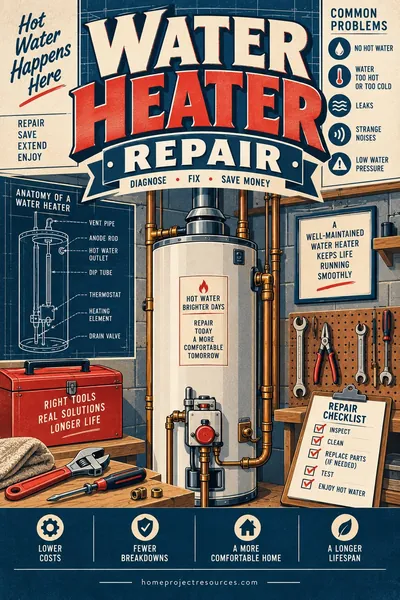
Also look at the outside. Rust on the tank jacket, fittings or valves means corrosion is under way. And a rotten-egg smell near a gas unit is a possible gas leak: leave the house and call your gas company from outside. Our water heater repair guide walks through each symptom and what a fix usually involves.
What shortens a water heater's life
Hard water is the biggest factor. The minerals settle in the bottom of a tank as sediment, which makes a gas burner work harder and can overheat the tank floor. In a tankless unit, they leave scale on the heat exchanger. If you see white crust on faucets and spotty glasses, our page on signs you have hard water will help you confirm it, and water softener installation cost explains what a softener involves.
Heavy use matters too. A family of five running back-to-back showers puts far more hours on a heater than a single person does. A heater that's too small for the household also runs harder. Finally, skipped maintenance adds up quietly: a tank that's never been flushed and has a fully eaten-away anode rod is living on borrowed time.
Simple care that adds years
Flush the tank about once a year to clear sediment. It's a manageable DIY job with a garden hose, and our guide on how to flush a water heater takes you through it. Check the anode rod every few years. This metal rod corrodes on purpose so the tank doesn't, and replacing a worn one can add years to a tank's life.
Test the temperature and pressure relief valve once a year, as your manual describes. Set the temperature to about 120°F unless your manual or household needs say otherwise. It's easier on the tank and lowers the risk of scalds. Keep the area around the heater clear, so air can reach gas burners and you can spot leaks early. For tankless units, descale about once a year, or as the maker suggests, especially with hard water. I'd add all of these to your seasonal home maintenance checklist so the yearly flush doesn't quietly slide.
Tank or tankless: which lasts longer?
Tankless units usually outlast tanks, mostly because there's no big tank of water sitting and slowly corroding. Their parts, such as sensors and igniters, can be replaced individually as they wear. But they aren't maintenance-free. Scale inside the heat exchanger is their main enemy, which is why makers suggest yearly descaling.
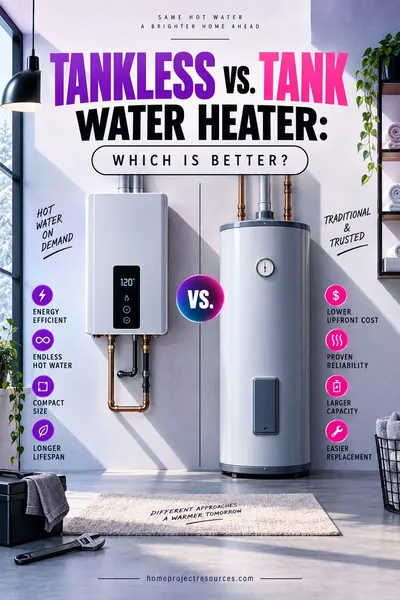
A tankless unit also costs more up front and may need gas line or electrical upgrades, so the longer life doesn't automatically make it the better buy for every home. Our tankless vs. tank water heater comparison covers the full trade-off, and tankless water heater cost explains what drives the price.
A worked example: repair or replace?
Say you have a 40-gallon gas tank that's 11 years old, and the hot water has started running out halfway through the second shower. The label code says it was made 11 years ago, which puts it near the top of the 8 to 12 year range for gas tanks. You flush it, and a lot of sediment comes out, but you also notice a little rust where the cold water pipe meets the top of the tank.
In that case, I'd treat any repair as a bridge, not a fix. A new part might buy a little time, but the tank itself is nearing the end, and the rust says corrosion has started. Planning the replacement now lets you choose the size and type calmly. Compare that with a 5-year-old electric tank that suddenly gives lukewarm water. That's very likely a failed element or thermostat, a common, affordable repair, and the tank has plenty of life left.
A simple rule of thumb: on a heater that's young, repair. On one that's at or past its typical range, especially with rust or any tank leak, put the repair money toward a new one.
Jobs to leave to a licensed plumber
Flushing the tank and reading the label are fine for most homeowners. Other work is best left to a pro. Call a licensed plumber for anything involving the gas line, burner or venting on a gas heater, any work inside the electrical panel of an electric heater, a relief valve that keeps dripping or discharging, and any leak you can't trace. A dripping relief valve can mean the pressure or temperature inside the tank is too high, which is a safety issue, not just a nuisance. If you're ever unsure whether something is safe to touch, that's your answer.
Why so many fail in winter
Winter is peak season for water heater trouble. The incoming water is much colder, so the heater runs harder and longer to warm it, and holiday guests mean more showers, more laundry and more dishes. An old tank that was barely hanging on often gives out in January, right when it's needed most. If yours is 10 years or older, give it a look before guests arrive: check the base for moisture, listen for rumbling and do the yearly flush if it's due.
Planning a replacement before it fails
Many homeowners replace a tank water heater near the end of its typical life, before it leaks. A planned replacement lets you compare options and quotes calmly instead of taking whatever is available on an emergency call. Our guide on how to compare contractor bids helps you line those quotes up side by side. Typical costs vary a lot by region, fuel type and how much the install has to change, so get more than one quote.
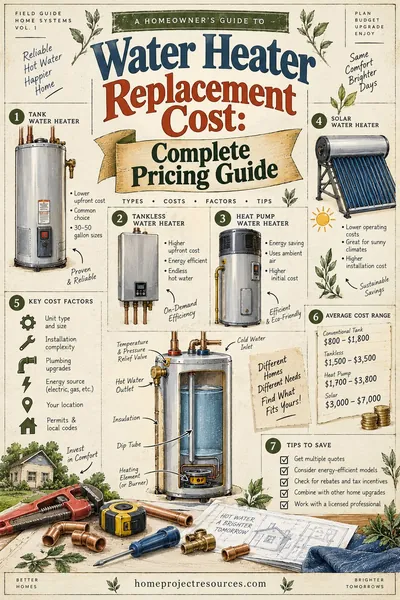
Location matters as much as age. If the heater sits where a leak would do real damage, like a finished basement or an upstairs closet, replacing early makes even more sense, and a drain pan underneath is cheap insurance. If a past leak has already soaked a basement floor, the free flooring calculator helps you price new flooring, and basement leak repair covers finding the source. Many areas require a permit for a new water heater; see water heater installation for steps and code, and water heater replacement for what drives the estimate. More free tools are on the Home Project Resources home page.
Quick answers about water heater lifespan
How long does a water heater last?
About 8 to 12 years for a gas tank, about 10 to 15 years for an electric tank and about 15 to 20 years for a tankless unit. Heat pump hybrids often last about 10 to 15. Water quality, installation and maintenance move a heater up or down within those ranges.
How do I know how old my water heater is?
Check the rating label on the side of the unit. Some print the manufacture date; most code the month and year into the serial number. The format varies by maker, so note the brand and full serial number and look it up on the maker's website or call its customer service line.
What are signs a water heater is going out?
Water around the base or a damp tank bottom, rusty hot water while cold runs clear, rumbling or popping, hot water that runs out fast, and rust on the tank or fittings. A leak from the tank itself means replacement; most other signs are worth having a licensed plumber check.
Do tankless water heaters last longer?
Usually, yes. Tankless units often last about 15 to 20 years because there's no storage tank to corrode, and worn parts can be replaced. They do need regular descaling, about once a year or as the maker suggests, especially in hard water areas.
Should I replace a 15-year-old water heater?
For a tank, 15 years is past the typical lifespan, so it's wise to plan a replacement before it leaks. That's especially true if it sits where a leak would cause damage, like a finished basement or an upstairs closet. A tankless unit at 15 may still have some years left.
How can I make my water heater last longer?
Flush it about once a year, check the anode rod every few years, test the relief valve yearly, keep the temperature around 120°F and treat hard water. For tankless units, descale on the maker's schedule. Keep the area around it clear so you spot leaks early.
Can a leaking water heater tank be repaired?
Not if the water is coming from the tank itself, since that means the inside has corroded through. Leaks from a fitting, drain valve or relief valve are often fixable. Shut off the water and the power or gas to the heater, and have a licensed plumber confirm where the water is coming from.