How to Unclog a Toilet: The Right Plunger, No-Plunger Fixes and When to Call a Plumber

Here's how to unclog a toilet: grab a flange plunger (the kind with a soft flap sticking out of the bottom), make sure there's enough water in the bowl to cover the cup, press down gently to seal it over the hole, then plunge firmly up and down 10 to 20 times and pull it off sharply. Most clogs clear in a few rounds like that. It's not glamorous, but it usually takes less than ten minutes.
If the bowl is already close to the rim, stop before you do anything else. Don't flush again. Lift the tank lid and push the flapper closed, or turn off the valve on the wall behind the toilet. Then you have time to fix the clog calmly. And please skip the chemical drain cleaners. In a toilet you're about to plunge, they are a splash and burn risk with very little upside.
Key facts
- Use a flange plunger, not a flat sink plunger.
- Plunge firmly 10 to 20 times per round, keeping the seal.
- About to overflow: close the flapper or turn the valve clockwise.
- Next step after a plunger is a toilet (closet) auger.
- Never use chemical drain cleaners or boiling water in a toilet.
Free calculator from Home Project Resources
Clog Troubleshooter: The Safe Order of Fixes for Your Toilet
Pick what your toilet is doing. You get the safe next step, in order, and when it's time to call a plumber.
Need more? Open the free Paint Calculator.
 Paint Calculator
 Square Footage Calculator
 Wallpaper Calculator
The Clog Troubleshooter above gives you the safe next step in the right order. Pick what's happening: the bowl drains slowly, the bowl is full and close to overflowing, it's clogged and there's no plunger at hand, plunging didn't work, or several drains are slow or backing up. Each answer walks you through what to do now and tells you plainly when it's time to call a plumber instead of trying harder.
Stop the water before it reaches the floor
The single most important rule with a clogged toilet is not to flush a second time "just to see." Every flush sends a full tank of water into a bowl that can't drain, and that is how a small mess becomes a wet bathroom floor.
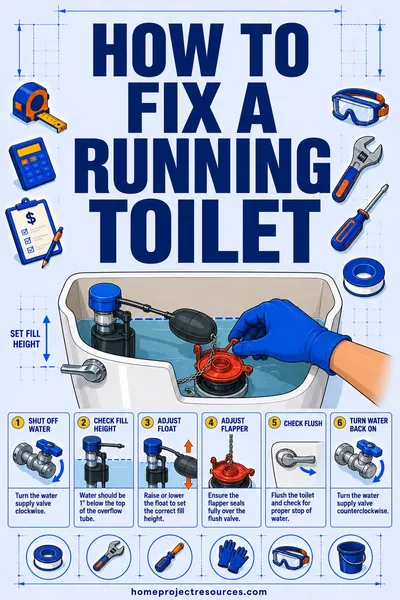
If the water is rising, lift the lid off the tank and look for the flapper, the rubber seal at the bottom of the tank. Push it down with your hand and the flow into the bowl stops. The tank water is clean, so this is less gross than it sounds. For a longer fix, turn off the supply valve on the wall behind the toilet. It turns clockwise to shut off. If it hasn't moved in years it may be stiff, so turn it firmly but don't force it with pliers.
Now lay a couple of old towels around the base of the toilet and put on rubber gloves. If the bowl is very full, use a plastic cup to bail some water into a bucket until it's about half full. That leaves room to plunge without slopping water over the rim.
Quick reference: which plunger for which drain
| Plunger | Looks like | Best for |
|---|---|---|
| Flange plunger | Rubber cup with a soft sleeve sticking out of the bottom | Toilets: the sleeve fits the drain and seals |
| Cup plunger | Simple flat-bottomed rubber cup | Sinks and tubs; struggles to seal on a toilet |
| Accordion plunger | Hard, ribbed plastic bellows | Strong force on toilets, but awkward and can scratch |
If you only buy one, get a flange plunger for the bathroom and keep a separate cup plunger for the kitchen sink. The shape really does make the difference. A flat cup sits on the curved bottom of a toilet bowl and leaks air on every push, so you end up splashing instead of pushing water through the drain.
How to plunge a toilet properly
Most people who say "plunging doesn't work" are using the wrong plunger or the wrong motion. Here is the method that works:
- Check the water level. You need enough water to cover the plunger's cup. Too little? Add some from a bucket.
- If the rubber is stiff, run it under hot tap water for a few seconds so it seals better.
- Fit the flange into the drain hole and press down gently first, to push the air out without splashing.
- Plunge firmly up and down 10 to 20 times, keeping the seal the whole time.
- Pull it off sharply and watch the water. Repeat a few rounds if it doesn't rush down.
The push matters, but so does the pull. Pushing water down presses on the clog; pulling back tugs it the other way. That back and forth is what loosens a wad of paper. The first gentle press is just as important, because a cup full of air compresses and sprays water around instead of moving the clog.
When the bowl drains with a gurgle, test with one careful flush. Keep your hand near the flapper (or the lid off the tank) so you can push it down if the water starts climbing again. If it does, you haven't fully cleared it yet. Plunge a few more rounds.
What to try when there's no plunger
It happens: a guest bathroom with no plunger, or a late-night clog with the stores closed. There are a couple of safe things to try while you wait for one.
The best is dish soap and hot water. Squirt a generous amount of dish soap into the bowl, then, if there's room, pour in a bucket of hot tap water from a little height. Not boiling water, which can crack the porcelain. Wait 15 to 30 minutes. The soap slicks waste and paper along, and the warm water helps break paper down. Then try one careful flush with your hand ready to close the flapper.
Time is the other tool. Many paper clogs soften on their own in an hour or so, so if the bowl isn't about to overflow, simply leaving it can do the job. If you own a toilet auger, that's your next step, covered below.
Some popular hacks are best skipped. Boiling water can crack the bowl. A straightened wire coat hanger scratches the porcelain and rarely reaches the clog, which usually sits in the curved trap inside the toilet. And chemical drain cleaners can splash and burn skin and eyes, damage pipes and react with other products. They are also dangerous for whoever ends up plunging after them.
Using a toilet auger when plunging fails
A toilet auger, also called a closet auger, is the tool plumbers reach for first when a plunger isn't enough. It's a coiled cable inside a curved metal tube, with a crank on top and a rubber sleeve at the bottom that protects the bowl. They're inexpensive and last for years, which is why I think every home with more than one toilet should have one tucked next to the plunger. It sits well with the other basics on our essential DIY tools list.
To use it, pull the cable all the way up into the tube. Set the curved end into the drain hole at the bottom of the bowl, with the rubber sleeve resting against the porcelain. Crank the handle clockwise while pushing down gently, feeding the cable through the toilet's internal curves. When you feel resistance, keep cranking. You'll either break through the clog or hook it. Then crank back slowly as you pull the cable up, and flush carefully to test.
Wipe the cable and rinse it in a bucket before you put it away, and let it dry so it doesn't rust. If the auger hits something hard that won't budge, stop. A solid object needs a different approach.
Why toilets clog in the first place
Most clogs come from a short list of causes. Too much toilet paper at once is the big one, especially with thick, plush paper. Wipes are the second, including the ones labeled flushable, because they don't break apart the way toilet paper does. Paper towels, cotton balls and pads, dental floss and hair cause trouble too, since they tangle and catch other waste.
In homes with small children, toys are a classic. A small plastic figure can sit in the trap and catch paper for weeks before the toilet clogs completely. A weak flush is the last common cause. If the tank isn't filling to the right level or the flapper closes too early, there isn't enough water to push waste through. Our guide on how to fix a running toilet covers the flapper and fill valve, which are often behind both problems.
Prevention habits that actually work
The easiest fix is a small lidded trash can right next to the toilet. When there's an obvious place for wipes, floss and cotton, they stop going in the bowl. For heavy paper users, flushing halfway through helps, and it's a gentle thing to teach kids. Keeping the lid down and toys out of the bathroom saves a lot of trouble with toddlers.
If you're on a septic system, these habits matter even more, since wipes and paper towels also build up in the tank. Our septic tank maintenance guide explains pumping schedules and what to keep out. A toilet that clogs over and over with normal use may also have mineral buildup in its rim and siphon holes; it's one of the signs you have hard water.
Know when to call a plumber
A plunger and an auger clear the vast majority of clogs. Call a licensed plumber when you've done both and the toilet is still clogged, or when something solid went down, like a toy, a phone or the head of a toilet brush. Pushing a hard object deeper can jam it in the drain line, which makes the job bigger.
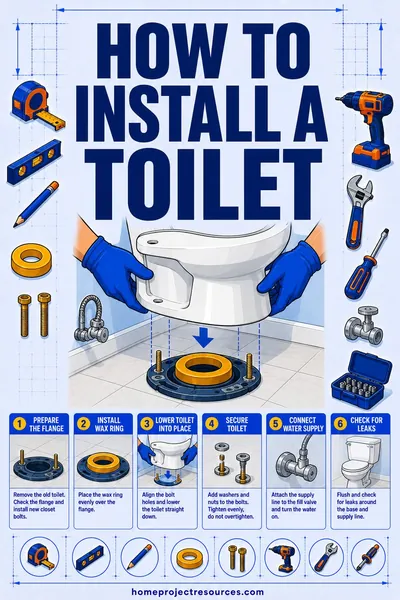
Several slow drains at once is a different problem. If the tub or shower gurgles or backs up when you flush, or more than one fixture is slow, the trouble is likely in the main drain line, not the toilet. That needs a pro with the right equipment. The same goes for a toilet that clogs often with normal use, or water seeping from under the base. A leak at the base usually means a failed wax seal; our guide on how to install a toilet shows what's under there. If water has dripped through to the room below, check what a water stain on the ceiling means.
Cleaning up after an overflow
If water reached the floor, deal with it the same day. Pick up the towels and wash them hot. Mop the floor, then wipe it down with a disinfectant cleaner, following the label. Use one cleaner at a time and never mix bleach with ammonia or vinegar, which can release harmful fumes. Open the window or run the exhaust fan while you work.
Look closely at the base of the toilet afterward. If the floor around it feels soft, or water seems to have soaked under it, keep an eye on it for a few days. Damp spots that linger can lead to mold, and our guide to identifying black mold explains what to look for. Re-caulking the base keeps future spills from sneaking underneath. If the floor needs replacing in the end, the free tile calculator works out how many tiles and boxes you'd need.
Before a houseful of holiday guests
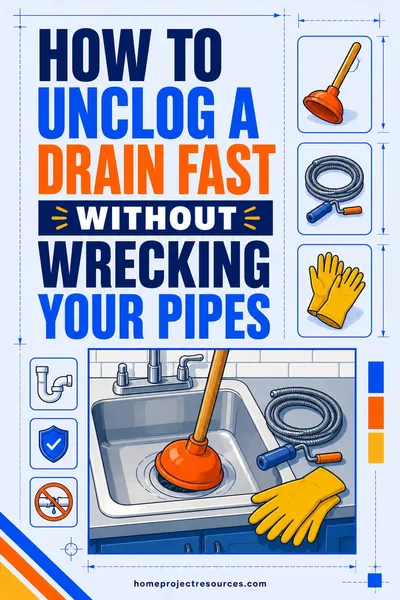
More people means more flushes, and clogs love a busy weekend. Put a plunger next to every toilet; a discreet holder makes it less awkward for guests to use. Add a small lidded trash can, and turn the shut-off valve once to make sure it moves before you actually need it. For slow sinks and tubs, see how to unclog a drain. You'll find all our free planners and calculators on the Home Project Resources home page.
Quick answers about unclogging a toilet
What is the fastest way to unclog a toilet?
A flange plunger. Make sure water covers the cup, press it gently over the drain to push the air out, then plunge firmly 10 to 20 times while keeping the seal and pull it off sharply. Repeat a few rounds. Most ordinary paper clogs clear within a few minutes this way.
How do you unclog a toilet without a plunger?
Add a generous squirt of dish soap and a bucket of hot (not boiling) tap water if there's room in the bowl. Wait 15 to 30 minutes, then try one careful flush with your hand ready to close the flapper. Paper clogs often soften on their own in an hour. A toilet auger is the next step.
What do I do if my toilet is clogged and full?
Don't flush again. Push the flapper closed inside the tank or turn the valve behind the toilet clockwise to stop the water. Lay towels around the base, put on gloves and bail some water into a bucket if needed. Then plunge with a flange plunger.
Should I use drain cleaner in a toilet?
No. Chemical drain cleaners can splash and burn skin and eyes, damage pipes and react with other products. They're also a hazard for anyone who plunges afterward. Use a plunger or a toilet auger instead, and never mix cleaning chemicals.
Which plunger is best for a toilet?
A flange plunger, which has a soft sleeve on the bottom that fits into the toilet's drain hole and makes a seal. Flat cup plungers work best on sinks and tubs. Accordion plungers push hard but are awkward and can scratch the bowl.
Why does my toilet keep clogging?
Common reasons are too much paper at once, wipes, a small object stuck in the trap or a weak flush from a low tank fill or a flapper that closes early. If it clogs often with normal use, or several drains are slow, call a plumber to check the drain line.
When should I call a plumber for a clogged toilet?
Call when plunging and an auger haven't worked, something solid went down, several drains are slow, or water comes up in the tub or shower when you flush. Water leaking from the base of the toilet is another reason to get a licensed plumber in.