Fall Garland Ideas: 18 Easy Looks for Your Mantel, Door and Porch

A good fall garland is a long, flexible base (rope, wire, grapevine or faux greenery) dressed with two or three autumn textures, such as leaves, small pumpkins, dried corn husks or flowers, and hung where people actually look: the mantel, the front door, the staircase or the porch rail. Pick one base, pick one main texture, add one accent, and you have a garland that looks finished instead of cluttered.
The ideas below are written for homeowners, not kids' craft hour. Each one comes with a short materials list, an honest effort level, and the spot in the home where it looks best. Some take twenty minutes; a couple are weekend projects.
How a Fall Garland Is Built
Every fall garland shares three layers. Once you see them, you can mix and match any look below.
- The base. This is the spine that carries the weight. Common options are jute rope, floral wire, a grapevine strand, a faux eucalyptus or magnolia garland, or a strand of fishing line for very light items.
- The main texture. This is what people notice from across the room: leaves, small pumpkins, dried corn husks, wheat, felt shapes, or faux flowers.
- The accent. A small repeat that ties the whole thing together, such as wooden beads, pinecones, cinnamon sticks, ribbon tails, or a strand of warm fairy lights.
A garland with all three layers reads as intentional. A garland with five or six different materials usually reads as busy, so it pays to edit.
Fall Garland Ideas by Material
1. Classic Fall Leaf Garland on a Mantel
Materials: faux maple and oak leaf garland (two strands), floral wire, command-style hooks or mantel clips, a strand of warm white micro lights. Effort: Easy, about 30 minutes. Where: Living room mantel.
Twist two strands of leaf garland together so the gaps in one are filled by the other. This one step is what makes a store-bought fall leaf garland look full and expensive instead of thin. Wrap the light strand loosely through the leaves, then secure the garland with clips at each end and one in the middle. Let the ends drape six to twelve inches past each side of the mantel. For more detail on clips, hooks and spacing, see our guide on how to hang garland on a mantel.
2. Real Garland of Fall Leaves (Pressed and Strung)
Materials: freshly fallen leaves, heavy books or a leaf press, clear matte spray sealer or decoupage medium, baker's twine, mini clothespins. Effort: Moderate, spread over about a week. Where: Kitchen window, a hallway, or a bookshelf edge.
Collect leaves with good color and no holes. Press them flat between paper towels inside heavy books for five to seven days. Brush both sides with a thin coat of decoupage medium or spray with sealer so they stay flexible. Clip them along twine every four inches. A real garland of fall leaves fades over a few weeks, which is part of its charm, but keep it away from heat vents and candles.
3. Fall Pumpkin Garland
Materials: 15 to 25 small faux pumpkins (two to three inches across), a drill with a small bit or an awl, jute rope, a few faux leaves for spacing. Effort: Moderate, about one hour. Where: Mantel, buffet, or a long console table.
Remove the stems or drill a small hole straight through each pumpkin from side to side. Thread them onto jute rope, adding a leaf or two between each pumpkin so the colors breathe. Mix two or three tones, such as white, cream and muted orange, rather than one bright orange. A fall pumpkin garland is heavy, so lay it along a surface or use sturdy hooks instead of light adhesive clips.
4. Corn Husk Garland
Materials: dried corn husks (a bag of tamale husks works), jute twine, a bowl of warm water, scissors, a few dried wheat stalks. Effort: Easy to moderate, about an hour plus drying time. Where: Front door frame, porch rail, or a farmhouse kitchen.
Soak the husks for ten minutes so they bend without cracking. Fold each husk in half over the twine and tie a small knot at the fold, sliding each one close to the last so the husks overlap like fringe. Let the corn husk garland dry fully before hanging. Tuck a wheat stalk in every foot or so for height. This looks especially good against a dark door.
5. Fall Felt Garland
Materials: wool-blend felt sheets in rust, mustard, olive and cream, sharp fabric scissors, a leaf or acorn template, a needle and embroidery floss, or a hot glue gun. Effort: Moderate, one to two hours. Where: A child's room, a playroom, a reading nook, or a kitchen open shelf.
Cut leaves, acorns, or simple pumpkin shapes from felt. Stitch a single running line down the center of each leaf to suggest a vein, then thread them onto floss or glue them to twine. A fall felt garland is soft, unbreakable, and folds flat for storage, which makes it one of the best options for homes with pets or small children.
6. Fall Floral Garland
Materials: a faux greenery garland base, faux dahlias, mums, or ranunculus in burnt orange and burgundy, wire cutters, floral wire, dried grasses. Effort: Moderate, about one hour. Where: Dining table runner, mantel, or an entry console.
Clip the flower stems to two inches. Wire each bloom onto the greenery base in loose clusters of three, leaving a hand's width of greenery between clusters. Add a few feathery grasses so the line looks airy. A fall floral garland feels more elegant than a leaf garland, so it pairs well with brass candlesticks and a neutral room.
7. Fall Flower Garland with Dried Blooms
Materials: dried hydrangea heads, dried strawflowers, dried statice, floral tape, floral wire, a twig or grapevine base. Effort: Moderate. Where: A bedroom headboard wall or above a window.
Dried flowers give a muted, vintage palette that is hard to get with faux stems. Break hydrangea heads into small clusters, wrap each stem with floral tape, and wire them to the base. Handle gently, since dried blooms shed. A fall flower garland made this way can last several seasons if stored in a box with tissue.
8. Fall Door Garland (Arched Swag)
Materials: a 9-foot faux fall garland, two adhesive hooks rated for outdoor use or a garland hanger kit for door frames, zip ties, a ribbon bow. Effort: Easy, about 30 minutes. Where: Around the front door frame.
Place one hook at each top corner of the door trim. Drape the garland across the top and let it fall down both sides about a third of the way. Zip-tie a large bow at one top corner. A fall door garland frames the entry without the bulk of a wreath, and it pairs nicely with one on the door itself. Our step-by-step on how to hang a wreath on a door covers hooks that will not scratch paint.
9. Outdoor Fall Garland for the Porch Rail
Materials: a weather-resistant faux leaf or berry garland, outdoor zip ties in brown or black, a few faux gourds, outdoor-rated string lights. Effort: Easy to moderate. Where: Porch rails, pergola beams, or a fence along the walk.
An outdoor fall garland has to survive wind and rain, so skip paper, felt and real dried flowers. Zip-tie the garland every 18 inches so it does not flip upside down in the wind. Add a cluster of faux gourds at each post for a deliberate rhythm. If you add lights, choose outdoor-rated strands and a covered outlet, and check our notes on hanging lights on a house for clip types that also work for fall.
10. Staircase Fall Garland
Materials: two or three garland strands, ribbon or zip ties, small faux pumpkins or pinecones, warm fairy lights. Effort: Moderate, about one hour. Where: Banister and railing.
Start at the bottom newel post and work up, tying the garland at every third or fourth baluster so it swoops gently. Keep the top of the handrail clear so people can still hold on. Tuck in a few small pumpkins at the swoops. Our full guide on how to hang garland on a staircase explains swag spacing and safe attachment.
11. Pinecone and Wood Bead Garland
Materials: 20 to 30 pinecones, small screw eyes, a strand of natural wood beads, jute twine. Effort: Moderate. Where: Mantel, open shelving, or draped over a mirror.
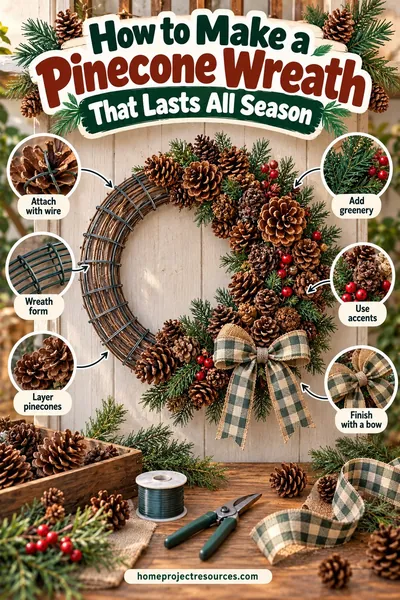
Twist a small screw eye into the base of each pinecone, then thread them onto twine with three to five wood beads between each one. If the cones are from your yard, bake them on a foil-lined sheet at a low oven setting for about an hour to open them and dry out sap, and stay nearby while they bake. The same pinecones can later go into a pinecone wreath.
12. Dried Orange and Cinnamon Garland
Materials: oranges sliced thin, cinnamon sticks, bay leaves, baker's twine, a large needle. Effort: Moderate, with several hours of low oven drying. Where: Kitchen window or a breakfast nook.
Dry orange slices on a rack in a low oven until they are leathery and translucent. Thread them on twine, alternating with cinnamon sticks tied on with a short loop and a bay leaf or two. It smells warm, it glows in a sunny window, and it carries right into the winter holidays.
13. Wheat and Ribbon Garland
Materials: dried wheat bundles, wide linen or velvet ribbon, floral wire. Effort: Easy. Where: Dining room chair backs or a sideboard.
Wire small wheat bundles every eight inches along a length of ribbon. The golden color reads as harvest without any orange at all, which makes this one of the best choices if your home is mostly neutral.
14. Gourd and Greenery Table Garland
Materials: a faux eucalyptus garland, mini gourds, small taper candleholders, a few acorns. Effort: Easy, about 15 minutes. Where: Dining table centerline.
Lay the eucalyptus flat down the center of the table and tuck gourds and acorns along it in odd-numbered groups. Keep anything taller than a few inches near the ends so guests can see each other.
15. Fabric Strip Rag Garland
Materials: fall fabric remnants or flannel, pinking shears, jute twine. Effort: Easy, though it takes time. Where: A farmhouse kitchen or a cozy den.
Tear or cut fabric into strips about one inch by eight inches. Tie each one on the twine with a simple knot and push them tight together. A plaid-and-solid mix in rust, cream and olive looks especially warm.
16. Paper Leaf Garland for a Quick Refresh
Materials: cardstock in autumn colors, a leaf punch or template, a sewing machine or hole punch and string. Effort: Easy. Where: A home office or an indoor doorway.
Run cut leaves through a sewing machine in one long line so they hang like a ribbon. This is light enough for washi tape, which means no holes in the wall.
17. Lit Fall Garland for Evening Glow
Materials: any garland above, a battery-powered warm white fairy light strand with a timer. Effort: Easy. Where: Anywhere without a nearby outlet.
A timer strand turns on at dusk, so your mantel or entry glows each evening without you thinking about it. Battery strands also mean no cords running down the wall.
18. Mixed Harvest Garland for a Big Statement
Materials: a thick faux greenery base, faux leaves, small pumpkins, berry picks, wheat, wired burlap or velvet ribbon. Effort: Moderate to involved, one to two hours. Where: A large mantel or a long entry table.
This is the "go big" option. Build it in sections: greenery first, then leaves, then pumpkins in clusters, then berries, then weave a ribbon through it last. Step back every few minutes and look from across the room.
Fall Garland Decor at a Glance
| Garland type | Indoor or outdoor | Effort | Lasts | Best spot |
|---|---|---|---|---|
| Faux fall leaf garland | Both | Easy | Many seasons | Mantel, door |
| Pressed real leaves | Indoor | Moderate | A few weeks | Window, shelf |
| Fall pumpkin garland | Indoor | Moderate | Many seasons | Mantel, buffet |
| Corn husk garland | Both (covered) | Easy to moderate | One to two seasons | Door, porch |
| Fall felt garland | Indoor | Moderate | Many seasons | Kids' rooms, shelves |
| Fall floral garland | Indoor | Moderate | Many seasons | Table, entry |
| Dried orange and cinnamon | Indoor | Moderate | One season | Kitchen window |
| Outdoor leaf and berry | Outdoor | Easy | Two to three seasons | Porch rail |
How to Choose the Right Fall Garland for Your Home
Start with the place, not the product. The location decides almost everything else.
- Mantel: Can carry weight, so pumpkins, pinecones and heavy greenery work. Look for clips that hook over the mantel edge so you avoid holes.
- Front door: Needs to handle wind, sun and the door opening and closing. Faux materials and outdoor hooks are a must.
- Staircase: Must stay off the handrail grip and be tied securely. Lighter materials are better.
- Windows: Light and flat garlands work best, such as paper, felt, dried oranges or pressed leaves.
- Table: Keep it low so conversation flows across it. Avoid anything that sheds into food.
Match your existing palette. If your room is gray and white, a white pumpkin and eucalyptus garland will feel natural, while a bright orange leaf strand may look out of place. If the room is warm wood and brick, rust and mustard tones will blend right in.
Measure before you buy or build. For a mantel, a good starting length is the mantel width plus 12 to 24 inches for draping ends. For a door frame, measure up one side, across the top, and down the other, then add a foot. For a staircase, measure the railing length and add about a third for the swoops.
Think about the season after this one. A neutral greenery base can carry you from early fall to Thanksgiving to the winter holidays if you swap the accents. Pull out the pumpkins after Thanksgiving, add pinecones and red berries, and you have a Christmas garland. Our Christmas mantel decorating ideas show how to make that switch.
Step by Step: Making a Fall Leaf Garland from Scratch
If you want one weekend project that looks professional, this is the one.
- Cut the base. Cut jute rope or a strand of grapevine to your measured length, plus 12 inches for tying.
- Prep the leaves. Pull faux leaves off their stems, or press and seal real ones.
- Lay it out. Lay the rope on the floor and arrange leaves along it before attaching anything. Overlap them like shingles, all pointing the same direction.
- Attach. Use hot glue or thin floral wire. Work from one end to the other so the overlap stays consistent.
- Add the accent. Wire in pinecones, wood beads, or small pumpkins at even intervals.
- Light it. Weave a warm fairy light strand through last, tucking the wire under leaves.
- Hang and fluff. Once hung, bend each leaf slightly so it catches light instead of lying flat.
Common Fall Garland Mistakes to Avoid
- Going too thin. One strand of store-bought garland almost always looks sparse. Double it, or add a greenery base underneath.
- Too many colors. Pick two main colors and one accent. Orange, red, yellow, purple and green all at once looks chaotic.
- Ignoring the ends. A garland that stops abruptly at the edge of the mantel looks cut off. Let the ends drape past the edge or curl them down.
- Using indoor materials outside. Paper, felt and real dried flowers fall apart in rain and sun.
- Putting heavy items on light hooks. Pumpkin garlands and loaded greenery need sturdy hooks or a weighted mantel clip.
- Hanging candles too close. Keep real flames well away from any garland, especially dried leaves, husks and paper. Battery candles are the safer choice near garland. If wax does drip, our guide on removing candle wax from carpet can help.
- Blocking the handrail. On stairs, the top of the rail has to stay clear for safe gripping.
FAQ
How long should a fall garland be for a mantel?
Measure the width of the mantel and add 12 to 24 inches so the ends can drape past each side. For a very full look, plan to layer two strands together.
Can I use a fall garland outdoors?
Yes, as long as it is made of weather-resistant faux materials. Secure it with outdoor zip ties every 18 inches or so, and use outdoor-rated hooks and lights. Paper, felt and real dried flowers are best kept indoors.
How do I hang a fall garland without nails?
Use adhesive hooks sized for the weight, mantel clips that grip the edge of the mantel shelf, tension rods inside a window frame, or ribbon tied to stair balusters. Test adhesive hooks on an out-of-sight spot first so they do not peel paint.
How do I keep a real leaf garland from crumbling?
Press the leaves for about a week, then seal both sides with decoupage medium or a clear matte spray. Keep the finished garland out of direct heat and sunlight. Even sealed leaves are a one-season decoration.
When should I put up my fall garland?
Many homeowners put fall decor up in September and leave it through Thanksgiving, which is the fourth Thursday of November. A garland in neutral tones can stay up longer if you swap the accents for winter ones.
How can I turn a fall garland into a Christmas garland?
Start with a greenery base. Remove the pumpkins, corn husks and orange leaves, then add pinecones, red berries, ornaments, and a fresh ribbon. The lights can stay right where they are.
Is a fall garland safe around pets?
Faux and felt garlands are the safest picks. Keep real dried flowers, small gourds and anything with loose beads out of reach, and avoid hanging garland ends low enough for a pet to pull.