Water Line Repair: What Goes Into a Real Quote

A water line repair quote is built from six things: what pipe material you have, exactly where the break sits, how deep and how long the run is, what is sitting on top of it, which repair method the site allows, and how much of the surface has to be put back afterward. Two houses with the same leak get very different numbers because one line runs under a lawn and the other runs under a driveway, a sidewalk and a mature maple.
Before any of that, prove you actually have a leak and find out which side of the meter it is on. That single fact decides whether this is your bill or the water utility's, and plenty of homeowners pay for work the city would have done.
Updated September 2026
A note on numbers. This page carries no dollar figures. Excavation, restoration, permits and plumbing labor vary far too much by city, soil and season for a printed range to be useful, and a stale range is worse than none. What you get instead is the diagnosis, the specifications, the exact line items that belong on a written quote, and the questions that make three bids comparable.
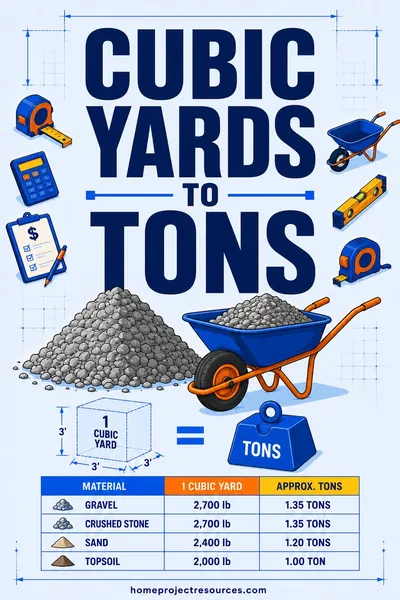
Excavation is usually the biggest line item, and you can size it yourself. Take the trench length, width and depth, and get the spoil volume with our free Cubic Yard Calculator. Knowing that a job moves ten yards of dirt rather than three tells you immediately why one bid is higher, and it gives you something concrete to ask about.
First, prove the leak and find which side it is on
Run the meter test before you call anyone. It takes fifteen minutes and it is the same test the utility will run.
- Shut off every fixture and appliance that uses water, including ice makers, humidifiers and irrigation.
- Open the meter box at the curb and find the low flow indicator, usually a small triangle, star or dial that spins on tiny flows.
- Watch it for five minutes. Any movement with everything off means water is going somewhere.
- Now close the main shutoff valve at the house. Watch the indicator again.
- If it stops, the leak is inside the house or in the plumbing past that valve. If it keeps moving, the leak is in the buried service line between the meter and the shutoff.
That last step is the one that saves people the most money. It splits the whole problem in two.
A few supporting signs are worth knowing. A soft, always green patch of lawn in a dry week, gravel or asphalt that keeps sinking in one spot, a hissing sound at the shutoff with everything closed, a water heater that runs constantly, or a warm strip on a slab floor all point to a buried leak. A sudden pressure drop at every fixture at once is different, and our guide to low water pressure causes walks through those.
Who owns which piece of pipe
| Segment | Usually owned by | Notes |
|---|---|---|
| Water main under the street | The utility | Never a homeowner repair |
| Corporation stop and tap at the main | The utility | Tapping the main is utility work almost everywhere |
| Service line from the main to the meter | Varies by city | Some utilities own it, some split it at the property line |
| Meter and meter box | The utility, in most systems | Do not open the meter itself |
| Service line from the meter to the house | Almost always the homeowner | This is where most repairs happen |
| Main shutoff valve and everything inside | The homeowner | Includes slab and wall lines |
Call the utility and ask exactly where their responsibility ends before you schedule a plumber. Ask them to send someone to confirm the leak location. Many will do that free, and their locate results become useful leverage in your plumbing conversation.
What goes into a water line repair quote
Here are the drivers, in roughly the order they move the number.
1. Pipe material. What is in the ground changes both the repair and whether a spot fix is even reasonable.
| Material | Typical era | What it means for repair |
|---|---|---|
| Copper, type K or L | 1950s onward | Long lived. Pinhole leaks from aggressive soil or stray current usually mean more are coming |
| Galvanized steel | Pre 1960 | Rusts closed from the inside. Spot repairs rarely last, full replacement is the honest answer |
| Polybutylene, gray or blue | Roughly 1978 to 1995 | Fittings and pipe both fail. Most plumbers will not patch it, and insurers may ask about it |
| PEX | 1990s onward | Flexible, few joints, easy to pull through a bore |
| HDPE, SDR-9 or SDR-11 | 1980s onward | Fused joints, common for trenchless pull in service lines |
| Lead or a lead gooseneck at the tap | Pre 1950s | Not repaired. Current practice is full replacement, and many utilities have replacement programs |
| Asbestos cement | Mid century | Requires specific handling procedures and adds cost and time |
2. Location of the break. A leak in the yard, ten feet from the house, in soft soil, is a very different job from a leak under a garage slab or under the sidewalk at the property line.
3. Length and depth of the run. Depth is set by your local frost line plus minimum cover. In the deep south a service line may sit 12 to 18 inches down. In the northern tier it can be 48 to 60 inches. Doubling the depth more than doubles the excavation, because trench walls have to be sloped or shored as they get deeper.
4. What is on top. Grass is the cheap case. Then landscaping, then a concrete walkway, then a driveway, then a curb and street cut that needs a municipal permit and a compaction test. A street cut can outrun the plumbing itself.
5. Method. Open trench, spot repair, pipe bursting, or a directional bore. More on that below.
6. Restoration. Who puts the lawn, driveway, sidewalk or basement floor back, and to what standard. Read this line item carefully in every bid.
7. Permits and inspection. Most jurisdictions require a plumbing permit for a service line replacement, an inspection before the trench is backfilled, a pressure test, and disinfection with a bacteria sample on a new potable line.
Repair methods, and when each one fits
| Method | Best for | Watch out for |
|---|---|---|
| Spot repair with a coupling | A single clean break in otherwise sound pipe | Pointless on galvanized or polybutylene, where the next failure is close behind |
| Open trench replacement | Shallow lines, soft soil, lawn only, short runs | Full restoration of everything the machine crosses |
| Pipe bursting | Replacing a full run on the same path | Needs pits at both ends, and other utilities close to the path are at risk |
| Directional bore | Long runs under driveways, patios and mature trees | Needs entry and exit pits, and a clean utility locate |
| Overhead reroute | Slab leaks in single story homes with attic access | Abandons the slab line, adds insulated pipe in the attic, and needs drywall patching |
| Under slab tunnel | Slab leaks where a reroute is not practical | Slow, and requires careful spoil handling and compaction |
Trenchless sounds automatically better, and often it is, but not always. A bore still needs two pits, and it does not help if the failure is a fitting three feet from the house. Ask each bidder to explain why they chose their method for your site, not in general.
Worked example: sizing the excavation on a 60 foot run
Say the plumber proposes an open trench replacement from the meter to the house.
- Run length: 60 ft. Trench width: 18 in, which is 1.5 ft. Depth: 36 in, which is 3 ft.
- Volume: 60 x 1.5 x 3 = 270 cubic feet.
- Cubic yards: 270 / 27 = 10 cubic yards of spoil.
- Bedding and cover: 4 inches of sand under the pipe and 6 inches over it is 10 inches, or 0.83 ft. That is 60 x 1.5 x 0.83 = about 75 cubic feet, roughly 2.8 cubic yards of bedding sand or pea gravel.
- Backfill and settlement: spoil fluffs up when excavated and settles after backfill, so plan on returning to top dress the trench line the following spring.
Ten yards is a real pile. It is roughly a tandem dump truck load, and it needs somewhere to sit for a day or two. If a bid does not mention where the spoil goes or how the trench is compacted, ask. Poor compaction over a service line trench is how people end up with a sunken stripe across the front yard.
The line items that belong on a written quote
Ask for this level of detail before work starts. A quote that says "replace water line" and nothing else is not a quote, it is a number.
| Line item | What it should specify |
|---|---|
| Diagnosis | Leak location, how it was located, and which side of the meter |
| Scope of pipe | From where to where, length in feet |
| New pipe | Material, diameter, pressure rating or type, for example 1 inch HDPE SDR-9 or 3/4 inch type L copper |
| Fittings and transitions | Brass, dielectric where dissimilar metals meet, meter setter work |
| Method | Open trench, bore or burst, and the pit locations |
| Excavation | Trench length, width and depth, spoil handling, shoring where required |
| Bedding and backfill | Sand or stone bedding depth, compaction method and lifts |
| Tracer wire and marking tape | Required for plastic pipe in most jurisdictions so the line can be located later |
| Shutoff valve | New main shutoff, and whether a curb stop is replaced |
| Permits and inspection | Who pulls, who schedules, and that the trench stays open until inspected |
| Pressure test and disinfection | Test pressure and duration, chlorination and bacteria sample on new service |
| Utility locate | That 811 was called and the ticket number |
| Restoration | Sod or seed, concrete thickness and finish, asphalt patch and compaction, interior drywall and paint |
| Warranty | Parts, labor and workmanship terms, stated separately |
| Change order clause | Written approval required before extra work |
Two of those deserve emphasis. Tracer wire costs almost nothing and saves the next person from digging blind. And inspection before backfill is not optional. If a crew closes the trench before the inspector sees it, you may be asked to reopen it at your expense.
What changes the number after work starts
These are the honest surprises. Ask each bidder how they handle every one of them, and get the answer in the quote.
- Rock. Ledge, cobbles or hardpan turns a two hour excavation into a two day one, sometimes with a hammer attachment.
- High water table. A trench that fills with groundwater needs a pump running the whole time, and the walls get unstable.
- Unmarked utilities. A private irrigation line, a gas line to a grill, a low voltage feed to a lamp post or an old septic line the locate service never sees. Call 811 yourself before any digging so the public utilities are marked, and tell the crew about anything private you know of.
- Lead discovered at the tap. If the excavation reveals a lead gooseneck or a lead service, the rules change. Full replacement becomes the expectation and the utility usually gets involved.
- Failed pressure test. A new line that will not hold test pressure means a bad fusion joint or a damaged section, and the crew has to find it.
- Deeper than expected. Old lines are sometimes buried well below current minimums or well above them, and finding it takes exploratory digging.
- Driveway thickness and reinforcement. A 4 inch plain slab saws easily. An 8 inch reinforced apron does not.
- Tree roots. Cutting a structural root under a mature tree is both slow work and a long term risk to the tree.
- Interior damage. Slab leaks that have been running a while soak flooring, subfloor and baseboard. That is separate from the plumbing scope, and it is the same kind of hidden damage our basement leak repair guide describes.
How to compare bids apples to apples
- Normalize the pipe. Copper against HDPE against PEX is not the same product. Ask every bidder to quote your preferred material as an alternate so you can see the true spread.
- Normalize the length. A spot repair and a full replacement are different jobs. Get both, from every bidder.
- Pull restoration into the open. Ask directly: does your number include putting my driveway back, and to what finish? Many exclude it. That exclusion is fine, as long as you know before you compare.
- Check who pulls the permit. If a bidder wants you to pull the homeowner permit, understand that you are then the responsible party for the inspection.
- Ask about the pressure test and the bacteria sample. Skipping disinfection on a new potable line is a corner that gets cut and should not be.
- Compare warranty terms, not warranty adjectives. Ten year workmanship on the fusion joints is a real promise. "Guaranteed work" is not.
Our broader walkthrough on how to get contractor bids covers the paperwork side, and the warning signs in contractor red flags apply here with unusual force, because emergency water work is exactly where high pressure sales tactics show up. You can get your public utilities marked free by calling 811 or filing online at call811.com, usually two to three business days ahead.
After the repair: what to check yourself
- Run every fixture in the house for several minutes. New work stirs up sediment, and aerators clog first.
- Repeat the meter test at the curb. The indicator should be dead still with everything off.
- Check your static pressure at a hose bib with a gauge. Most homes want roughly 40 to 80 psi. Above about 80, code generally calls for a pressure reducing valve.
- Walk the trench line after the first heavy rain and again in spring. Settlement is normal and top dressing is your call to make.
- Note the new pipe material, depth and route somewhere you will find it later. A photo of the open trench with a tape measure in it is worth keeping.
- If your water tastes or feels different afterward, that is usually the disinfection flushing out. Persistent scale is a different issue, and our guide to hard water signs covers it.
Frequently asked questions
How do I know if the leak is in the yard or under the house?
Use the meter test. With every fixture off, watch the low flow indicator, then close the main shutoff at the house and watch again. Movement that stops when you close the valve puts the leak inside the house. Movement that continues puts it in the buried line between the meter and that valve.
Is a spot repair ever the right call?
Yes, when the pipe is otherwise sound and the failure was mechanical, like a rock pressing on a copper line or a shovel strike. On galvanized steel or polybutylene the answer is usually no, because the failure mode is the material itself and the next leak is already forming somewhere else on the same run.
Do I really need a permit to replace my own water service?
In most jurisdictions, yes. Service line work is inspected because it is the barrier between the public water supply and your house, which is why backflow, disinfection and pressure testing are part of the process. Unpermitted work also tends to surface at the worst moment, during a home sale.
Can trees or roots break a water line?
Roots rarely break a pressurized water line the way they invade a sewer line, because there is nothing to feed them until a leak already exists. What roots do is wrap and load the pipe, then hold moisture against it. Once a small leak starts, roots crowd the area fast and make the excavation much harder.
How long does a typical service line replacement take?
A straightforward open trench run through a lawn is often a one day job, plus the inspection window. Bores and pipe bursting are usually one to two days. Add time for street cuts, rock, high water tables, and any restoration that has to cure, such as concrete.
Will homeowners insurance cover it?
Policies commonly cover the resulting water damage but not the pipe itself or the excavation to reach it. Many utilities and third parties sell separate service line coverage that fills that gap. Read whether your policy covers the digging, because that is the expensive half.
What size pipe should replace my old service line?
Most single family homes are served by 3/4 inch or 1 inch. The right answer depends on fixture count, the length of the run and the static pressure at the meter, since a long run drops pressure along its length. If you have ever had two showers fight each other, upsizing the service while the trench is already open is the cheapest chance you will get.