Closet Organization Ideas: Small Closets, Walk-Ins, Kids' Closets and the Right Heights

The best closet organization ideas use the space you're already wasting. Add a second hanging rod (double-hang) for shirts and pants, put a shelf of labeled bins above the top rod, keep shoes on low shelves, use the back of the door for hooks, and switch to slim matching hangers. In most reach-in closets, those five changes alone nearly double what fits.
But the real first step isn't buying organizers. It's emptying the closet, deciding what to keep and measuring. This guide walks through that process, the standard rod and shelf heights, a worked example for a 6-foot closet, layouts for walk-ins, kids' closets and coat closets, and how to hang rods and shelves so they don't sag or pull out of the wall.
Key facts
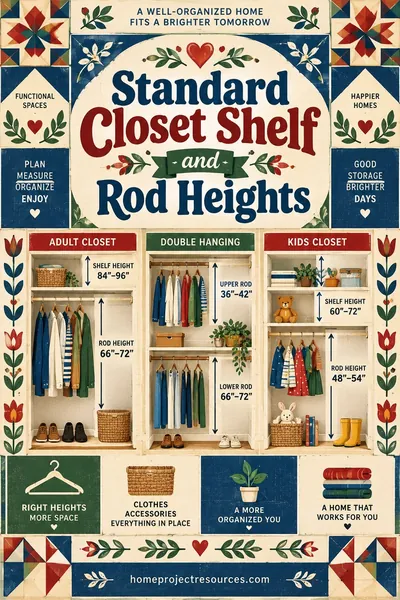
- Single rod: about 66 inches from the floor.
- Double-hang rods: about 40 and 82 inches.
- Top shelf: about 84 inches; shelves 12 to 16 inches deep.
- Hang rods at least 12 inches out from the back wall.
- Declutter and measure before you buy any organizer.
Free calculator from Home Project Resources
Closet Idea Finder: 5 Layouts and Shelf Heights for Your Closet
Pick your closet type and size. You get five layout ideas and the rod and shelf heights to use.
Need more? Open the free Paint Calculator.
 Paint Calculator
 Square Footage Calculator
 Wallpaper Calculator
The Closet Idea Finder above gives you a starting layout. Pick your closet type (a reach-in bedroom closet, a walk-in, a kid's closet, or a coat or entry closet) and its size (small, under 4 feet wide; medium, 4 to 8 feet; or large, over 8 feet). You get five layout ideas plus the rod and shelf heights to use, so you can sketch the plan before you shop.
Quick reference: closet rod and shelf heights
| Item | Typical height from the floor |
|---|---|
| Single hanging rod | About 66 inches |
| Long-hang rod (dresses, coats) | About 66 to 70 inches |
| Double-hang rods | About 40 and 82 inches, divider shelf at about 42 |
| Shelf above a rod | About 2 to 3 inches above the rod |
| Top shelf | About 84 inches |
| Kids' rod | About 40 to 58 inches, by age |
Shelves in a hanging closet are usually 12 inches deep for shoes and folded items and 14 to 16 inches deep above a rod. Anything deeper than about 16 inches tends to become a black hole where things get lost at the back. Our closet shelf height guide explains each measurement in more detail.
Step one: empty, sort and clean
It's tempting to start with a cart full of bins, but you can't plan storage for things you're about to give away. Set aside an afternoon and work through it in this order:
- Take everything out and put it on the bed.
- Sort into four piles: keep, donate, repair or clean, and toss.
- Dust the shelves, wipe the rod and vacuum the floor while it's empty.
- Measure the closet (see the next section).
- Plan zones: long-hang, double-hang, folded, shoes, accessories and storage up top.
- Put things back by category, with what you use most between your shoulders and knees.
The "keep" pile is usually smaller than people expect, and that changes what you need to buy. I'd rather end up with one fewer organizer than a closet full of bins holding things nobody wears.
How to measure your closet
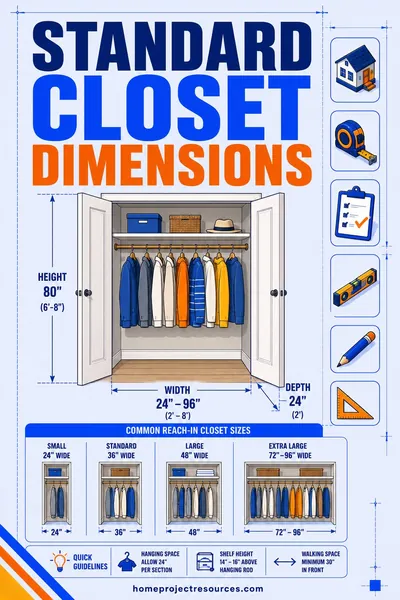
Measure the width wall to wall at the back, the depth from the back wall to the inside of the door frame, and the height from the floor to the ceiling. Write down where the door swings, how far the trim sticks in on each side of the opening, and where any light, outlet or switch sits, since those limit where shelves can go. A reach-in closet that only shows a 4-foot door opening is often wider inside, and those hidden "returns" on each side are great spots for shelves or hooks.
Depth matters most for hanging clothes. Hangers are roughly 17 to 19 inches wide, which is why a standard reach-in is about 24 inches deep, and why the rod goes at least 12 inches out from the back wall so clothes don't press against it. If you're unsure of the marks on your tape, see how to read a tape measure, and for typical reach-in sizes, check standard closet dimensions. The square footage calculator is handy for a walk-in floor plan.
A worked example: a 6-foot reach-in closet
Say you have a typical bedroom closet, 6 feet wide and 24 inches deep, with one rod at 66 inches and a single shelf above it. That's 6 feet of hanging space, and a lot of empty air below most shirts, since most shirts are under 40 inches long.
Here's how I'd split it. On the left 4 feet, put double-hang rods at about 40 and 82 inches with a divider shelf at about 42 inches: shirts on top, folded pants or skirts on the bottom. On the right 2 feet, keep a single long-hang rod at about 66 to 70 inches for dresses and coats, with a short shoe shelf or two underneath. Add a full-width top shelf at about 84 inches for labeled bins of off-season clothes. Hanging space goes from 6 feet of rod to about 10 feet (4 + 4 + 2), and you gain shoe storage and a bin shelf. Finish with hooks on the side returns for bags and belts, and slim matching hangers throughout.
While the closet is empty, it's the easiest time to paint it. The free paint calculator tells you how much to buy for the walls and shelves, and a light color makes it much easier to find things.
Small closet organization ideas
In a small reach-in, every inch counts. Double-hang rods are the biggest win. Use the full height by adding a second shelf above the first for bins of off-season clothes. The back of the door can hold over-the-door hooks, a slim shoe organizer or a mirror, as long as the door still closes. Fabric hanging shelves hang from the rod and hold folded sweaters and jeans. Slim matching hangers take less space than bulky plastic or wood ones and make the whole closet look tidier.
Move bulky things out if you can. Winter coats can live in the coat closet, and spare bedding can go in bins under the bed (our bed sizes chart lists heights and widths to measure for). Hooks on the side walls hold tomorrow's outfit, scarves and belts.
Walk-in closet layouts
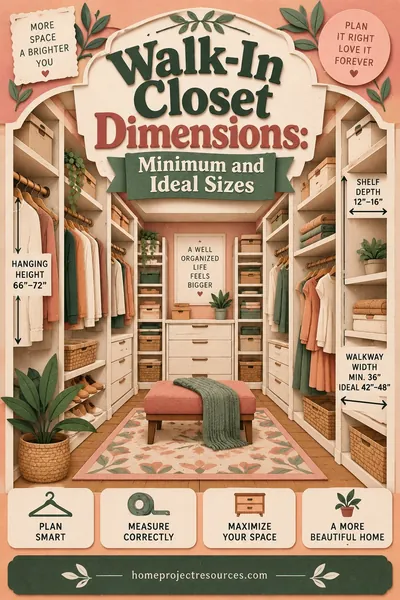
Walk-ins come in four basic layouts: one wall, two parallel walls, an L-shape or a U-shape. A U-shape stores the most. In a shared closet, zone by person, giving each one a wall or a side. Adding drawers lets folded clothes move out of the bedroom dresser. Light it well, either with a bright overhead fixture or battery-powered motion lights, because a dim closet is hard to keep organized.
An island or bench only works in a wide closet. Plan on about 10 feet across or more, so you keep comfortable walking space around it. If you're planning a new walk-in, walk-in closet dimensions lists minimum widths for each layout.
Kids' closets that grow with them
Hang the rod low, about 40 to 45 inches for ages 3 to 6 and about 52 to 58 inches for ages 7 to 12, so kids can hang up their own clothes. Put a higher rod or shelf above it for out-of-season things, and raise the low rod as they grow. Adjustable shelving on standards and brackets makes that easy. Picture labels on bins help little ones who can't read yet, and hooks at kid height catch backpacks, jackets and pajamas. Keep the categories few and simple: kids can keep up with "shirts, pants, pajamas, shoes," but not twelve bins.
Coat and entry closets
Use hooks for everyday coats and the rod for guest and dressy coats. Give each person one bin on the shelf for hats, gloves and scarves. A boot tray on the floor catches slush and salt in winter. Before holiday parties, clear a section of the rod and add a few spare hangers so guests' coats have somewhere to go. If you're tackling other storage spots too, see pantry shelf height and garage storage systems.
Installing rods and shelves so they hold
Closet rods and shelves carry a surprising amount of weight once they're full of clothes, so mount them into studs whenever you can. A stud finder makes this quick; studs are usually 16 inches apart. Where there's no stud, use anchors rated for the load, following the organizer maker's instructions. Long rods sag in the middle, so add a center support bracket on spans longer than about 4 feet.
Use screws sized for the bracket and the wall (our types of screws guide helps), and check that each shelf is level before you load it. If you move an old shelf and leave holes behind, how to patch drywall covers small holes in a few minutes. Turn off the power at the breaker before working near a closet light fixture.
What to buy, and what to skip
Buy organizers only after you've decluttered and measured. Start with the cheap, high-impact pieces: a second rod with brackets, slim hangers, a few bins with labels and some hooks. Prices are typical US ranges that vary by region and store, but a basic double-hang conversion usually costs far less than a full closet system. Skip shelves deeper than about 16 inches, organizers that ignore the door swing or the trim, and dozens of small categories. Big, simple zones are easier to keep up.
Keeping it organized all year
Leave a little breathing room so clothes don't wrinkle, and put things back in their zone. Twice a year, swap off-season clothes into the top-shelf bins. A simple trick for finding what you never wear: hang everything with the hangers facing backward, and when you wear something, turn its hanger around. After a year, you'll know exactly what to donate. The long New Year weekend is a good time for a reset; start with the closet you use most.
Quick answers about closet organization
How do you organize a small closet?
Add a second rod for double-hanging, use the full height with an extra shelf and labeled bins, put hooks or a slim shoe organizer on the door, and switch to slim matching hangers. Move bulky items like winter coats and spare bedding somewhere else if you can.
How do you organize a closet step by step?
Empty it, sort into keep, donate, repair and toss, clean it, then measure. Plan zones for long-hang, double-hang, folded items, shoes and storage up top. Put things back by category, with everyday items between your shoulders and knees.
What height should closet rods be?
About 66 inches for a single rod and about 40 and 82 inches for double-hang rods, with a top shelf at about 84 inches. A long-hang rod for dresses and coats sits around 66 to 70 inches, and kids' rods go lower so they can reach.
How deep should closet shelves be?
About 12 inches for shoes and folded items, and 14 to 16 inches for the shelf above a hanging rod. Shelves deeper than about 16 inches get hard to use because things disappear at the back.
How deep does a closet need to be for hanging clothes?
About 24 inches is standard for a reach-in, because hangers are roughly 17 to 19 inches wide. Mount the rod at least 12 inches out from the back wall so clothes hang freely without pressing against it.
What are good walk-in closet ideas?
Use an L or U-shaped layout to store the most, zone by person in a shared closet, add drawers for folded clothes, and light it well. Add an island or bench only if the closet is about 10 feet wide or more.
How do I keep a closet rod from sagging?
Mount the end brackets into studs or rated anchors, and add a center support bracket on spans longer than about 4 feet. Don't overload one section; spread heavy coats along the rod and leave a little breathing room between hangers.
How should I organize a kid's closet?
Hang the rod at kid height, about 40 to 45 inches for ages 3 to 6, and raise it as they grow. Use picture labels on bins, hooks at their height for backpacks and pajamas, and only a few simple categories so they can keep it tidy.