Cost to Replace a Garage Door: What Drives the Price and What to Ask in a Quote

The cost to replace a garage door comes down to a handful of things: the size of the door, the material, the insulation, any windows or fancy panels, whether you need a new opener, local labor rates, and whether removing the old door is included. A single basic steel door sits at the lower end of the range. A large insulated door, or one made of wood or glass, sits much higher.
You won't find a price list on this page, and that's on purpose. Garage door prices are typical US ranges that swing a lot by region, by home and by season, and they change often. What I can give you is a clear picture of what pushes the number up or down, so you can read quotes with confidence and ask the right questions. Get at least three written quotes from licensed installers, and compare them line by line.
Key facts
- Size and material are the two biggest cost drivers.
- Insulation, windows, style and a new opener all add to the bill.
- Haul-away of the old door, trim repair and permits may be extra.
- Get at least three written quotes from licensed, insured installers.
- Springs and cables are dangerous: this is not a DIY job.
Free calculator from Home Project Resources
Garage Door Cost Planner: Drivers and an Add-On List
Pick the door size and material. You get the cost drivers and an add-on list, not a price.
Need more? Open the free Paint Calculator.
 Paint Calculator
 Square Footage Calculator
 Wallpaper Calculator
The Garage Door Cost Planner above doesn't give a dollar figure. Instead, pick your door size (a single door for one car, a double door for two cars, or an oversize or custom opening) and your material and insulation (basic steel with no insulation, insulated steel, or wood, glass or custom). It tells you where that combination usually sits in the range, lower, mid or upper, and gives you an add-on list to bring to each installer.
Quick reference: what drives the cost
| Driver | How it changes the cost |
|---|---|
| Size | Bigger doors need more material and heavier hardware. |
| Material | Steel is common; wood, glass and custom designs usually cost more. |
| Insulation | Costs more; helps with temperature and noise. |
| Style and windows | Decorative panels, windows and colors add cost. |
| Hardware and springs | Heavier, longer-lasting parts cost more up front. |
| Opener | A new opener, extra remotes or smart features add to the bill. |
| Labor | Varies by region and by how tricky the job is. |
| Removal and haul-away | Taking the old door away may be extra. |
| Framing, trim and repairs | Rot or damage around the opening adds work. |
| Permit | Some places require one. |
Size: the first number on every quote
Size sets the baseline. A single door for one car, usually 8 or 9 feet wide and 7 feet tall, uses the least material and sits at the lower end of the range. A double door for two cars, usually 16 feet wide, needs more panels, longer tracks and stronger springs to carry the extra weight. An oversize or custom opening, like an 18 foot wide door or an 8 foot tall door for a truck, adds more again, and custom sizes can take longer to arrive.
If you aren't sure what you have, our guide to garage door sizes and two car garage dimensions lists the common widths and heights and shows how to measure the opening, headroom and side room. Knowing your exact size before you call makes every quote easier to compare. If you're thinking of changing the size, expect a bigger bill, since a wider or taller opening can mean a new header and new framing.
Material and insulation, side by side
Most replacement doors are steel, and basic steel with no insulation is usually the lower-cost choice. It does the job, but it has less insulation and less sound control, so it can feel thin and noisy, and the garage stays as hot or cold as the weather. For a detached garage that only holds the car and the lawn mower, that may be all you need.
Insulated steel costs more, and it helps with temperature and noise, especially in an attached garage that shares a wall with the house. If a bedroom sits above the garage, or you use the space as a workshop or play area, insulation is often worth it. Ask each installer what the insulation is and what its R-value is, since "insulated" covers a wide range. Our R-value insulation chart helps you make sense of the numbers.
Wood, glass and custom designs sit at the upper end. Real wood looks beautiful but needs regular finishing to stay that way. Glass and aluminum doors look modern and let in light, but they cost more and offer less insulation unless you choose insulated glass. Custom styles, carriage-house looks and special colors add to the price as well.
The add-ons that quietly raise the total
Two quotes for the "same" door can be far apart because of what's included. A new opener, extra remotes, a keypad or smart features all add to the bill. Heavier springs rated for more cycles cost more up front but often last longer. Weather seals on the bottom and sides, new trim and a new jamb may be listed separately, or left out entirely.
Removal and haul-away of the old door is a common surprise. Some installers include it, some charge extra, and some leave it for you. If the wood around the opening is rotten or damaged, the installer may need to repair it before the new door can go in, and that adds labor. Some places also require a permit, especially when you change the size of the opening or wind-load rules apply. Our guide on whether you need a permit explains how to check with your local building office.
Questions to ask every installer
I like to bring the same short list to every installer, so each quote answers the same questions. First, is removal and haul-away of the old door included? Are the springs, cables, tracks and rollers new, or reused? Is a new opener included, and does it have safety sensors? What is the insulation, and what is its R-value? Are bottom and side weather seals part of the job, and is new trim or a new jamb needed? What is the warranty on the door, the parts and the labor? And finally, is a permit needed, and who pulls it?
Write the answers right on each quote. When you sit down to compare, you'll see at a glance which one leaves things out.
A worked example: comparing three quotes
Say you're replacing a 16 foot double door on an attached garage, and you've asked for insulated steel with a new opener. Quote A has the lowest total, but when you read the lines, it reuses your old tracks and springs and doesn't mention haul-away. Quote B is in the middle, includes new springs, cables, tracks and rollers, a new opener with safety sensors and haul-away, and lists a clear R-value. Quote C is the highest, and it adds new trim and a new jamb because the installer found soft wood at the bottom of the frame.
The cheapest total isn't automatically the best deal here. Quote A may look like a bargain until you pay separately for removal and replace worn springs a year later. Quote C may be the honest one if the frame really is rotting, so ask the other two installers whether they saw the same damage. This is exactly why giving each installer the same details, size, material, insulation, windows and opener, matters so much. Our guide on how to compare contractor bids covers how to line quotes up fairly.
Repair or replace?
Not every tired door needs replacing. A single dented panel, a bad opener or a worn roller can often be fixed, and a pro may be able to swap just the damaged section. If your door is badly rusted, warped, very noisy or out of balance, or it's an older door with a broken track, a full replacement is often the better value. Cold weather makes any door stiffer and louder, so a winter groan isn't always a sign it's time for a new one.
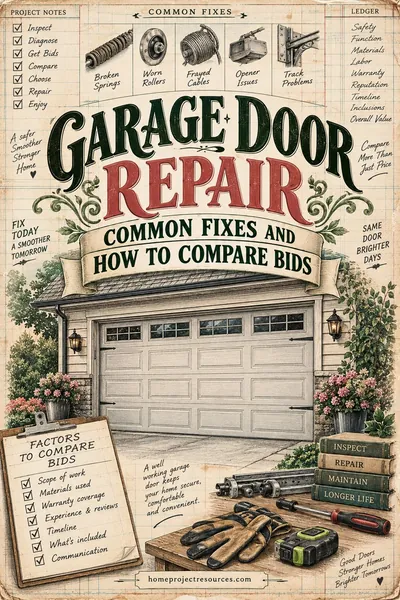
The fair way to decide is to ask installers for both options and compare. Our guide to garage door repair walks through the common fixes, so you know what's simple and what's a warning sign. If the door is part of a bigger plan, the garage remodel cost guide covers the rest of the space.
Why this isn't a DIY job
Garage door springs and cables hold a lot of stored energy, enough to lift a door that weighs a few hundred pounds. A slip while loosening or replacing them can cause serious injury. Never replace springs or cables yourself. A trained pro should handle the springs, the cables and the full install, and should test the auto-reverse and the safety sensors before leaving.
There are still plenty of jobs you can do safely. You can measure the opening, clear the garage so the crew has room to work, research styles and colors, and paint the trim around the opening afterward. If you're painting that trim or the inside walls while the garage is empty, our paint calculator tells you how many gallons to buy.
Ways to keep the cost down
Start with the size you already have. Keeping the existing opening avoids framing work and a likely permit. Choose a standard size and a stocked style rather than a custom one, since standard doors are usually cheaper and arrive faster. If the garage is detached and unheated, basic steel may be all you need, and you can put the savings toward good springs and seals.
Keep your opener if it's in good shape and has working safety sensors, but ask the installer to check it. Ask about timing too, since parts can take weeks to arrive, and planning ahead lets you get quotes without pressure. Check references and reviews for every installer, and watch for the warning signs in our guide to contractor red flags, like a big cash deposit or a quote that won't go in writing.
Winter and weather notes
Insulation matters most for an attached or heated garage, and it makes a real difference to the room above or beside it. Ask about weather seals on the bottom and sides to keep out drafts, rain and snow. A good bottom seal also helps keep leaves and mice out. If your area has wind-load rules, the installer may need a reinforced door, and that can add to the price. In very cold places, a well-sealed, insulated door helps protect anything you store in the garage, from paint cans to a spare freezer.
A new garage door also changes how your home looks from the street, which is one reason people weigh it in home improvement ROI. For more free planning tools, including our square footage calculator, visit the home page.
Quick answers about garage door replacement cost
How much does it cost to replace a garage door?
It depends on the size, material, insulation, style, windows, opener and your local labor rates. Prices are typical US ranges that vary a lot by region and change often, so this page doesn't list figures. Get written quotes from at least three licensed installers and compare what each one includes.
What makes a garage door cost more?
A larger size, insulation, wood or glass, custom styles, windows, stronger hardware and a new opener all add cost. Removing and hauling away the old door, repairing rotten framing or trim, and pulling a permit can add more. Ask each installer to list these as separate lines so you can see them.
Is an insulated garage door worth it?
It can be if the garage is attached, heated, sits under a bedroom or is used as a workshop. Insulation helps with temperature and noise. Ask installers about the R-value, since "insulated" covers a wide range, and compare what each one offers before you decide.
Can I replace a garage door myself?
It isn't a good DIY job. Springs and cables are under high tension and can cause serious injury if they slip or snap. Hire a trained pro for the springs, cables and installation. You can still measure, clear the space, pick a style and paint the trim afterward.
Should I replace just the panels or the whole door?
If one panel is damaged, a pro may be able to replace only that section, as long as matching panels are still made. If the door is old, rusted, warped or the track is damaged, a full replacement can be a better value. Ask installers to quote both options.
Do I need a permit to replace a garage door?
Some areas need one, especially if you change the size of the opening or wind-load rules apply. A same-size swap often doesn't, but rules vary. Ask your local building office or your installer, and find out who will pull the permit if one is required.
How long does a garage door replacement take?
The install itself is often done in a day for a standard door. The wait for the door can be longer, since parts and custom sizes can take weeks to arrive. Ask each installer about timing when you request a quote, so you can plan around it.
What warranty should I look for?
Ask about three separate warranties: the door itself, the parts such as springs and the opener, and the installer's labor. They often have different lengths. Get every warranty in writing, and keep it with your quote and receipt so you can find it if something goes wrong.