How to Fix Christmas Lights: Replace the Fuse, Find the Bad Bulb and Fix Half-Dark Strands

To fix Christmas lights, unplug the strand first, then work from the easiest fix to the hardest: check the outlet and plug, replace the tiny fuses in the plug, then find the loose, broken or missing bulb that's knocking out a section. When a whole strand is dark, it's usually the fuse. When half a strand is out, it's usually one bad bulb in that half. Most strands are fixed in 10 to 20 minutes.
The rest of this guide explains why strands fail the way they do, walks through each fix in order, and tells you when a strand isn't worth saving. Do the work on a table or the floor, in good light, not with the lights wound through a tree.
Key facts
- Always unplug before touching a fuse, bulb or socket.
- Whole strand dark: check the outlet, then the fuses in the male plug.
- Section dark: the bad bulb is inside that section, not the lit part.
- Replace fuses with the same amp rating, and bulbs with the same voltage.
- Cracked sockets, bare wire or a hot plug means retire the strand.
Free calculator from Home Project Resources
Light Strand Fixer: What's Wrong and What to Try First
Pick what your lights are doing and what kind they are. You get the likely cause and the order to try fixes in, starting with unplugging.
Need more? Open the free Paint Calculator.
 Paint Calculator
 Square Footage Calculator
 Wallpaper Calculator
In the Light Strand Fixer, choose what the lights are doing: whole strand dark, half or a section dark, one bulb out with the rest working, flickering, or works then cuts out or blows fuses. Then choose the type: mini lights with removable bulbs, or LED lights with sealed bulbs. You'll get the most likely cause and a numbered order of fixes to try, always starting with unplugging, plus a reminder of when to retire the strand.
Quick reference: what you see and what to try first
| What you see | Most likely cause | Try first |
|---|---|---|
| Whole strand dark | Blown fuse, tripped GFCI or dead outlet | Test the outlet, then replace plug fuses |
| A half or a third dark | Loose, broken or missing bulb in that section | Push in every bulb in the dark section |
| One bulb out, rest lit | That bulb burned out | Replace it soon |
| Flickering | Loose bulb or plug connection | Reseat bulbs, check plug joints |
| Works, then cuts out | Too many strands linked, or a short | Connect fewer strands, inspect sockets |
Safety before you start
Unplug the strand before you touch a fuse, pull a bulb or wiggle a socket. Plug it back in only to test, then unplug again before the next step. It's tempting to work on a live strand so you can see the moment it lights, and that's exactly how people get a shock from a cracked socket.
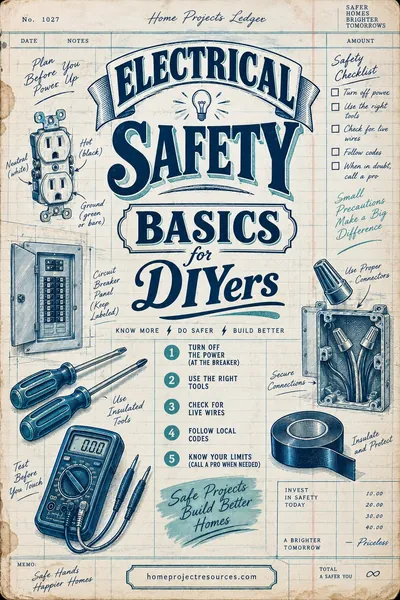
Never bypass a fuse with foil, wire or a bigger fuse. The fuse is there to stop the thin wires from overheating, and defeating it turns a dead strand into a fire risk. Retire damaged lights: cracked or melted sockets, bare wire, chewed cords or a plug that gets hot all mean the strand goes to recycling, not back on the tree. Outdoor lights should be marked for outdoor use and plugged into a GFCI outlet. If an outlet itself seems faulty, such as scorch marks, a loose fit or a breaker that keeps tripping, stop and read our electrical safety basics; that's a job for a licensed electrician.
How a mini-light strand is wired
Knowing the wiring makes the hunt for a bad bulb much faster. Most mini-light strands are wired in sections, often of about 50 bulbs each. A 100-light strand usually has two sections, and a 150-light strand three. Inside each section, the bulbs sit in a chain, one after another. Electricity has to pass through every bulb in the chain to light it.
Each bulb has a tiny shunt inside. When the filament burns out, the shunt is meant to close the gap so the rest of the section stays lit. That's why you can have one dark bulb on an otherwise working strand. But if a bulb is loose, cracked, missing, or its shunt doesn't kick in, the chain breaks and the whole section goes dark.
The good news is that a dark section almost always means the problem is somewhere inside it. You don't need to check the lit part at all. On a 100-light strand with one half out, you're looking at about 50 bulbs, not 100.
Fix 1: the outlet and the plug
When the whole strand is dark, start with the simplest thing. Plug a lamp or phone charger into the same outlet. If that doesn't work either, look for a tripped GFCI outlet, which has Test and Reset buttons and is common in kitchens, bathrooms, garages and outdoors. Press Reset firmly. A GFCI can also protect other outlets further down the line, so a dead porch outlet may be fed by a tripped GFCI in the garage. Also check the breaker panel for a tripped breaker.
If the outlet works, look at the plug. Make sure strands are pushed fully together where they connect, and that the first strand isn't plugged into a loose extension cord. A timer that's switched off or set wrong is another easy one to miss.
Fix 2: replace the plug fuses
If the outlet is fine and the strand is still dark, the fuses are next. They live inside the male plug, the end with the prongs.
Unplug the strand from the wall and from any other strand. Find the small sliding door on top of the plug, often marked with an arrow, and slide it open with a small flat screwdriver or a fingernail. Pop out the one or two tiny glass fuses and look at them. Fit new fuses with the same amp rating, close the door and test.
A blown fuse looks dark or cloudy inside, or the thin wire inside is broken. The amp rating is usually printed on the plug or on the spare-fuse pack; many strands come with spare fuses and bulbs in a little bag taped to the cord. If you don't have spares, take the old fuse to a hardware store to match it.
If the new fuse blows right away, stop. Something is shorting: too many strands connected end to end, a damaged socket or water in an outdoor plug. Check the box for how many strands you can connect, and retire the strand if you can't find the fault.
Fix 3: find the bad bulb in a dark section
Start by looking. With the strand unplugged, scan the dark section for a bulb that's missing, cracked, blackened or sitting crooked in its socket. A missing bulb is easy to miss on a busy tree, and it breaks the chain just as surely as a broken one.
Next, press every bulb in. Plug in and gently push each bulb in the dark section into its socket, working from where the dark section begins. A loose bulb is the most common cause, and sometimes the section pops back on halfway along.
If that doesn't work, swap one at a time. Unplug, pull a bulb, and fit a known-good spare of the same voltage. Test, then move to the next. Check each bulb's two thin wires as you go; if they're bent or broken where they go into the base, straighten them gently or swap the bulb. Match the voltage printed on the spare-bulb pack that came with the strand, because the wrong voltage can make the other bulbs burn out faster.
A handheld Christmas light tester, sold at hardware stores, speeds this up a lot. Many can find the bad bulb by sensing where power stops, and some can fix a stuck shunt with a click. Follow the tool's own directions. A multimeter can also check fuses and bulbs for continuity; our guide on what a multimeter is used for covers the basics, and it's a handy addition to the essential tools every homeowner needs.
Flickering or cutting out
Flickering usually means a loose connection. Push the bulbs in, check that plugs are snug where strands connect, and make sure the outlet itself isn't loose. If one bulb flickers, replace it. If an LED strand flickers in a steady, even pulse, that can be how some LED sets are built, not a fault.
A strand that works for a while and then cuts out, or keeps blowing fuses, is usually overloaded. Count how many strands are linked and compare with the box. Split long chains so each starts from its own outlet on a power strip with a built-in breaker. If it still cuts out, look closely along the cord for a crushed spot, a cut from a staple or clip, or a melted socket.
LED sets and sealed bulbs
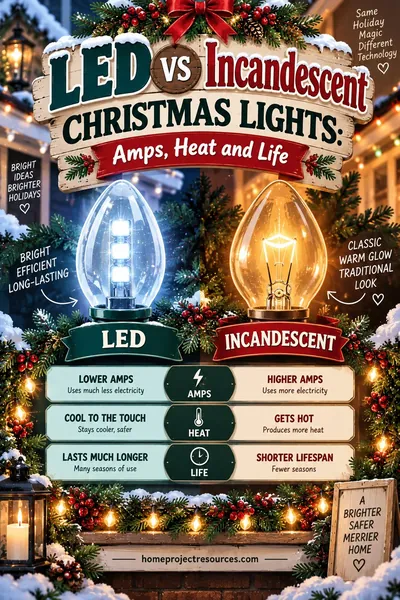
Some LED strands have removable bulbs, and you fix them just like mini lights. Many newer LED sets have bulbs sealed in place, so you can't swap one. With those, check the fuses in the plug and, if there's a controller box for twinkle or color modes, check that its plug is snug and try a different mode. If a sealed section stays dark after that, the strand is usually done. Our guide to LED vs incandescent Christmas lights explains the trade-offs if you're choosing replacements.
Battery-powered sets are simpler: fresh batteries, clean contacts, and the switch or timer set correctly. Wipe lightly corroded contacts with a dry cloth. When you swap batteries, see how to dispose of batteries safely.
Outdoor strands: water and GFCI trips
Outdoors, water is the usual suspect. A plug joint sitting in a puddle or packed with snow can trip the GFCI or cause flicker. Keep connections off the ground, point them downward, and cover them with a connection cover made for outdoor lights. Use only lights and extension cords rated for outdoor use. If the GFCI trips every time it rains, unplug everything and plug strands in one at a time to find the one causing it.
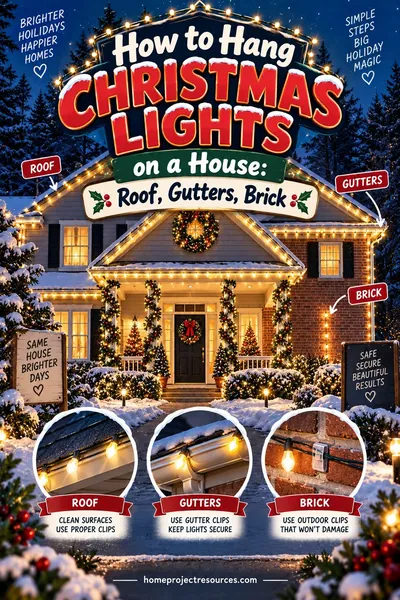
Fix outdoor strands on the ground or a table, not from a ladder. Our guide on how to hang Christmas lights on a house covers clips, ladder safety and timers.
Store them so they work next year
Most dead strands in December were damaged in January. Test each strand as you take it down, and fix or toss the bad ones while you still remember which they are. Wrap strands loosely around a piece of cardboard or a hanger instead of balling them up, which kinks wires and loosens bulbs. Store the spare bulbs and fuses in the same bag as the strand, and keep lights somewhere cool and dry, away from damp basements and hot attics.
Our guide on when to take down Christmas decorations has a full packing order. Once your lights work again, our Christmas tree light ideas show how many your tree needs, and the Christmas village display ideas cover lighting a village safely. For bigger projects around the house, see our free home project calculators, including the square footage calculator.
Quick answers about fixing Christmas lights
Why is half of my Christmas light strand out?
Most mini-light strands are wired in sections, often about 50 bulbs each. One loose, broken or missing bulb breaks the chain in its section and darkens it, while the rest stays lit. Unplug the strand, look for a damaged or missing bulb, then push in and check each bulb in the dark section.
How do you replace a fuse in Christmas lights?
Unplug the strand, slide open the little door on the male plug, and pop out the tiny glass fuses. Put in new ones with the same amp rating, close the door and test. Spare fuses often come in a small bag taped to the cord. If a new fuse blows right away, look for a short or an overloaded chain.
How do you find a bad bulb in Christmas lights?
Unplug the strand and look for a missing, cracked, blackened or crooked bulb in the dark section. Then push each bulb in, or swap them one at a time with a spare of the same voltage. A handheld light tester from a hardware store can find where power stops much faster.
Can you fix LED Christmas lights?
Sometimes. If the bulbs come out, fix them like mini lights. If they're sealed in, check the plug fuses and any controller box. A sealed section that stays dark after that usually means the strand has reached the end of its life and is best recycled.
Is it safe to fix Christmas lights yourself?
Yes, for simple fixes like fuses and bulbs, as long as the strand is unplugged while you work. Never bypass a fuse with foil or wire, and retire any strand with cracked sockets, bare wire or a plug that gets hot. Leave faulty outlets and breakers to a licensed electrician.
Why do my Christmas lights keep blowing fuses?
Usually too many strands are connected end to end, or there's a short from a damaged socket or water in a plug. Connect fewer strands, starting new chains from separate outlets, and inspect the whole cord. If you can't find the fault, retire the strand rather than fitting a bigger fuse.
Why does one bulb go out but the rest stay lit?
That bulb's filament has burned out and its shunt did its job, keeping the circuit closed. Replace it soon with a spare of the same voltage. Leaving burned-out bulbs in place puts a little more voltage on the others, which can make them burn out faster.