Roof Repair Cost

A roof repair cost is driven almost entirely by scope, and scope on a roof is a strange thing. The size of the wet spot on your ceiling tells you nothing. A leak the size of a quarter can be a twenty minute fix or a half day of taking a chimney apart, and the difference has nothing to do with how much water came in. It has to do with what failed, how steep the roof is above it, how much intact roofing has to come off to reach the failure, and whether the deck under it survived.
That is why the useful question is not what a repair costs. It is what exactly is being repaired, stated on paper, so that two or three roofers are pricing the same work.
Updated September 2026
A note on numbers. You will not find dollar figures on this page. Repair labor is priced locally and moves with the season, the storm cycle, and how backed up your local crews are, so any range printed here would be wrong for most readers and stale for the rest within a month. What you get instead is the diagnosis, the line items a written repair quote has to contain, the factors that make a small job expensive, and the method for getting two or three bids on one identical scope.
Know how much roof you have before anyone climbs on it. Run your footprint and pitch through our free roofing calculator. Even for a repair, the square count and the pitch are the two numbers that frame every conversation that follows, and the pitch in particular is the one that quietly doubles the labor on a small job.
Leaks are almost never in the field of the roof
The open field of shingles, the big uninterrupted planes, is the part of a roof that almost never leaks. Shingles are good at shedding water down a slope. What fails is every place the slope gets interrupted: a pipe coming through, a wall meeting the roof, a chimney, a valley where two planes collide, a skylight curb, the edge where the roof stops.
Two consequences follow. First, when you look for the source, look at penetrations and transitions, not at the middle of a plane. Second, water travels. It comes in at a flashing, runs down a rafter or along the underside of the deck, and drips through the ceiling six or ten feet away and on the other side of a wall. The stain on your ceiling marks where the water gave up, not where it got in. Any roofer who quotes a repair based only on the location of the interior stain has not found the leak.
Diagnose the leak by symptom first
Work through this before you call anyone. Knowing the likely failure changes the questions you ask and makes it much harder for a repair to expand on you.
| What you are seeing | Most likely source | What the repair usually involves |
|---|---|---|
| Round stain on the ceiling near a bathroom or kitchen, worse in heavy rain | Cracked or split pipe boot around a plumbing vent | Lift the surrounding courses, remove the old boot, install a new boot or a metal flashing with a replaceable collar, reset shingles |
| Stain running down an interior wall where an upper roof meets a wall | Failed or missing step flashing, or a missing kickout at the bottom of that run | Open the wall-to-roof transition, install new step flashing woven course by course, add a kickout diverter, often siding work too |
| Stain near the chimney, worse on the uphill side | Counterflashing pulled out of the mortar joint, failed cricket, or no cricket at all | Cut a new reglet in the masonry, install step and counterflashing, build a cricket on the uphill side if the chimney is wide |
| Stain in line with a valley | Debris damming the valley, punctured valley metal, or nails driven too close to the center | Clear and inspect, then open the valley and replace the metal with correctly set courses |
| Sudden leak after a windy storm, shingles visible in the yard | Blown off or lifted shingles, often at a rake edge or a ridge | Replace missing shingles, hand seal the surrounding field, check the starter course at the edge |
| Small dark dots on the attic side of the deck, occasional drips with no pattern | Nail pops, or fasteners that missed the rafter and are sweating | Reseal or replace affected fasteners from above, sometimes a small section reroofed |
| Water at the upper corners of a skylight | Curb flashing, head flashing, or a failed seal on the unit itself | Strip back the courses around the curb, install new head, sill, and step flashing, or replace the unit |
| Leak only during a thaw after snow, along the eaves | Ice dam, not a roofing defect | Address the attic heat loss and ventilation, membrane at the eave when the roof is next opened |
| Leak only during wind-driven rain from one direction | Underlayment or edge detail, drip edge missing, water pushed under the courses | Edge metal and starter work, sometimes a section of underlayment |
| Interior stain with no leak at all during rain | Condensation in the attic, or a bathroom fan venting into the attic | Ventilation and duct work, not roofing |
The ice dam case deserves flagging because it is misdiagnosed constantly. A roof that only leaks after a snowfall, along the lower two or three feet of the slope, is usually telling you about heat escaping into the attic rather than about failed shingles. Replacing shingles there fixes nothing. Ice dams on the roof explains the mechanism and the fix order, which is air sealing first, insulation second, ventilation third.
Before you commit to any diagnosis, do the inspection yourself in the attic on a bright day and again during rain if you can. Our roof inspection checklist walks the five zones, including what a leak looks like from the underside of the deck, and it will let you describe the problem in a roofer's vocabulary.
What a roof repair cost line item must specify
A repair quote that says "repair roof leak" is not a quote. It is a blank check with a signature line. Here is what each line of a real repair scope contains.
| Line item | What a complete bid states |
|---|---|
| Location and count | The specific penetration or area, by elevation and by count. "Three pipe boots on the rear slope," not "boots as needed" |
| Extent of removal | How many courses come off around the repair, and how far up and to each side |
| What gets replaced versus reused | Every flashing named individually, with replaced or reused stated for each. Reused flashing is the most common hidden downgrade |
| Underlayment and membrane | Whether new underlayment or self-adhering membrane goes under the repaired area, and which product |
| Shingle match | The product line and color being installed, and an acknowledgment that a weathered roof will not match new material exactly |
| Tie-in method | Where the new shingles lace into the existing field, and whether the courses are woven or the repair is a patch with a visible edge |
| Deck repair basis | A written per sheet unit price for replacing bad sheathing, plus how many sheets are included in the base number |
| Fasteners and sealant | Which sealant, where it is used, and confirmation that sealant is not being used in place of flashing |
| Access and staging | Ladder work, roof jacks, harness anchors, scaffolding, or a lift, and whether landscaping protection is included |
| Cleanup | Debris haul away and a magnet sweep of the ground below the work |
| Warranty on the repair | A stated term for the repair itself, in months or years, in writing |
| Return policy on a recurring leak | What happens if it leaks again in the same place, and who pays to come back |
Two of these carry most of the risk.
Reused flashing. Flashing is the metal that makes a transition watertight, and it is thin, it corrodes, and it fatigues. A repair that lifts shingles, sets them back over the same forty year old step flashing, and runs a bead of sealant along the top will look finished and will leak again. Ask, per flashing, replaced or reused. If reused, ask why.
Sealant used as a repair rather than as a detail. Roofing sealant belongs in specific places, sealing a fastener head, bedding a counterflashing, hand sealing a shingle tab in cold weather. It does not belong smeared over a failed flashing or troweled into a valley. Sealant is not waterproofing; it is a supporting detail that fails in a few seasons under UV. A bid whose method is "seal the affected area" is buying you one summer.
What actually drives the number on a small job
Two repairs that look identical from the driveway can be far apart, for reasons that have nothing to do with the size of the hole.
Mobilization. A crew, a truck, ladders, and a dump trailer show up whether the work takes twenty minutes or six hours. Every roofing company has a practical floor below which a service call is not worth dispatching, and small repairs sit at or near that floor. This is why bundling matters: if you have a bad pipe boot, a loose ridge cap, and a section of missing drip edge, having all three done in one visit is dramatically more efficient than three separate calls.
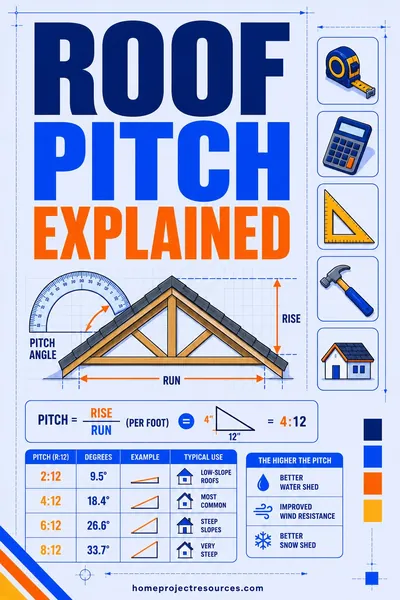
Pitch and walkability. Up to about 6/12 a crew walks the roof and works at normal speed. Past 7/12 they slow down. Past 8/12 they are working off roof jacks and planks with harnesses tied to anchors, and a job that takes an hour on a ranch takes most of a morning. A steep roof also makes hauling materials up and debris down slow. If you do not know your slope, roof pitch explained shows how to measure it from inside the attic with a level and a tape, which takes five minutes and no ladder.
Height and access. Two stories means longer ladders, more staging, and more time spent getting into position. A third story, a walkout basement side, a tight side yard, mature landscaping the crew has to protect, a fence with no gate wide enough for a trailer, and low service lines all add hours before any roofing happens.
How much intact roof has to come apart. This is the driver homeowners never anticipate. Asphalt shingles seal to each other with a thermal adhesive strip, so you cannot simply pull one out. Reaching a failed flashing at a chimney means carefully breaking the seal and lifting several courses above and to each side, doing the work, and re-laying and hand sealing everything you disturbed. The repair is small. The surgery around it is not.
Age and brittleness. On a roof past fifteen or twenty years, shingles crack when they are lifted, especially in cold weather. The crew ends up replacing shingles they only meant to move, and the repair area grows. A roofer who has been on your roof knows this; it is a legitimate reason a bid on an older roof runs above a bid on the same repair on a newer one.
Material matching and availability. Discontinued shingle lines, unusual colors, and old dimensional products may not be available at all. Options are to source from a salvage or overrun supplier, to pull matching shingles from an inconspicuous slope and patch that area with new, or to accept a visible mismatch. Tile, slate, cedar, and standing seam metal all require a specialist rather than a shingle crew, and specialists are scarcer and busier.
Deck condition. Nobody can see the sheathing until the roofing is off. Wet, delaminated, or rotted plywood under a long-running leak turns a flashing repair into a flashing repair plus carpentry. Handle this the same way you handle it on a replacement: get a written per sheet unit price before work starts, and get photographs of every sheet replaced.
Interior repairs are a separate trade. The stained drywall, the wet insulation, the ruined ceiling texture, the painting. Roofers repair roofs. Ask explicitly whether interior work is in or out of the quote, because assuming it is included is a common and expensive misunderstanding.
Emergency versus scheduled. After-hours, weekend, and storm-surge dispatch carries a premium in every market. When the leak is contained by a bucket and a tarp, scheduling the permanent repair for a normal weekday is the single easiest way to reduce what you pay.
Tarps and emergency work
A tarp is a legitimate line item and a legitimate skill, not a sign of a stalling contractor.
When a tarp is the right call: active water entering the house, a large area of missing shingles, storm damage you cannot get permanently repaired for days or weeks, or weather that makes a proper repair impossible right now. Shingles will not seal in cold weather without hand sealing, and open roof work in rain is how a small problem becomes a ceiling replacement.
What a competent tarp looks like. The tarp runs over the ridge, not just up to it, so wind and water cannot get under the top edge. The edges are wrapped around furring strips or 2x4s and the assembly is fastened through the strip, which spreads the load and stops the tarp from tearing off the fasteners in wind. Fasteners land in a pattern that will be repaired, not scattered randomly across sound roofing. The tarp is big enough to extend well past the damage on all sides. Sandbags alone are a parking lot solution, not a roof solution.
Documentation. If this is a storm and you may file a claim, photograph everything before the tarp goes on, then photograph the tarp. Keep the invoice for the emergency work separate from the permanent repair quote. Most policies treat reasonable emergency mitigation as covered and separately reimbursable, and having it on its own invoice makes that straightforward.
Do not sign the permanent contract while the tarp is going on. This is the moment when pressure works, and everybody in the storm-chasing business knows it. Authorize the emergency mitigation, get the leak stopped, and then take a few days to collect real bids. Contractor red flags covers the door-knocking pattern, the authorization form that is actually an assignment of benefits, and the deductible offer that you should treat as a disqualifier.
The repair versus replace decision point
There is a real line here, and it is not about the leak. It is about how much life the rest of the roof has.
| Signal | Points toward repair | Points toward replacement |
|---|---|---|
| Roof age against material lifespan | Well under half its expected life | Past about three quarters of it |
| Number of leaks | One, at an identifiable detail | Multiple leaks in unrelated areas |
| Granule loss | Normal for age, gutters mostly clean | Granules filling gutters, bare mat showing in the field |
| Shingle condition | Flat, sealed, flexible | Curling, cupping, clawing, cracking across whole slopes |
| Deck condition | Sound around the repair | Soft or spongy in several places, sagging between rafters |
| Flashing condition | One detail failed | Rusted, fatigued, or improperly installed throughout |
| Availability of matching material | Product still made | Discontinued, so every repair will be visible anyway |
| How long you plan to stay | Selling within a year or two | Staying long enough to need the roof replaced anyway |
| An insurable event | Isolated damage below your deductible | Widespread hail or wind damage a claim would cover |
The general rule practitioners use: if a repair would consume a large share of what a replacement costs, put the money into the replacement instead, because the repair leaves you with an old roof and a bill. The same logic runs the other direction: on a roof with a decade of life left, a properly done flashing repair is the right answer and replacing the roof is spending future money early. The full picture on the replacement side, including how squares are counted and what a complete replacement bid contains, is in roof replacement cost.
One caution about repeated repairs. Three service calls in three years on different parts of the same roof is a roof telling you something. Add up what you have already spent on it before you approve the fourth.
Getting two or three quotes on one identical scope
This is the whole method, and it is the only reliable way to compare repair bids.
1. Write the scope yourself, first. One page. What you observed, when it leaks, where the interior stain is, what you found in the attic, and what you believe failed. Attach photographs, including attic shots with the flash on showing wet sheathing or daylight.
2. Have each roofer inspect and tell you what they found. Do not lead with your diagnosis. Ask them to identify the source and photograph it. Then compare their finding to yours. A roofer who confirms your suspicion with a photograph of the actual cracked boot is worth more than one who quotes from the driveway.
3. Reconcile the diagnoses before you compare prices. If two roofers say pipe boot and one says the whole rear slope needs replacing, you do not have three bids on one job. You have a disagreement about the problem. Resolve that first, with photographs, and if it will not resolve, pay an independent inspector who does not sell roofing.
4. Then issue one written scope to all of them. Same locations, same count, same flashings replaced not reused, same deck allowance in sheets, same warranty term requested, same cleanup. Ask each to price that document.
5. Ask each of them the same three questions. What is your unit price per sheet for deck replacement above the allowance. What is your warranty on this repair, in writing. What happens if this leaks again in the same spot next spring.
6. Compare line by line, not by total. The bid that is lower because it reuses the chimney flashing is not lower. It is a different job.
7. Verify insurance before anyone gets on the roof. Ask for the certificate of insurance directly from the insurer, and confirm both general liability and workers' compensation. A repair is a small job with the same fall exposure as a large one.
Our guide to how to get contractor bids covers the paperwork side, including payment schedules and what a reasonable deposit looks like on a job this size.
Worked example: one leak at a chimney on a 6/12 roof
A two story house, asphalt shingles about twelve years old, a brick chimney on the rear slope. The stain is on the second floor ceiling roughly four feet downhill of the chimney and appears in sustained rain, not in brief showers. In the attic, on a bright afternoon, there is no daylight, but the sheathing on the uphill side of the chimney is dark and the rafter beside it shows old water tracks running down.
The diagnosis writes itself: water is entering at the chimney, most likely at the counterflashing on the uphill side or at a missing cricket, and running down the rafter before it finds the ceiling.
Here is the scope you hand to three roofers.
| Line | What the scope says |
|---|---|
| Location | Brick chimney, rear slope, roughly centered on the slope, 6/12 pitch, second story |
| Investigation | Open the courses on the uphill and both side elevations of the chimney to expose all flashing |
| Step flashing | Replace all step flashing on both sides, new metal, woven course by course, no reuse |
| Counterflashing | Cut a new reglet into the mortar joints, install and seal new counterflashing, no surface-mounted strip over the old joint |
| Cricket | Build a cricket on the uphill side if the chimney width warrants it, stated as included or excluded with a reason |
| Membrane | Self-adhering membrane on the deck around the chimney before flashings are set |
| Deck | Allowance of four sheets included, with a written per sheet unit price above that, plus photographs of any sheet replaced |
| Shingles | Product line and color stated, courses relaid and hand sealed, tie-in method described |
| Access | Two story rear elevation, ladder and roof jack staging, protection for the beds along that wall |
| Interior | Excluded, homeowner arranging drywall and paint separately |
| Cleanup | Debris removed, magnet sweep of the rear yard |
| Warranty | Stated term on this repair in writing, plus the return policy if the same area leaks |
Three bids on that document are comparable. Three bids on "fix chimney leak" are not, and the gap between them will look like a price difference when it is really a scope difference.
Notice what the scope does not do: it does not tell the roofer how to build the cricket, and it does not insist on a cricket regardless of the chimney's size. It asks for a decision with a reason. That is the tone you want, because a roofer who has to justify an exclusion in writing tends to think about it harder.
What you can safely do yourself
A short list, and a shorter one of things to leave alone.
Reasonable homeowner work, on a walkable roof, in good weather, with someone home: clearing a valley or a gutter of debris, replacing a rubber pipe boot collar with a slip-on repair collar on an otherwise sound boot, resetting and hand sealing a few lifted shingle tabs, replacing loose ridge cap, and tarping. Keeping the gutters clear is genuinely preventive, and how to clean gutters covers doing it without falling off a ladder.
Leave alone: step flashing, chimney counterflashing (it involves cutting masonry), valley metal, skylight curbs, anything on a roof steeper than about 6/12, anything on a second story without proper fall protection, and any repair on a roof still under a workmanship warranty, because doing it yourself voids that warranty.
The interior stain is a separate job and it should wait. Do not patch or paint the ceiling until the roof has been repaired and you have seen the area stay dry through a real rain. Patching first just hides the evidence you need if the repair did not hold, and a fresh stain on fresh paint is its own kind of demoralizing. Water stain on the ceiling covers sequencing the interior work.
FAQ
How do I know if I need a roof repair or a full replacement?
Look at the rest of the roof, not the leak. One failed detail on a roof with granules intact, flat and flexible shingles, and sound decking is a repair. Multiple leaks in unrelated areas, granules filling the gutters, curling across whole slopes, or an age past three quarters of the material's expected life points to replacement. The practitioner's rule is that when a repair would consume a large share of what a replacement takes, the repair is spending money on a roof you are about to lose anyway.
Will homeowners insurance cover a roof repair?
It depends on the cause. Sudden damage from a covered peril, such as wind or hail, is generally covered subject to your deductible. Wear, age, deferred maintenance, and manufacturing defects generally are not. The practical wrinkle on repairs is that many small repairs fall below the deductible, so filing gains you nothing and puts a claim on your record. Get the repair scoped and priced first, then decide whether a claim makes sense.
Can a roofer repair a leak without matching my shingles?
They can repair it, but the patch will be visible if the line is discontinued or your roof has weathered significantly. Ask about three options: sourcing salvage or overrun stock of the original product, pulling matching shingles from an inconspicuous slope such as a rear garage roof and patching that spot with new material, or accepting the mismatch. On a roof close to replacement, accepting the mismatch is usually the sensible call.
How long should a roof repair last?
A properly executed flashing or boot repair on a roof with life left should last as long as the surrounding roof does. A repair that leans on sealant instead of metal will typically start weeping again within a few seasons as UV breaks the sealant down. This is exactly why the written warranty term and the return policy matter more on a repair than on most jobs: they tell you which kind of repair you bought.
Should I have a roof leak repaired in winter?
Stop the water now with a tarp, and schedule the permanent repair for warmer weather when you can. Asphalt shingles have a thermal seal strip that will not activate below roughly the low forties, so cold weather work has to be hand sealed at every disturbed course. Ask specifically whether hand sealing is included if the repair cannot wait.
Why is a small leak so expensive to fix?
Three reasons, and none of them is the size of the hole. A crew and a truck have to mobilize regardless of the job's size. Reaching a failed flashing means breaking the thermal seal and lifting several courses of otherwise sound roofing, doing the work, then relaying and hand sealing all of it. And steep pitch, second story access, and brittle old shingles multiply the time the whole sequence takes.
Do I need a permit for a roof repair?
Most jurisdictions exempt small repairs below a stated area, often something like one or two squares, and require a permit above that or for any structural work such as replacing rafters or large areas of decking. The threshold is local. Ask your building department, and make the bid state who pulls the permit if one is needed. Our do I need a permit page covers how to check without guessing.
Can I just use roof sealant on the leak?
As a temporary stop until a real repair can happen, yes, and it is better than letting water run into the house. As the repair itself, no. Sealant degrades under UV and thermal cycling, and a sealed-over failed flashing will leak again, usually within a couple of seasons and often worse, because by then the deck underneath has been quietly wet the whole time.
Related: Roof replacement cost covers the square count, the full bid checklist, and the material ladder when repair is no longer the answer. Roof inspection checklist walks the five zones so you can find the source yourself. Ice dams on the roof explains the winter-only leak that is not a roofing defect. Roof pitch explained shows how to measure slope from the attic, and the roofing calculator gives you the square count.