Roof Replacement Cost

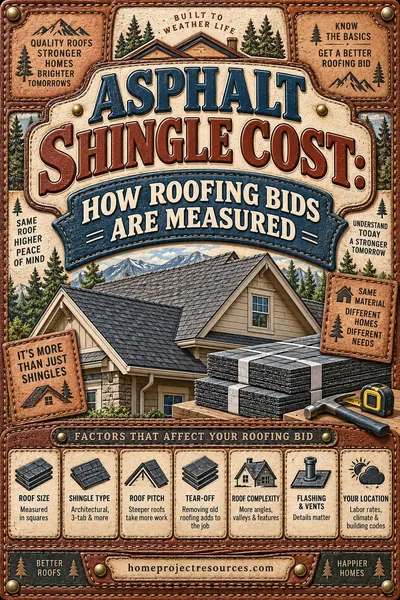
Roofing is priced by the square, and one square is 100 square feet of roof surface. Roof replacement cost therefore starts with a count, not a quote: how many squares you actually have. Five things move the number after that, and the shingle brand is not one of them. How steep the roof is, how many old layers come off, how complicated the roof shape is, how many stories the crew is working above, and what they find under the old shingles.
Updated August 2026
A note on numbers. We do not publish prices. Roofing labor rates swing hard by region and by season, material pricing moves with the shingle market, and anything printed here would be wrong somewhere and out of date everywhere within months. What this page gives you instead is the unit roofers actually quote in, every line item a complete bid contains, and the questions that make three bids comparable.
Know your square count before anyone quotes you. Run your footprint and pitch through our free roofing calculator and you will walk into the first conversation knowing exactly how much roof you are buying.
Why roofers quote in squares, not square feet
This is the single most useful thing to understand before you read a roof estimate.
1 roofing square = 100 square feet of roof surface. A 2,000 square foot roof surface is 20 squares. Shingles are packaged, ordered, delivered, and priced around that unit, usually three bundles to a square. Underlayment comes in rolls sized in squares. Tear off labor is bid per square. Even the dumpster is sized by squares of old shingles.
So when a contractor quotes a rate per square, that rate covers 100 square feet, and dividing it by 100 gives you the per square foot figure. Both numbers describe the same job. If a bid gives you only a lump sum, ask for the square count and the per square rate. A roofer who will not tell you how many squares your roof is has not measured it.
Your roof is bigger than your house
Here is where homeowners get blindsided. A 1,800 square foot house does not have an 1,800 square foot roof. Two things make the roof larger than the floor plan:
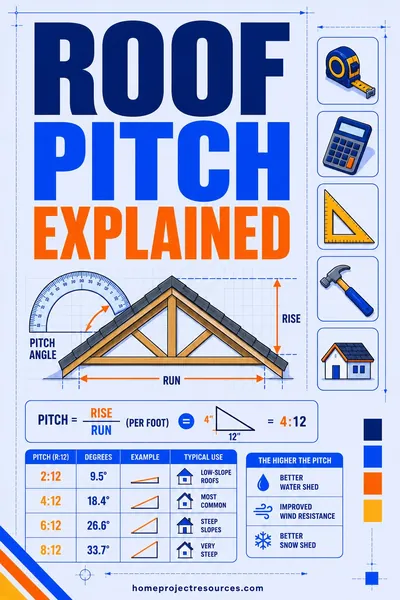
- Pitch. A sloped roof is the hypotenuse of a triangle. The steeper it is, the more surface it covers over the same ground.
- Overhangs. Eaves and rake overhangs typically add 12 to 24 inches past the wall on every side, which is roughly 5 to 12 percent more area on an average house.
The way pros handle this without climbing on anything is the pitch multiplier. You take the horizontal footprint the roof covers, including overhangs, and multiply by a factor for your slope:
Roof surface area = footprint area (with overhangs) x pitch multiplier
| Pitch | Angle | Pitch multiplier | What it does to a 2,000 sq ft footprint |
|---|---|---|---|
| 3/12 | 14.0° | 1.031 | 2,062 sq ft (20.6 squares) |
| 4/12 | 18.4° | 1.054 | 2,108 sq ft (21.1 squares) |
| 6/12 | 26.6° | 1.118 | 2,236 sq ft (22.4 squares) |
| 8/12 | 33.7° | 1.202 | 2,404 sq ft (24.0 squares) |
| 10/12 | 39.8° | 1.302 | 2,604 sq ft (26.0 squares) |
| 12/12 | 45.0° | 1.414 | 2,828 sq ft (28.3 squares) |
Same house, same footprint, and a 12/12 roof needs almost 8 more squares of material than a 3/12 roof. That is a large chunk of the job before anyone talks about labor, and it is why pitch is the second question a roofer asks after square footage.
If you do not know your slope yet, roof pitch explained walks through measuring it from inside your attic with a level and a tape measure, which takes about five minutes and does not involve a ladder. To get your footprint, our square footage calculator handles L shapes and additions.
Roof replacement cost per square by material
The ladder below is what matters, not any specific figure. Positions on it are stable even as prices move, because they come from material weight, install speed, and the skill the product requires. Coastal and high cost of living metros sit well above the national middle for all of them. Rural areas with competitive crews sit below it.
| Material | Where it sits on the ladder | Lifespan | Weight per square | Notes |
|---|---|---|---|---|
| 3 tab asphalt | The cheapest roof available | 15 to 20 yrs | 200 to 240 lbs | Thinnest option, mostly used on rentals and flips. Increasingly hard to source. |
| Architectural (dimensional) asphalt | The default, and the baseline everything else is compared to | 25 to 30 yrs | 230 to 340 lbs | Better wind rating and a shadow line that looks like a real roof. |
| Corrugated and exposed fastener metal | Overlaps the architectural asphalt band, and can run above it | 25 to 40 yrs | 50 to 100 lbs | Screws through the panel face. Cheap and fast, and the neoprene washers need attention every 15 to 20 years. |
| Synthetic composite (shake or slate look) | Roughly double architectural asphalt | 30 to 50 yrs | 150 to 300 lbs | Molded polymer. The look of slate or shake at asphalt range weight, so no framing upgrade. |
| Wood shake | Roughly double architectural asphalt | 25 to 40 yrs | 250 to 400 lbs | Restricted or banned in many wildfire zones. Needs treated Class A product where allowed. |
| Standing seam metal | Roughly two to three times architectural asphalt | 40 to 70 yrs | 100 to 150 lbs | Hidden fasteners, panels formed on site. Often outlives two asphalt roofs. |
| Concrete tile | Roughly two to three times architectural asphalt | 50+ yrs | 900 to 1,100 lbs | Structural check required. Roughly four times the weight of asphalt. |
| Clay tile | Above concrete tile | 50 to 100 yrs | 600 to 1,000 lbs | Structural check required. Brittle underfoot, so future service calls cost more. |
| Slate | The most expensive roof on this list, by a wide margin | 75 to 150 yrs | 800 to 1,500 lbs | Structural check required. Real slate needs a slate installer, not a shingle crew. |
About that weight column, because it is the part people skip. Asphalt sits around 250 pounds per square. Concrete tile and slate run three to five times that. On a 25 square roof, switching from asphalt to concrete tile adds roughly 8 to 10 tons of dead load. Existing framing on a house built for shingles often cannot take it without sistered rafters or added purlins, and that is an engineer's call, not a roofer's. Budget for a structural evaluation before you fall in love with tile or slate on an older house. Synthetic composite exists precisely so you can get that look without the framing bill.
What a real roof estimate actually contains
Two bids on the same house can be thousands apart and both be honest, because they include different work. This is the list of line items a complete quote covers. Use it as a checklist when you compare, and treat any missing row as a question rather than a saving.
| Line item | What it is | How it is measured, and what to watch |
|---|---|---|
| Tear off and disposal | Stripping old roofing to the deck, plus dumpster and dump fees | Per square, per layer. Two layers is roughly double, in both labor and dump weight |
| Dumpster | Usually folded into tear off, sometimes separate | Confirm which. It is a favorite place to double count |
| Roof deck repair | Replacing rotted or delaminated sheathing | Per 4x8 sheet installed. Demand a written unit price. See below |
| Underlayment | Synthetic sheet over the whole deck | Per square. Synthetic, not felt, on any roof you intend to keep |
| Ice and water shield | Self adhering membrane at eaves and in valleys | Per linear foot. Locations matter more than quantity |
| Drip edge | Metal edging at eaves and rakes | Per linear foot. Code in most of the country, and commonly omitted |
| Starter strip | Purpose made first course, sealed for wind uplift | Per linear foot. Cut up field shingles are not a starter strip |
| Ridge cap | Thicker cap shingles over ridges and hips | Per linear foot of ridge and hip |
| Flashing | Step, counter, chimney, sidewall, skylight, pipe boots | Per chimney or skylight, per linear foot for step. Ask replaced or reused |
| Ventilation | Ridge vent, plus soffit or gable intake | Per linear foot of ridge and per intake vent. Exhaust without intake does nothing |
| Permit | Required in most jurisdictions | Flat, and it should say who pulls it |
| Labor | Install crew, staging, cleanup, magnet sweep | Usually bundled into the per square rate |
A few of these deserve more than a table row.
Drip edge and starter strip are the two most commonly skipped items on a cheap bid, and both are code in most of the country. Drip edge keeps water from wicking back under the deck at the edges. Starter strip is what actually holds your first course down in wind. A crew that cuts the tabs off regular shingles to fake a starter strip has just voided the wind warranty.
Ice and water shield is not optional in freeze climates. It goes at the eaves, typically 2 feet inside the interior wall line, which often means two courses on a low roof, and in every valley. Southern roofs still need it in valleys and around penetrations.
Ventilation is the item most likely to be quietly omitted. A ridge vent with no soffit intake does nothing, because air has to enter low to exit high. If the quote adds ridge vent and says nothing about intake, ask. Poor ventilation cooks shingles from underneath and is a documented warranty exclusion for most manufacturers.
The decking change order, and how to defuse it
Here is the one that surprises people mid job. Nobody can see the roof deck until the old roofing is off. Rot around chimneys, at valleys, under old leaks, and along eaves is common on any roof past 20 years, and it is invisible from both the attic and the driveway on a finished roof.
So the deck is the classic change order. The crew calls at 10am on day one, tells you they found bad sheathing, and quotes a number while your house is open to the sky. That is the worst possible moment to negotiate anything.
The fix is simple: make every bidder state a per sheet price for replacing bad decking, in writing, before the job starts. It should be listed as replace as needed with your approval above some sheet count. Then ask each of them to include the same allowance, say four to eight sheets, in the base bid. Now you have a known unit price instead of a captive audience negotiation, and three bids that all carry the same allowance are directly comparable.
Ask for photos of any sheet they replace. Every crew has a phone.
The cost drivers that actually move your number
Two identical looking houses can be far apart on price. These are the reasons.
Pitch and walkability. Up to about 6/12, a crew walks the roof normally and works fast. Past 7/12 they slow down. Past 8/12 to 9/12 they need roof jacks, planks, harnesses and anchors, and sometimes scaffolding. Steep slope surcharges typically add 15 to 40 percent to labor, and a very steep roof can add more. Steepness also raises your square count through the pitch multiplier, so it hits you twice.
Number of stories. Two stories means longer ladders, more staging, harder material loading, and slower debris handling. Expect 10 to 20 percent over the same roof on a ranch. Three stories or a walkout basement side can push further.
Roof complexity. Cut up roofs cost more per square than simple gables, because complexity means cutting, flashing, and detail work rather than running full courses. Every valley, hip, dormer, skylight, chimney, and sidewall is hand work. Waste factor climbs too: a simple gable wastes about 10 percent of material, and a complex hip roof with multiple valleys wastes 15 to 20 percent. A busy roof can run 20 to 35 percent per square above a plain one.
Existing layers. Most jurisdictions allow a maximum of two layers of asphalt shingles. If you already have two, both must come off, which roughly doubles tear off labor and disposal weight. If you have one layer, a second layer overlay is sometimes legal, and it is still a bad deal: it hides deck problems, traps heat, shortens the new shingle life, and makes the next tear off more expensive. It is a way to sell a cheap number, not a way to get a good roof.
Access. Can the dump trailer park next to the house? Can the material be boom loaded onto the roof, or does it get carried up a ladder bundle by bundle? Tight lots, steep driveways, landscaping the crew has to protect, and low power lines all add hours.
Season and region. Labor rates vary more across the country than material does. Shingle prices are relatively national. A roofing crew's day rate is not, which is why the same roof genuinely costs different amounts in different metros.
How to read and compare bids without getting played
Get three bids. Put them side by side and compare line items, not totals.
A complete quote states, in writing: - Total squares and the rate per square - Tear off, how many layers, and disposal included - The specific shingle line and color, not just a brand - Underlayment type, ice and water shield locations, drip edge, starter, ridge cap - Which flashings get replaced versus reused - The ventilation plan, exhaust and intake - The per sheet decking price and any included allowance - Permit responsibility - Payment schedule and both warranties - Cleanup, including a magnet sweep for nails
Warning signs of a lowball bid: - No tear off line item, or vague language that leaves an overlay on the table - Flashing described as reflash as needed with no chimney or skylight line - Replace decking as needed with no unit price - No ventilation line - No mention of registering the manufacturer warranty - A price good only if you sign today - A large deposit up front. Materials are typically ordered on the roofer's account, so a deposit anywhere near half the job is a bad sign - The crew is a different company than the one on the contract, with no answer about who is insured
Always ask for the certificate of insurance directly from the insurer, and confirm both general liability and workers' compensation. If an uninsured worker gets hurt on your roof, the exposure can land on your homeowners policy.
Material warranty versus workmanship warranty
These are two different documents and they cover opposite failures.
The material warranty comes from the shingle manufacturer. It covers defective shingles. The headline lifetime or 50 year number is largely marketing: coverage is usually full for the first 10 years and then prorates down hard, and it typically covers the shingle only, not the labor to tear off and redo the roof. Most manufacturer warranties require correct ventilation and correct installation to stay valid, and many require registration within 30 to 60 days of completion.
The workmanship warranty comes from the contractor and covers installation errors, which is what actually causes most roof leaks. Nail placement, flashing details, and valley technique are workmanship. Typical coverage runs 2 to 10 years, and 10 years from an established local company is a genuinely strong signal.
Enhanced or system warranties from manufacturers, available only through their certified contractors and priced into the job, can extend both, including labor, if the whole system is installed with their components. They are worth asking about, and worth reading, because the coverage tiers differ a lot.
Storm damage and insurance, honestly
If a hail or wind event damaged your roof, your homeowners policy may pay for replacement rather than repair, minus your deductible. A few things worth knowing before you file:
The adjuster's scope is a starting point, not a verdict. Adjusters write an itemized scope of loss. If it misses items your roof genuinely needs, such as drip edge required by current code, ice and water shield, a second layer that has to come off, or ridge vent, a reputable contractor can submit a supplement with documentation. Supplements are a normal, routine part of the process.
Know which kind of policy you have. Replacement cost value (RCV) policies pay the depreciated amount first, then release the recoverable depreciation after the work is done and invoiced. Actual cash value (ACV) policies pay only the depreciated value and never release the rest, which on a 15 year old roof can be a small fraction of what replacement takes. Read your declarations page for this before you assume you are covered.
Be careful with contractors who offer to cover your deductible. It shows up as a promise to waive it or eat it. That is insurance fraud in most cases and it is explicitly illegal in many states, with statutes that can put the homeowner at risk as well, not just the contractor. The mechanics are simple: the only way to absorb your deductible is to inflate the claim or cut work out of the job. Either way you end up with a smaller roof than the insurer paid for. Decline it and cross that contractor off the list.
Also be cautious signing anything a storm chase canvasser hands you at the door. Some authorization to inspect forms are actually assignment of benefits or contingency contracts that lock you into that company if the claim is approved. Read what you sign and take the time to check local references. Our guide to contractor red flags covers the rest of that pattern.
Timing: when to schedule the job
Late summer and fall are peak roofing season. Weather is stable, and everyone who put it off in spring is calling now. Expect longer lead times, firmer pricing, and less flexibility on scheduling from September through November.
Late winter and early spring are the softer months in most of the country. Crews with gaps in the schedule are more negotiable. If your roof is not actively leaking and you can wait, this is where the saving lives.
Winter installs are possible in mild climates, with a real caveat. Asphalt shingles have a thermal sealant strip that needs sun and warmth to bond. Below roughly 40 to 45°F the strips do not activate on their own, and the roof stays vulnerable to wind uplift until the first warm stretch. A crew installing in cold weather should hand seal with roofing cement at eaves, rakes, and ridges. Ask specifically whether they do.
Do not let an urgent leak push you into a bad contract. A competent tarp job or a targeted repair buys you weeks, and on a job this size the difference between a rushed choice and a considered one is worth a few days.
Worked example: 1,800 sq ft ranch, 6/12 pitch
Single story, simple gable roof with one chimney, one layer of old shingles, easy driveway access.
Step 1: footprint including overhangs. The heated floor plan is 1,800 sq ft. Eaves and rakes extend 18 inches on all sides, which adds roughly 8 percent. Footprint under the roof: about 1,940 sq ft.
Step 2: apply the pitch multiplier. A 6/12 pitch has a multiplier of 1.118.
1,940 x 1.118 = 2,169 sq ft of roof surface
Step 3: convert to squares. 2,169 divided by 100 = 21.7 squares, call it 22 squares billed, and order about 24 with waste.
Step 4: the takeoff. These are the quantities every bid on this house should be pricing. Line them up against what each roofer submits, and any quantity that disagrees is a conversation worth having before you sign.
| Line item | Quantity on this roof | What to verify in the bid |
|---|---|---|
| Tear off and disposal, 1 layer | 22 squares | That it says one layer, and what happens if a second is found underneath |
| Deck repair allowance | 6 sheets included | The per sheet unit price above the allowance, in writing |
| Synthetic underlayment | 22 squares | Synthetic, and the product name |
| Ice and water shield | About 130 linear feet | Eaves and every valley, and how far up from the eave |
| Drip edge | About 190 linear feet | Eaves and rakes both, new metal not reused |
| Starter strip | About 130 linear feet | Manufactured starter, not cut field shingles |
| Architectural shingles | 24 squares ordered for 22 installed | The exact product line, not just the brand |
| Ridge cap | About 45 linear feet | Manufactured cap, matched to the shingle line |
| Flashing | 1 chimney, 4 pipe boots, sidewall runs | Replaced or reused, stated separately for each |
| Ventilation | 45 lf ridge vent, 8 soffit intake vents | That intake is included, not just exhaust |
| Permit and cleanup | 1 permit, full magnet sweep | Who pulls the permit, and that cleanup is named |
Where the bids on this house will actually differ is the flashing and the ventilation. A full chimney reflash plus a complete new intake and exhaust system is a meaningful share of the job on a roof this size. A reroof that reuses sound flashing and keeps existing venting is a noticeably smaller job, and it should be quoted as one rather than hidden inside the same lump sum.
The metal comparison. Same roof in standing seam runs roughly two to three times the architectural asphalt version. The case for it is time: 40 to 70 years against 25 to 30. If you plan to be in the house 25 more years, standing seam is roughly a wash against buying two asphalt roofs, and you skip a second tear off and a second week of disruption. If you plan to sell in seven years, it will not return the premium.
Run your own numbers with the roofing calculator before you look at bids. Knowing you have 22 squares changes every conversation that follows.
FAQ
How do I estimate the roof on a 2,000 square foot house?
Careful with the question, because 2,000 square feet usually means floor area, not roof area. A 2,000 sq ft single story at 6/12 with overhangs has roughly 24 squares of roof. A 2,000 sq ft two story house has only half that footprint, so its roof is closer to 12 or 13 squares. That difference is the whole job, which is why the square count has to come before any quote.
What is included in the roofing cost per square?
A per square rate normally covers material, install labor, and one layer of tear off with disposal. It usually does not cover deck repair, chimney reflashing, new ventilation, skylight work, or a second layer of old roofing. Ask each bidder exactly what their per square rate includes, because that is where two similar looking rates stop being similar.
Can I put new shingles over old ones?
Usually yes if there is only one existing layer and your jurisdiction allows two, and it is rarely a good trade. An overlay hides rotted decking, traps heat that shortens shingle life, prevents proper ice and water shield at the eaves, and makes the eventual tear off cost more. The saving is modest for a roof that lasts noticeably less time.
How long does a roof replacement take?
A typical single story asphalt roof of 20 to 30 squares takes one to three days with a full crew. Steep pitches, multiple stories, complex roofs, tile, and slate take longer, sometimes a week or more. Weather delays are normal and a good contractor will not open more roof than they can dry in the same day.
Should I get a roof estimate before filing an insurance claim?
Having an independent inspection first is genuinely useful, because it tells you whether the damage is worth your deductible and gives you a reference point against the adjuster's scope. Just avoid signing any contingency agreement or assignment of benefits before you have decided who is doing the work.
What time of year is cheapest to replace a roof?
Late winter and early spring in most regions, when crews have openings and demand is low. Peak season is late summer through fall, when pricing is firmest and schedules are full. The one caveat is cold weather installation: shingles need warmth to seal, so a winter job should include hand sealing at the edges and ridges.
How do I know if my roof needs replacing or just a repair?
Repair makes sense for localized damage on a roof with meaningful life left, like a few blown off shingles or a failed pipe boot. Replace when you see granules filling the gutters, curling or cupping shingle edges across the field, bare fiberglass mat showing, multiple leaks in different areas, or an age past 20 to 25 years for asphalt. If a repair costs more than about 30 percent of a replacement, put the money toward the new roof.
Does a new roof add value when I sell?
It rarely returns the full cost in appraised value, and it removes an objection that stops sales and shows up in every inspection report. Buyers discount an old roof by more than it costs to replace, because they are pricing in the hassle. If you are selling within a year and the roof is at end of life, replacing it usually nets better than the credit you would otherwise give.
Related: Roof pitch explained shows how to measure your slope from the attic and gives the full multiplier chart. Contractor red flags covers the storm chase pattern in detail, and bathroom remodel cost applies the same bid reading approach to an interior job. The roofing calculator plus the square footage calculator will give you your square count in about two minutes.