Tile vs Vinyl for a Bathroom Floor: Which Lasts Longer

On the question of tile vs vinyl for a bathroom floor, tile lasts longer, and it is not close. A properly installed porcelain floor with a sound subfloor routinely goes 30 to 50 years and beyond, while luxury vinyl plank in a wet bathroom typically gets 10 to 25 depending on the wear layer and how much standing water it sees. Vinyl wins on comfort underfoot, on installation over a less than perfect subfloor, and on how quickly one person can put it down in a weekend.
The catch is that both materials fail at their seams, not in the middle. Tile fails at grout and at the perimeter. Vinyl fails where water gets under an edge and stays there. Whichever you pick, the detailing at the tub, the toilet and the door decides how long it lasts.
Updated September 2026
Working out how much material a bathroom actually takes? Use our free Tile Calculator to turn your room dimensions and layout pattern into a tile count, thinset bags and grout volume, with the right waste allowance built in.
Tile vs vinyl for a bathroom floor, side by side
| Factor | Porcelain or ceramic tile | Luxury vinyl or sheet vinyl |
|---|---|---|
| Realistic life span in a bathroom | 30 to 50 years, longer if grout is maintained | 10 to 25 years, wear layer dependent |
| Water resistance | Porcelain absorbs under 0.5 percent by weight | Core is waterproof, seams and edges are not |
| Weak point | Grout joints and the perimeter caulk line | Seams, plank edges, and the tub and toilet perimeter |
| Subfloor demand | Stiff, flat, usually needs backer board or a membrane | Flat, forgiving of small deflection |
| Comfort underfoot | Hard and cold without radiant heat | Warmer, slightly soft, quieter |
| Repairability | One cracked tile can be cut out and replaced | Click plank can be lifted, sheet vinyl usually cannot be patched invisibly |
| Added floor height | Roughly 5/8 to 3/4 inch with backer and thinset | Roughly 1/8 to 5/16 inch |
| DIY difficulty | Moderate to hard, unforgiving of layout errors | Easy to moderate, cuts with a utility knife |
| Radiant heat | Ideal, tile is the best conductor of the two | Limited, most makers cap surface temperature near 85 degrees |
| Resale perception | Reads as an upgrade in a bathroom | Reads as neutral to budget, better in a rental |
The one line summary. If this is your long term home and the subfloor is solid, tile. If it is a rental, a fast refresh, a basement bathroom, or a floor going over an old surface you would rather not tear out, vinyl.
Why tile lasts longer, and where it still fails
Porcelain is fired at a temperature that vitrifies the clay body, and the industry definition of porcelain is a water absorption rate of 0.5 percent or less by weight. That is the whole reason it belongs in a bathroom. Water sitting on the surface for an hour does nothing to it. Standard ceramic absorbs more, which is fine for a wall but a weaker choice for a floor that gets splashed daily.
So a tile floor almost never fails because of the tile. It fails for three other reasons:
- Movement in the subfloor. Tile is rigid. If the floor flexes underfoot, the bond breaks or the grout cracks in a line straight across the room. The standard target for a ceramic tile floor is a deflection limit of L/360, which means a joist span deflects no more than the span in inches divided by 360. Natural stone doubles that requirement to L/720.
- Grout maintenance. Cement grout is porous. Unsealed, it picks up soap, dirt and mildew, and it eventually crumbles at the high traffic path in front of the vanity. Epoxy grout skips that problem entirely and is worth the extra fussiness in a small bathroom.
- The perimeter. The joint where the floor meets the tub, the shower curb, or the wall base should be flexible caulk, never grout. Grout in a movement joint cracks in the first year, and then water has a path to the subfloor.
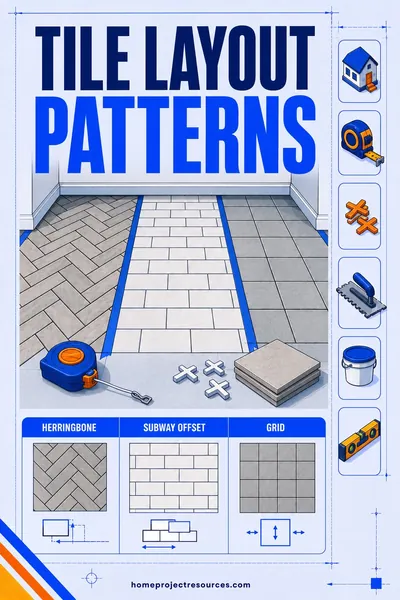
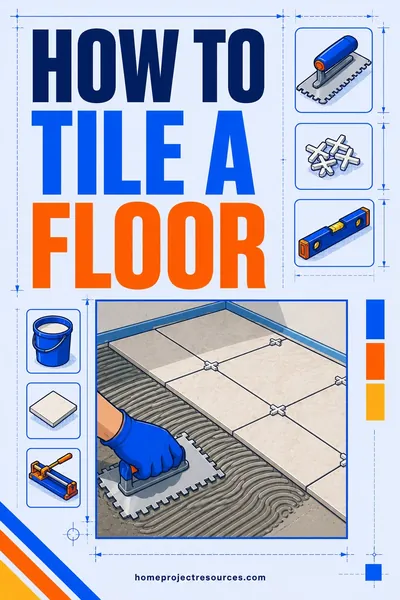
Fix those three and the floor outlives the fixtures around it. Our step by step on how to tile a floor covers the layout and the setting sequence, and tile layout patterns explains how the pattern you pick changes both the look and the cut waste.
Why vinyl is the right call more often than people admit
Modern vinyl is not the peeling sheet goods people remember. The two products that matter now are rigid core plank and sheet vinyl.
Rigid core plank comes as SPC, a stone plastic composite with a dense mineral core, or WPC, a wood plastic composite with a slightly softer, thicker core. SPC is thinner, harder, and more dent resistant, and it handles temperature swings better, which matters in a bathroom that goes from cold to steamy twice a day. WPC feels warmer and quieter underfoot. Both float over the existing floor with a click lock.
The number that predicts life span is the wear layer, measured in mils. That is the clear top film, not the total thickness:
| Wear layer | Realistic use | Bathroom verdict |
|---|---|---|
| 6 mil | Light residential, guest rooms | Too thin for a family bathroom |
| 12 mil | Standard residential | Fine for a low traffic or guest bath |
| 20 mil | Heavy residential, light commercial | The sweet spot for a main bathroom |
| 28 mil and up | Commercial | Overkill at home, but it will not wear out |
Sheet vinyl deserves more respect than it gets in a bathroom, for one specific reason: in a small room it goes down as a single piece with no seams at all. The most waterproof vinyl floor you can install in a 5 x 8 bathroom is one continuous sheet turned up slightly at the walls and covered by the base. No plank edge, no click joint, nowhere for water to wick.
If you are weighing vinyl against other floating floors rather than against tile, our comparison of laminate vs vinyl plank covers that side of the decision, and laminate is the one to rule out in a bathroom because its core is compressed fiberboard.
Subfloor and height: the part that decides your project
This is where the two materials genuinely diverge, and it is usually what settles the choice.
| Requirement | Tile | Vinyl plank |
|---|---|---|
| Flatness | Within about 1/8 inch over 10 feet for large format tile | Within about 3/16 inch over 10 feet, per most manufacturers |
| Structure | Typically 1-1/8 inch total wood subfloor: 5/8 or 3/4 inch plywood plus 1/4 inch backer board, or an uncoupling membrane | 5/8 inch plywood or a sound existing hard floor |
| Deflection | L/360 for ceramic, L/720 for stone | Tolerant, but a bouncy floor still shows at the seams |
| Prep work | Backer board screwed and taped, or membrane bonded, then thinset | Sweep, patch dips, underlayment where required |
| Height added | About 5/8 to 3/4 inch | About 1/8 to 5/16 inch |
That last row causes more headaches than any other line in this article. Adding 3/4 inch of floor in a bathroom means the door may not swing, the transition to the hallway needs a reducer, and the toilet flange now sits below the finished floor. A flange should end up level with or slightly above the finished floor, so a tile job frequently needs a flange extender ring and a taller wax ring or a wax free seal. Vinyl adds so little height that most of the time the door and the flange are unaffected.
Can you put tile over vinyl? Sometimes, if the vinyl is a single fully bonded layer with no cushion, it is well adhered, and you scuff and prime it or bond an uncoupling membrane over it. It is usually cleaner to pull it. Cushioned or floating vinyl always comes out, because tile over anything springy cracks.
A worked example: a 5 x 8 bathroom, both ways
Take a standard 5 foot by 8 foot bathroom with a 5 foot alcove tub along one wall and a vanity 2 feet deep by 3 feet wide.
The floor area. The room is 5 x 8 = 40 square feet. The tub covers 5 x 2.5 = 12.5 square feet. Tile goes under the toe kick but not under the tub, so subtract the tub footprint: 40 minus 12.5 = 27.5 square feet of field.
Tile, straight lay. The Tile Calculator adds a 10 percent waste allowance for a straight or stacked layout. So 27.5 x 1.10 = 30.25 square feet of tile to buy. In 12 x 24 inch porcelain, that is 2 square feet per tile, so about 16 tiles. Grout at a 1/8 inch joint with a 5/16 inch thick tile, and thinset with a 1/4 x 3/8 inch notched trowel for the larger format.
Tile, diagonal or herringbone. The waste allowance jumps to 18 percent for both, because every edge tile becomes a cut. Now 27.5 x 1.18 = 32.5 square feet, about 17 tiles, and roughly twice the cutting time. Chevron pushes it to 22 percent. That is the real cost of a fancy pattern in a small room, and in a bathroom this size a straight or brick pattern usually looks better anyway because the tile is not fighting a 40 square foot canvas.
Vinyl plank. Same 27.5 square feet of field, but most plank makers ask for 5 to 10 percent extra. At 10 percent that is 30.25 square feet, and boxes typically cover somewhere around 24 square feet, so two boxes. No backer board, no thinset, no grout, and it goes in with a utility knife and a tapping block.
The time difference. Tile is realistically a three day job for a competent DIYer: backer board and layout on day one, setting on day two, grout and caulk on day three, and no walking on it in between. Vinyl in the same room is an afternoon plus trim.
Maintenance and how each floor ages
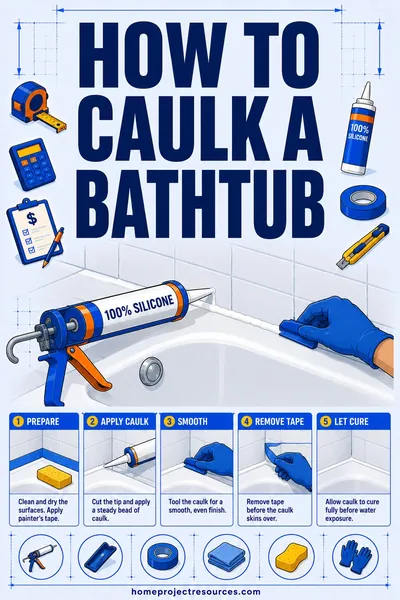
Tile. Sweep and damp mop. Seal cement grout when it is new and again every year or two in a bathroom, or use epoxy grout and skip it. Replace the perimeter caulk when it discolors or pulls away, which in a bathroom is every few years. Our guide on how to caulk a bathtub covers that joint properly, because it is the single most important detail on the whole floor.
Vinyl. Sweep and damp mop with a pH neutral cleaner. Do not steam mop it, because heat and moisture at a click seam is exactly the failure mode you are trying to avoid. Put felt pads under anything that slides. Watch for a cupped or lifted edge near the tub, which means water is getting under, and deal with the source right away.
How each one ages badly. Tile ages badly at the grout: darkened joints, a crack line where the floor moves, and a chipped edge where something heavy landed. Every one of those is repairable. Vinyl ages badly in the wear layer: a dull traffic lane, scuffs that will not come out, and a slightly telegraphed seam. Those are not repairable, and at that point the floor is done.
Slip resistance. Both can be slippery wet, and both can be specified not to be. For tile, look for a textured or matte surface and a smaller tile with more grout lines, since the joints add grip. Polished porcelain in a bathroom is a bad idea no matter how good it looks in the showroom. Most vinyl has a slight embossed texture that performs reasonably well wet.
Which one should you pick
Pick tile if you plan to stay in the home, the joist span and subfloor are solid, you want radiant heat under the floor, or the bathroom is a primary or hall bath that a buyer will judge.
Pick vinyl if the subfloor is imperfect and you would rather not rebuild it, the height added by tile creates a door or flange problem, the room is over a slab in a basement, the bathroom is in a rental, or you want the job finished this weekend.
Pick sheet vinyl specifically if the room is small, seamless matters more than the look of individual planks, and it is a laundry or utility bathroom where a leak is likely.
If the floor is part of a bigger project, our bathroom makeover ideas has the sequence for what to do in what order, because the floor should go in after the tub and before the toilet and the base trim.
FAQ
Is vinyl plank really waterproof in a bathroom?
The plank itself is. A rigid core will sit in water without swelling, which is more than laminate can say. But a floating floor has seams and a perimeter gap under the base trim, and water that finds its way through those sits on the subfloor where it cannot dry. Caulk the perimeter at the tub and the toilet, and treat the floor as water resistant rather than waterproof.
How long does grout last in a bathroom floor?
Sealed cement grout in a family bathroom generally looks good for 5 to 10 years before it needs cleaning and resealing, and the traffic path in front of the vanity goes first. Epoxy grout can go decades without maintenance. The grout at the perimeter is different: that joint should be flexible caulk from the start, and caulk gets replaced every few years.
Can I install tile over an existing vinyl floor?
Only over a single layer of fully bonded, non cushioned vinyl on a solid subfloor, and even then most installers prefer to bond an uncoupling membrane over it rather than thinset directly. Cushioned vinyl, floating plank, or two layers of anything comes out first. The safest read is that if the surface moves at all under your weight, tile will crack.
Does tile add value that vinyl does not?
In a primary or hall bathroom, tile generally reads as the finished, permanent option and vinyl reads as neutral. In a basement bathroom, a laundry room or a rental unit, buyers and tenants rarely penalize good vinyl. The bigger factor either way is whether the installation looks square, whether the cuts are clean, and whether the perimeter is detailed properly.
Which is better for a bathroom with radiant floor heat?
Tile, clearly. It conducts heat well and it is the material electric mat and hydronic systems are designed around. Vinyl can go over radiant heat only where the manufacturer allows it, and almost all of them cap the surface temperature around 85 degrees to keep the core from expanding, which limits how warm the floor ever feels.
What thickness of vinyl plank should I use in a bathroom?
Total thickness matters less than the wear layer. Aim for a 20 mil wear layer in a main bathroom and no less than 12 mil in a guest bath. For the core, SPC at 4 to 6 mm handles temperature swings and dents better than a thicker WPC, though WPC feels warmer and quieter if that trade is worth it to you.
How much extra tile should I buy for a bathroom?
Plan on 10 percent over the field area for a straight or stacked layout, 12 percent for a brick or offset pattern, and 18 percent for diagonal or herringbone. Small rooms are cut heavy, so round up to the next full box and keep the leftovers. A few spare tiles from the same production run is the only way to make an invisible repair years later.