Condensation on Windows: Causes and How to Fix It

Condensation on windows happens for one reason: the glass is colder than the dew point of the air touching it, so water vapor turns back into liquid on the coldest surface in the room. Fixing it means doing one of two things, and usually both. Lower the amount of moisture in your indoor air, or raise the temperature of the glass. Everything else is a variation on those two moves.
Before you change anything, find out which side of the glass is wet. Interior fog is a humidity problem you can fix this week. Exterior fog is a sign your windows are working well. Fog sealed between two panes means the window unit itself has failed, and no amount of dehumidifying will touch it.
Updated September 2026
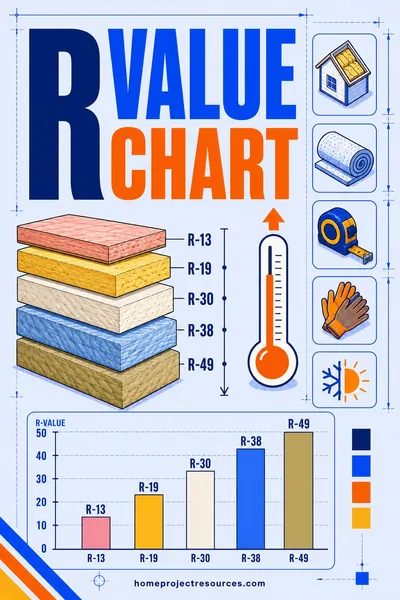
Cold walls and a cold attic are what chill your glass in the first place. Use our free Insulation Calculator to see how much material your attic or walls actually need at your target R-value, since a warmer shell raises every interior surface temperature in the house, glass included.
Which side is wet? Three completely different problems
Wipe the glass with your finger. Where the water disappears tells you what you are dealing with, and the three causes have almost nothing in common.
| Where the moisture sits | What it means | What fixes it |
|---|---|---|
| Inside surface, in your room | Indoor humidity is too high for how cold the glass is | Ventilate, dehumidify, find the moisture source, warm the glass |
| Outside surface, facing the yard | Night sky cooled the outer pane below the outdoor dew point | Nothing. This means the insulated glass is doing its job |
| Sealed between the panes | The insulated glass unit lost its seal and the gas fill | Replace the glass unit or the whole window |
| Only along the bottom edge inside | Cold air pooling at the frame, plus a weak seal | Weatherstrip, add a storm panel, check the sash lock |
| Every window in one room only | A local moisture source in that room | Vent that room, not the whole house |
That fourth row catches a lot of people. If the top two thirds of the pane is dry and there is a puddle on the sill, the glass is not uniformly cold. The bottom edge of an insulated unit is the coldest strip of the whole window because the spacer bar conducts heat straight through. Cold air also sinks and stalls at the sill, especially behind a heavy curtain.
Why condensation on windows starts with the dew point
Dew point is the temperature at which air can no longer hold the water it is carrying. Warm air can hold a lot. Cold air can hold very little. When room air drifts across cold glass, it chills, its capacity drops, and the extra water has to go somewhere. It goes on the window.
Here is the part that makes it click. At a normal 70 degree room, this is roughly the surface temperature at which your glass begins to sweat:
| Indoor temperature | Indoor relative humidity | Approximate dew point | Glass sweats when the surface is below |
|---|---|---|---|
| 70 F | 30% | 37 F | 37 F |
| 70 F | 35% | 41 F | 41 F |
| 70 F | 40% | 45 F | 45 F |
| 70 F | 45% | 48 F | 48 F |
| 70 F | 50% | 50 F | 50 F |
| 70 F | 60% | 56 F | 56 F |
| 70 F | 70% | 60 F | 60 F |
Now look at what different windows do to surface temperature on a cold night. With outdoor air at 20 F and a 70 F room:
| Window type | Roughly | Inside glass surface, 20 F outside |
|---|---|---|
| Single pane, no storm | R-1 | Near 25 F to 30 F |
| Single pane plus storm window | About R-2 | Near 40 F |
| Clear double pane, older | About R-2 | Near 40 F to 45 F |
| Double pane, low-e coating, argon fill | About R-3 to R-4 | Near 50 F to 55 F |
| Triple pane | About R-5 | Near 58 F to 62 F |
Line the two tables up and the whole problem resolves itself. A single pane window on a 20 degree night sits near 28 F, which means it will fog at any indoor humidity above roughly 20 percent. You cannot dehumidify your way out of that, and you should not try, because air that dry is uncomfortable and hard on wood floors and furniture. A good low-e double pane sits near 52 F, which means it stays clear right up to about 50 percent indoor humidity. Same house, same air, completely different outcome.
The humidity target that changes with the weather
The mistake is picking one humidity number and holding it all winter. Your indoor target has to fall as the outdoor temperature falls, because the glass gets colder as outside gets colder. This rule of thumb has been in cold-climate building guidance for decades:
| Outdoor temperature | Maximum indoor relative humidity |
|---|---|
| 20 F to 40 F | 40% |
| 10 F to 20 F | 35% |
| 0 F to 10 F | 30% |
| Minus 10 F to 0 F | 25% |
| Below minus 10 F | 20% |
Buy a cheap hygrometer, or two. One in the main living space, one in the bedroom you sleep in with the door shut. Bedrooms run high overnight because two adults breathing and perspiring add a surprising amount of water to a closed room, and that room has the coldest glass in the house by morning.
The Environmental Protection Agency publishes the underlying guidance on keeping indoor humidity in the 30 to 50 percent band to control mold growth, and the same band is what keeps most modern windows clear.
Worked example: a 1,400 square foot house that fogged every January
Take a real shape of problem. A 1,400 square foot single story house, 14 windows, clear double pane units from the late 1990s, a family of four, and a fresh basement finish. Every window fogs on the inside from Thanksgiving to March, and the two north bedroom windows grow black spots on the sash.
Measure first. Hygrometer in the living room reads 55 percent at 70 F. Dew point at that pair of numbers is about 53 F. The clear double pane glass on a 15 degree night sits somewhere near 40 F. The gap is 13 degrees, so of course it sweats, and it will keep sweating until one of those two numbers moves.
Now find the water. Four people produce a lot of it just by living, roughly two to three gallons a day across breathing, showers, cooking and laundry in a household that size. Add a basement slab that was never sealed and a dryer duct that came loose behind the machine, and you have a house making more water than it can shed.
The sequence that fixed it:
- Reconnected the dryer vent. A disconnected dryer dumps every load's worth of water into the house. Free, took ten minutes, and dropped the reading three points on its own.
- Ran the bath fan on a timer for 30 minutes after every shower. The old habit was flipping it off with the light. Two more points.
- Sealed and covered the basement slab, then ran a dehumidifier down there at 45 percent. Basement air rises into the house through the stack effect, so drying the basement dries the upstairs. Five more points.
- Ran the kitchen range hood on high for the whole cook, not the last minute. One to two points on cooking days.
- Added interior storm panels on the two north bedroom windows. This raised those two glass surfaces by roughly 10 degrees, which was the difference between fogging and not.
Living room settled at 42 percent. Dew point at 42 percent and 70 F is about 46 F, comfortably below the roughly 40 to 45 F glass. Twelve of 14 windows went clear. The two that needed help got warmer glass instead of drier air, which is the right trade when a single window is the outlier.
Fixes ranked from free to major
Work down this list in order. Most households stop fogging somewhere in the first section and never need the bottom of it.
Free, today
- Open interior blinds and pull curtains back from the glass so room air can wash across it. Heavy drapes trap a cold pocket against the pane and guarantee a wet sill.
- Move furniture off the wall under the window a few inches.
- Run bath fans for 20 to 30 minutes after showers, not 2 minutes.
- Use the range hood every time you boil, simmer or fry, and make sure it vents outside rather than recirculating through a charcoal filter.
- Crack a window in the bedroom overnight, even an inch, if the climate allows it.
- Stop drying laundry on racks indoors during cold months.
- Keep the house at a steadier temperature. Deep night setbacks drop glass temperature further than most people expect.
Cheap, this weekend
- Put a hygrometer in two rooms and start writing the numbers down.
- Check that the dryer vents outside and the duct is intact and clear.
- Cover any bare dirt in a crawl space with a heavy poly vapor barrier and tape the seams. Bare crawl space soil is often the single largest water source in a house.
- Weatherstrip the sashes so cold outside air stops sliding down the inside face of the glass, which is a common cause of a wet bottom edge only. Our guide to weatherstripping a door uses the same materials and the same fit test for a window sash.
- Add a small dehumidifier in the basement or the worst bedroom and set it to 45 percent.
Real projects
- Insulate the attic to current levels for your region. A cold ceiling plane pulls the whole room's surface temperatures down. Our walkthrough on insulating an attic covers depth, baffles and the air sealing that has to happen first.
- Add interior or exterior storm panels to the worst windows. This is the biggest single improvement you can make to single pane glass.
- Install a bath fan where there is only a window, or replace a weak fan with one sized for the room.
- Add a balanced ventilation unit if the house is tight and modern. New construction that fogs is usually under-ventilated, not over-humidified.
- Replace failed insulated glass units. If the fog is between the panes, this is the only real answer. Our page on replacing windows walks through how a scope of work should be written so you can compare bids fairly.
Room by room: where the water is actually coming from
Bathroom. A single 10 minute hot shower can put half a pint of water into the air. The fan has to run during and after, and it has to actually move air. Hold a square of toilet paper to the grille. If it does not stick, the duct is crushed, clogged, or dumping into the attic.
Kitchen. Boiling a pot uncovered for 20 minutes is the same as pouring a cup of water into the room. Lids on pots and the hood on high solves most of it.
Bedrooms. Two sleeping adults release roughly a pint of water overnight. A closed door plus a closed vent plus a cold exterior wall is why bedroom windows are usually the first to run. Leave the door cracked, or leave the ceiling fan on low to keep air moving across the glass.
Basement. Concrete gives off moisture for a long time after it is poured, and an unsealed slab keeps wicking ground water forever. If your basement smells earthy, that smell is the moisture you are seeing on the upstairs windows. Our page on a musty basement smell tracks the source down step by step.
New construction and new remodels. Fresh concrete, fresh drywall mud, fresh paint and fresh lumber all release water for months. First winter fogging in a new build often fades on its own by the second winter.
When condensation is a warning sign, not a nuisance
Water on glass is annoying. Water in the assembly is expensive. Take these seriously:
- Black or fuzzy growth on the sash, sill or the drywall return. That is mold feeding on the moisture. Clean it, then fix the humidity, or it comes back.
- Soft, spongy or stained wood at the sill. Rot is already underway. Probe it with a screwdriver.
- Peeling paint on the interior casing. Paint fails when the substrate stays wet.
- Frost patterns on drywall near the ceiling or in corners. That is a thermal bridge and an air leak, not a window issue.
- Fog on the inside of a brand new window. Suspect an installation air leak or an unbalanced ventilation system, and call the installer while the warranty is fresh.
Two more things worth knowing. Exterior condensation on a cool morning is a compliment to your windows. It means so little heat is escaping that the outer pane cooled below the outdoor dew point overnight. And condensation between the panes never dries and never responds to anything you do inside the house, because the water is sealed in a space you cannot reach.
FAQ
Is condensation on windows dangerous?
The water itself is not, but what it feeds can be. Persistent moisture on sills and sashes grows mold and rots wood over a season or two. Occasional light fogging on the coldest mornings that clears by mid morning is normal and harmless.
Why do only some of my windows fog up?
Different windows have different glass temperatures and different air movement. North facing units get no sun, ground floor units sit in colder air, and any window behind heavy curtains or blocked by furniture has a stalled pocket of cold air against it. Bedrooms and bathrooms also carry more moisture than the rest of the house.
Will a dehumidifier stop window condensation?
Usually yes, if the glass is reasonably modern and the dehumidifier is sized for the space. Set it to about 45 percent and check a hygrometer in the room that fogs, not just at the machine. On true single pane glass in a cold climate, a dehumidifier alone often cannot get low enough to keep the glass clear, and a storm panel does more.
Can I fix moisture between window panes without replacing the window?
Not reliably. The seal has failed and the insulating gas is gone, so the unit has lost most of its performance whether it looks foggy or not. Defogging services exist, but they drill the glass and vent it, which clears the view without restoring the seal or the gas fill. Replacing the insulated glass unit inside the existing frame is often possible and is worth asking about before replacing the whole window.
Should I use plastic window film in winter?
It helps. A tight shrink film creates a still air pocket that raises the inside surface temperature of the film several degrees above the glass, so the room side of the film stays clear. If you see water forming between the film and the glass, the film is not sealed tightly enough and room air is leaking behind it.
Does opening windows in winter make condensation better or worse?
Better, in almost every case. Cold outdoor air is very dry once you warm it up, so a short deliberate air exchange lowers indoor humidity fast. Ten minutes with two windows open on opposite sides of the house moves a lot of air without cooling the walls and furniture much.
What indoor humidity should I run in winter?
Start at 40 percent when it is above freezing outside and step down as the outdoor temperature drops, roughly to 35 percent in the teens, 30 percent in single digits and 25 percent below zero. Let your own windows be the referee. If they are dry, you are fine where you are.
Do new windows always stop condensation?
They stop most of it by raising the glass temperature, but they can also make an existing moisture problem obvious somewhere else. A tighter house holds the water it makes, so if you replace windows without adding ventilation, you may see the fog move to a closet wall or a corner instead. Fix the moisture source and the ventilation as part of the same project.