Cost to Paint a House Interior

The cost to paint a house interior is roughly three quarters labor, which means you are not really buying paint from a contractor, you are buying hours. Material for a whole house is a small share of the bill, and it barely moves between a cheap bid and an expensive one. Everything that makes two quotes on the same house differ is hidden in the other three quarters: how many surfaces are included, how many coats, how much prep, how high the ceilings are, and whether the house is empty.
That is also why a whole house repaint has such a wide honest range. Walls only, walls plus ceilings, and walls plus ceilings plus trim and doors are three different jobs on the same floor plan, and trim is the one that changes the total the most.
Check your own gallon count in about a minute with our free paint calculator. Knowing how much product the job actually needs is the fastest sanity check on any bid you get handed.
Updated August 2026
A note on numbers. This page gives you surface area math, gallon counts, hour estimates, scope definitions and bid questions rather than dollar figures. Painting is labor, labor rates move by metro and by season, and a printed national range would mislead most readers. Work out your quantities here, then put one identical written scope in front of three local painters.
Painting one room? Use the room page instead
If you are painting a single bedroom, a bathroom or one living room, this is the wrong page. Go to cost to paint a room, which handles individual rooms, breaks out trim and doors per room, and gives the tool list for a one room job.
One room work costs noticeably more per square foot than whole house work. Setup, masking, protection and cleanup are largely fixed costs. Spread across a whole house they disappear into the total. Landing entirely on one room, they dominate it. Both pages are right for the job they describe, and comparing their per square foot figures directly is the most common mistake readers make.
This page covers the questions that only appear at whole house scale: how to compare bids that use different units, how scope multiplies across eight or ten rooms, and whether a house sized DIY project is worth doing.
Cost to paint a house interior by house size
The first thing a painter does on a walkthrough is convert your floor plan into surface area, because that is what gets rolled. You can do the same thing in five minutes, and it turns an abstract quote into something checkable.
These figures assume standard 8 ft ceilings and two coats. Wall area is estimated at about 2.75 times floor area, which accounts for interior partition walls counted on both faces.
| Home size | Approx. wall area | Ceiling area | Wall gallons, two coats | Ceiling gallons, two coats |
|---|---|---|---|---|
| 1,000 sq ft | 2,750 sq ft | 1,000 sq ft | 15 | 6 |
| 1,500 sq ft | 4,100 sq ft | 1,500 sq ft | 22 | 9 |
| 2,000 sq ft | 5,500 sq ft | 2,000 sq ft | 30 | 12 |
| 2,500 sq ft | 6,900 sq ft | 2,500 sq ft | 37 | 15 |
| 3,000 sq ft | 8,250 sq ft | 3,000 sq ft | 44 | 18 |
Gallon counts assume about 375 sq ft of coverage per gallon per coat on walls and about 350 on ceilings, which is realistic over sound, previously painted drywall. New drywall, heavy texture and deep color changes all drink more.
Two houses of identical size can still be quoted very differently, because "the whole interior" is not one job. It is a bundle of decisions about ceilings, trim, color changes and wall condition. The square footage calculator will give you real wall area for your floor plan if you have vaulted sections, a stairwell or an open great room that breaks the 2.75 rule of thumb.
Per floor square foot vs per wall square foot: how to compare two bids
This is the most confusing part of collecting interior painting quotes, and it is where homeowners accidentally pick the more expensive contractor.
Some painters quote per square foot of floor area, the number on your listing sheet or tax record. Others quote per square foot of wall surface, meaning the actual paintable area they have to roll. The two bases are wildly different, and nobody volunteers which one they used.
The conversion factor is about 2.75. Interior wall area in a typical single family home runs 2.5 to 3.0 times the floor area, depending on how chopped up the plan is. Open plan homes sit near 2.5. Older houses with many small rooms and hallways sit near 3.0.
Run that through the arithmetic and the trap becomes obvious. A wall surface rate will look like roughly one third of a floor area rate for the exact same job, because it is being multiplied by nearly three times as many square feet. Read quickly, the wall surface bid appears to be a fraction of the other one. Multiply each rate by its own basis and the two totals can land within a rounding error of each other.
How to normalize two real bids
- Ask each bidder, in writing, which square feet their rate refers to.
- Multiply each rate by its own basis to get a total for the whole job.
- Confirm both totals cover the identical surface list: walls, ceilings, closets, trim, doors, door jambs, window casings.
- Confirm both are two coats, and that both include the same prep.
- Compare only the totals. Never compare the rates.
Ask every bidder for three things in writing: the total, the surfaces included, and the number of coats. Everything else on a painting proposal is commentary.
What drives your interior painting quote up
These are the factors a painter is pricing during the walkthrough, roughly in order of how much they move the number.
Ceiling height. Eight feet is the baseline. Nine foot ceilings add meaningfully to labor and ten foot ceilings add more, because every cut line becomes ladder work. A two story entry or a vaulted great room needs scaffolding or a lift, and those rooms can price at close to double the rate of the rest of the house.
Trim and door count. Trim is slow brush work, priced per linear foot and per unit rather than per square foot. A 2,000 sq ft house typically has 12 to 16 interior doors, 15 to 20 windows and 500 to 700 linear feet of baseboard. That package is the single biggest reason the "with trim" version of a quote jumps the way it does.
Color change versus refresh. Repainting the same color, or a close neighbor of it, over a sound finish is the cheapest job in painting. A whole house color change means genuine two coat coverage everywhere with no shortcuts, plus much more care at every cut line.
Dark to light. Going from a deep red, navy, chocolate or saturated yellow to an off white is the expensive direction. It needs a tinted blocking primer plus two finish coats, and sometimes a third. Light to dark is far easier, because the dark color covers.
Wall condition. Nail holes are included in every quote. Anchor holes, cracks, dents, failed tape seams, old wallpaper adhesive and water stains are not. Drywall repair is quoted separately, either per patch or per square foot of skim coating, and across a whole house it adds up quickly. If your walls need real repair, how to hang drywall covers what that work involves and the drywall calculator sizes the materials.
Occupied versus empty. An empty house is dramatically cheaper to paint. A crew can spray, move fast, skip most masking and work room to room without stopping. An occupied house means furniture moving, daily protection and cleanup, and working around your life. If you can paint before you move in or between tenants, that is the cheapest painting you will ever buy.
Access and stairs. Third floor walk ups, tight parking and long carries all get priced in, even though nobody itemizes them.
Number of colors. Every color change is a new cut line, a new tray and a cleanup cycle. Five colors through a house costs meaningfully more than one, for zero extra square footage.
Materials versus labor: where the money actually goes
Separating these two is what lets you evaluate a bid at all.
| Component | Share of a hired job |
|---|---|
| Paint and primer | Roughly an eighth to a sixth |
| Sundries: tape, plastic, caulk, filler, covers | A small single digit share |
| Labor | Roughly seven tenths to four fifths |
| Overhead and profit | Included in the labor line, varies by shop |
Because labor dominates, painting is one of the few whole house projects where doing it yourself removes most of the cost rather than some of it. It also means a bid that is far below the others cannot be saving you money on paint. It is saving on hours, and hours are prep, coats and care.
DIY cost to paint a house interior
Here is the honest whole house shopping list for a 2,000 sq ft home, walls and ceilings, buying tools from scratch.
| Item | Quantity for a 2,000 sq ft house | Notes |
|---|---|---|
| Interior wall paint, mid grade | 16 to 20 gal | Buy in 5 gallon buckets for color consistency and a lower unit price |
| Ceiling paint | 5 to 6 gal | Flat ceiling white, dead flat hides more |
| Primer | 2 to 4 gal | Spot priming only unless you are covering deep colors or stains |
| Spackle and joint compound | 1 tub each | Lightweight spackle for nail holes, compound for anything larger |
| Caulk and gun | 8 to 12 tubes | Paintable acrylic latex, not silicone |
| Roller frames, covers, trays | 2 frames, 8 to 12 covers | 3/8 in nap for smooth walls, 1/2 in for light texture |
| Brushes | 2 good sash brushes | One for cutting, one kept clean for trim |
| Painter's tape | 8 to 12 rolls | Buy the grade rated for the surface you are masking |
| Canvas drop cloths | 4 to 6 | Canvas over plastic, plastic slides and traps wet paint |
| Extension poles, sanding sponges, misc | 1 pole, assorted | An 18 in roller and a pole cut wall time noticeably |
Materials are the small half of this project. The large half is on your calendar.
The honest time estimate
This is where whole house DIY goes wrong. People budget a long weekend and lose a month.
| Phase | Hours, 2,000 sq ft house |
|---|---|
| Move and cover furniture, remove hardware and outlet covers | 8 to 12 |
| Patch, sand, caulk, wipe down | 14 to 20 |
| Masking and taping | 12 to 18 |
| Ceilings, two coats | 18 to 25 |
| Walls, cut in and roll, two coats | 30 to 45 |
| Cleanup, touch up, reassembly | 8 to 12 |
| Total | 90 to 132 hours |
Call it 80 to 120 hours if you speed up as you go, which most people do. At twelve hours a weekend that is roughly two months of weekends. A two person crew does the same house in five to eight working days, because they cut and roll simultaneously and never stop to work out what comes next.
DIY versus hired, 2,000 sq ft, walls and ceilings:
| DIY | Hired | |
|---|---|---|
| What you buy | Paint, sundries and tools | Paint, sundries and labor |
| Your time | 90 to 130 hours | None beyond moving valuables |
| Elapsed time | 4 to 8 weekends | 5 to 8 days |
| Finish quality | Depends entirely on your prep | Consistent, and warrantied by a real shop |
| Risk | Ladder work at height, and living in a half painted house | Scheduling, and a crew you have not vetted |
The useful way to decide is to get one real bid, subtract what the materials would cost you, and divide the difference by 100 hours. That gives you an hourly rate for your own weekends, calculated from your own market rather than an average. If the rate is worth it to you, do the work. If it is not, hire it.
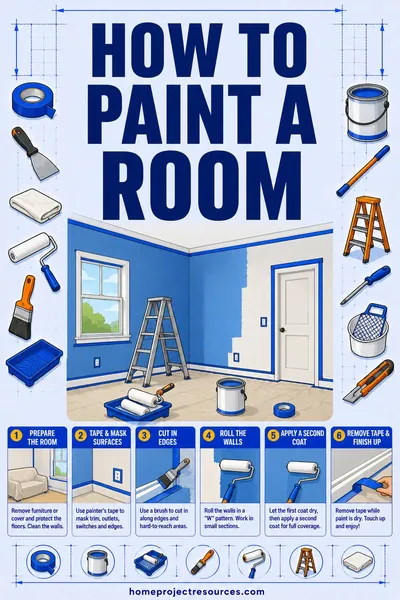
For technique on the actual painting, how to paint a room covers cutting in, roller loading and the order of operations that keeps a whole house job moving.
The two coat rule, and why a one coat quote is a red flag
Every honest interior quote is two coats. If a bid does not say how many coats, ask, and get the answer in writing.
One coat of modern interior latex is thin. It looks acceptable in flat light and terrible under a window in late afternoon, where raking light shows every roller lap and every spot where the old color grins through. It also scrubs off faster, because film thickness is what makes paint durable.
A contractor who comes in far under everyone else is usually doing one of three things:
- Quoting one coat and calling it a full repaint.
- Thinning the paint so it spreads further, which does the same damage as one coat.
- Excluding prep so that patching, caulking and priming become change orders after you have signed.
There is exactly one case where a single coat is genuinely fine: the same color, the same sheen, over a sound existing finish that only needs freshening. Say that out loud when you request the bid so everyone is pricing the same thing.
Paints marketed as one coat coverage do sometimes deliver, but only over a similar color on primed, smooth, non porous walls. Over new drywall, over a color change, or over fresh patches, they need two coats like everything else.
Worked example: 2,000 sq ft house, walls and ceilings
The house: 1,900 sq ft single story, 8 ft ceilings, nine rooms plus two hallways, currently a builder beige going to a warm white. Walls in good shape, about twenty anchor holes to fill.
Surface area
- Wall area: 1,900 x 2.75 = 5,225 sq ft
- Ceiling area: roughly equal to floor area = 1,900 sq ft
Paint needed
- Walls, two coats: 5,225 x 2 = 10,450 sq ft to cover. At 375 sq ft per gallon per coat, that is 27.9, so 28 gallons. In practice, five 5 gallon buckets plus three singles.
- Ceilings, two coats: 3,800 sq ft to cover at 350 sq ft per gallon = 10.9, so 11 gallons.
- Primer: spot only. Beige to warm white is an easy transition, so 2 gallons.
Time, doing it yourself: 95 to 120 hours, spread across four to eight weekends.
What goes on the bid request
| Item | What to write down |
|---|---|
| Surfaces | Walls, ceilings, closets interior, laundry, and whether trim and doors are in or out |
| Coats | Two finish coats, plus spot primer where noted |
| Prep | Fill twenty anchor holes, sand, caulk gaps at trim, wash kitchen walls |
| Product | Brand and line, or "equivalent or better" with the sheen named per room |
| Sheen | Flat on ceilings, eggshell on walls, semi gloss on trim, or your own choices |
| Protection | Floor covering, furniture moving and daily cleanup expectations |
| Access | Which days the house is available and whether it is occupied |
| Exclusions | Anything the painter will not do, written out rather than assumed |
Give that one page to three painters and the numbers that come back will finally be comparable. Our painter cost per hour page covers how painting labor is structured, and how to quote a painting job shows the same process from the contractor's side, which is genuinely useful to read before you negotiate.
Should you hire out just part of it?
Splitting the job is underrated and it usually beats an all or nothing decision.
- Hire the ceilings. They are the slowest, most miserable, most ladder dependent part of the job, and a crew's speed advantage over you is largest here.
- Hire the trim and doors. Brush finish quality is the hardest thing for an amateur to match, and trim is the surface people look at most closely.
- Do the walls yourself. Rolling a wall is the easiest skill in painting and walls are the largest area, so your hours buy the most there.
- Do the closets and the laundry room yourself. Nobody inspects those, and they are annoying for a crew to price.
A common split on a 2,000 sq ft house: you paint all the walls over a few weekends and a crew does ceilings, trim and doors in about three days. You get a professional looking finish exactly where finish quality shows, and you keep the largest labor line for yourself.
Related calculators and guides
- Paint calculator: gallons for any room and any number of coats
- Square footage calculator: real wall and floor area for odd floor plans
- Cost to paint a room: the per room version of this page
- How to paint a room: technique, order of operations and the prep that makes it last
- Drywall calculator: sheets and compound if your walls need repair first
- Cost to paint a house exterior: the outside version
Frequently asked questions
What should it cost to paint the interior of a 2,000 sq ft house?
That depends on your metro, your ceiling heights and, above all, on which surfaces are included. Walls only, walls plus ceilings, and walls plus ceilings plus trim are three different jobs, and trim is the one that moves the total most. Write down the surface list, the coat count and the prep, then get three bids on that identical page. The spread you see will be a real one for your market.
Is interior painting priced by floor square footage or wall square footage?
Both are common, which is exactly why quotes are hard to compare. Interior wall area is about 2.75 times floor area, so a wall surface rate looks like roughly a third of a floor area rate for identical work. Ask which basis each bidder used, multiply each rate by its own basis, and compare the totals rather than the rates.
How much cheaper is it to paint a house interior yourself?
Paint and sundries are a small fraction of a hired job, and labor is the rest, so doing it yourself removes most of the cash cost rather than a slice of it. What it costs you is 90 to 130 hours for a typical 2,000 sq ft house. Get one bid, subtract your material list, and divide by 100 hours to see what your weekends are worth on this particular job.
How long does it take to paint a whole house interior?
A two person professional crew does a 2,000 sq ft house in five to eight working days. A homeowner working alone needs 90 to 130 hours, which usually means four to eight weekends. Empty houses go roughly a quarter faster than occupied ones in both cases, because masking and furniture handling disappear.
Should I paint before or after moving in?
Before, without question. An empty house lets a crew spray, skip most masking and work continuously, which takes real hours out of the job. It also removes furniture moving, daily cleanup and the risk of overspray on your things. If closing timing allows even a few days of overlap, use them for painting.
Do I need to prime the whole house?
Usually not. Prime new drywall, bare patches, glossy or oil based existing finishes, water and smoke stains, and any room going from a deep saturated color to a light one. A straightforward repaint over sound eggshell or flat needs no full prime, just two good finish coats over clean, dull, dry walls.
How many gallons of paint does a 2,000 sq ft house need?
About 28 gallons for walls at two coats and about 11 for ceilings, based on 5,225 sq ft of wall area and 375 sq ft of coverage per gallon per coat. Buying 5 gallon buckets rather than singles lowers the unit price and guarantees color consistency across the whole house, which matters more than people expect on long sight lines.
Why is trim so expensive to paint?
Trim is brush work, and a brush covers a fraction of what a roller does per minute. A typical 2,000 sq ft house has 500 to 700 linear feet of baseboard, 12 to 16 doors and 15 to 20 windows, and doors are priced individually because each one has two faces, four edges and a jamb. That is why adding trim and doors to a whole house quote changes the total so sharply.