How to Fix Drafty Windows Without Replacing Them

Most drafty windows are not leaking through the glass. They leak around the sash where it meets the frame, and through the hidden gap between the window frame and the rough opening behind your trim. Seal those two paths and add one layer over the glass, and a cold old window gets dramatically more comfortable without anyone touching your walls.
The order matters. Lock the sashes, find the leak with smoke, seal the frame perimeter, weatherstrip the moving parts, then add an interior storm panel or film. Do it in that order and each step makes the next one cheaper and more effective.
Updated September 2026
Wondering whether the windows are even your biggest problem? Run our free insulation calculator for the attic and walls first, because in most houses the ceiling plane leaks more air than every window combined.
Two different things both feel like a draft
This is the part that trips people up, and it decides which fix will actually work.
Real air leakage is moving air. Cold outside air pushes in low in the house and warm air escapes high, so a first-floor window blows cold at your ankles while a second-floor window quietly leaks your heat out. You can feel this on the back of a wet hand. Caulk, weatherstrip, and foam fix it.
Radiant chill and the convection loop is not moving outside air at all. A single pane of glass sits close to outdoor temperature. Your body radiates heat to that cold surface, and the room air touching the glass cools, gets dense, and slides down the window onto the floor. It feels exactly like a draft blowing in. Caulk does nothing for it. Adding a layer over the glass does.
A quick way to tell them apart: hold a lit incense stick or a strip of tissue near the sash edges. If the smoke bends and runs, you have air leakage. If the smoke goes straight up but the cold feeling is still there when you stand near the window, you have a cold surface, not a hole.
Most old windows have both, which is why the full stack of fixes below beats any single one.
Where drafty windows actually leak
| Leak path | How to confirm it | Best fix | Reversible? |
|---|---|---|---|
| Between the sash and the frame (sides) | Smoke test with the window locked | V-strip in the sash channels | Yes |
| At the meeting rail where two sashes overlap | Smoke test, or look for daylight | Locking the sash, plus a rail seal | Yes |
| Under the bottom sash at the sill | Slide a piece of paper under, it moves freely | Tubular or foam seal on the sash bottom | Yes |
| Around the outside of the frame, at siding | Look for cracked or missing exterior caulk | Exterior sealant bead | No |
| Behind the interior trim, in the shim space | Cold trim, or a thermal camera line around the casing | Remove casing, low expansion foam and backer rod | No |
| Through old glazing putty at the glass edge | Putty is cracked, chalky, or missing | Reglaze, or a temporary bead of sealant | Depends |
| Through the sash weight pockets on old double hungs | Cold air at the side jambs on a windy day | Insulate the pocket or convert to spring balances | No |
| Through the glass itself (radiant) | Smoke is still, but the surface is cold | Interior storm, film kit, or cellular shade | Yes |
The sash weight pocket is the one most people never find. On a true double hung from before the 1950s, there is a hollow cavity in each side jamb holding a cast iron counterweight on a rope. That cavity is often open to the exterior sheathing. It is a chimney inside your wall, and it is why a window can feel drafty even when the sash seals look perfect.
The five minute test that finds the leak
Do this on a cold, windy day, because that is when the pressure difference is real.
- Close and lock every window. Locking is not optional. The lock on a double hung is a cam that pulls the two sashes together and compresses the seal at the meeting rail. An unlocked window can leak several times what a locked one does, and locking costs nothing.
- Turn off the furnace fan, the range hood, and the bathroom fans so they are not skewing the pressure.
- Light an incense stick and walk it slowly around the perimeter of each window, about an inch from the surface. Go around the sash edges, along the meeting rail, along the sill, and then around the outside of the casing where trim meets wall.
- Mark every spot where the smoke pulls or pushes. Blue painter's tape works, and you can write on it.
- Repeat with the back of a damp hand for anything the smoke was too subtle to show.
Now look at your tape. If most of it is on the sash, you have a weatherstrip job. If most of it is on the outside edge of the casing, you have a framing gap and the trim needs to come off. If there is barely any tape and the window still feels cold, skip to the glass layer section, because you have a radiant problem.
Fix one: seal the frame perimeter
This is the fix with the biggest payoff per hour, and it is the one people skip because it is boring.
Outside: inspect the joint where the window frame or brickmold meets the siding. Old caulk cracks, shrinks, and pulls away. Cut out what is loose, clean the surface, and lay a fresh bead with an exterior grade sealant rated for the substrate. Do not seal the weep holes at the bottom of a vinyl or clad window, because those are drains, not leaks. Sealing them traps water in the frame.
Inside: the casing (the flat trim around the window) hides a shim space between the window frame and the rough framing. In houses built before the mid 1980s, that space is often stuffed with nothing, or with fiberglass batt scraps that stop no air at all.
Pry the casing off carefully with a stiff putty knife and a flat bar, working from the middle outward, and set the pieces aside in order. You will see the gap. If it is wider than about 1 inch, push in a foam backer rod first, then fill with a low expansion window and door foam. Read the can. Standard high expansion foam can bow a window jamb enough to bind the sash, which turns a draft problem into a sticking problem.
Let it cure, trim it flush with a knife, and put the casing back with 15 or 16 gauge finish nails. Caulk the casing to the wall and to the jamb, and touch up the paint.
Fix two: weatherstrip the moving parts
Once the frame is sealed, the sash is the remaining path.
V-strip (also called tension seal) is the workhorse for double hungs. It is a folded strip of vinyl or bronze that you press into the sash channel with the fold facing out, so the sash squeezes it closed as it slides past. Bronze lasts decades and looks right on an old house. Vinyl is easier to cut and install.
Foam tape goes on surfaces that compress rather than slide, like the underside of a bottom sash where it meets the sill, or the top of an upper sash. It is not for sliding surfaces, because it shreds.
Tubular gasket seals irregular gaps well and is a good choice at the meeting rail on windows that no longer close tight.
Rope caulk is the renter's answer and it deserves more respect than it gets. It is a soft, non-hardening putty rope you press into the sash joint in fall and peel out in spring. It seals a window you are not going to open all winter, leaves nothing behind, and requires no tools.
Measure before you buy. On a standard 32 inch wide double hung, the two side channels for one sash run the full sash height, the meeting rail run is the sash width, and the bottom seal is the sash width again. Write those numbers down for every window before you go shopping, because coming home short is what turns a Saturday project into two Saturdays.
Fix three: add a layer over the glass
This is the step that fixes the cold surface feeling, and it is where single pane windows gain the most.
For reference, plain single pane glass performs at roughly R-1. A standard double pane runs about R-2, and a low-e unit with argon gets to roughly R-3. Those numbers explain why a single pane feels the way it does: it is barely better than an open frame at holding a temperature difference. Adding a second layer with a trapped air space roughly doubles the glazing performance, which is why a good interior storm gets a single pane window into double pane territory for comfort.
Your options, from least to most permanent:
- Shrink film kits. Double-sided tape around the casing, a clear plastic sheet, and a hair dryer to tension it. Nearly invisible when done well. It seals the window shut for the season, so never film an egress window in a bedroom.
- Cellular shades with side tracks. The tracks are what make them work. A cellular shade hanging free lets the convection loop spill out the sides and does much less than the marketing implies.
- Magnetic or friction fit interior storm panels. Acrylic or glass in a light frame that sits in the window opening. They come out for summer, they are quiet, and they preserve the look of an old window from outside. This is the best answer for historic windows you do not want to lose.
- Exterior storm windows. The traditional approach, and still effective. A low-e coated storm does noticeably better than plain glass. They also protect the original sash from weather, which extends its life.
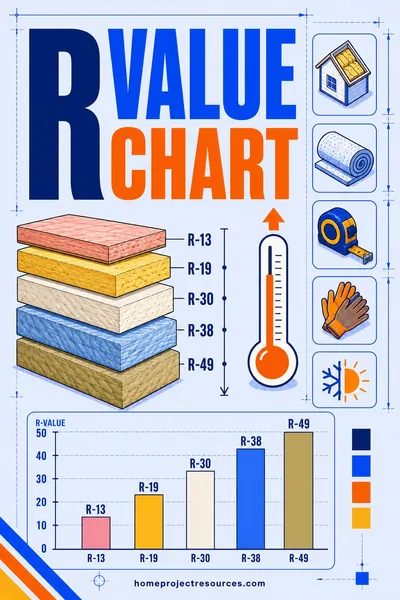
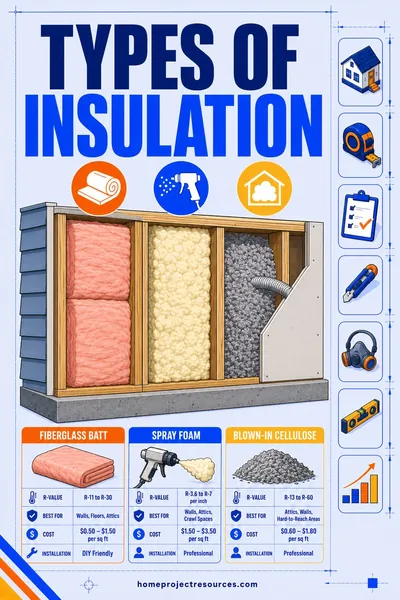
For a house-wide view of what different assemblies actually deliver, our R-value insulation chart puts glass in context next to walls and attics, and types of insulation covers what belongs in the wall cavity around those windows.
Worked example: twelve windows in a 1930s house
A two story house, 1,400 square feet, twelve original wood double hungs, and a living room nobody wanted to sit in from December to March.
The smoke test on a 20 degree windy morning found this:
- Nine of twelve windows were unlocked. Locking them killed visible smoke movement at the meeting rail on seven.
- Four windows had heavy smoke pull at the side jambs near the top, which pointed at open sash weight pockets.
- Every window on the west wall had smoke movement at the outside edge of the casing, and the trim itself was cold to the touch.
- Two windows had cracked glazing putty with visible daylight at one corner.
The work, in order:
- Locked everything. Free.
- Pulled the casing on the four worst windows. The shim space was empty on all four, roughly 3/8 to 3/4 inch all the way around. Backer rod plus low expansion foam, then the casings went back.
- Stuffed the accessible sash weight pockets with mineral wool. The counterweights on those four windows had already been replaced with spring balances by a previous owner, so the pockets were dead space anyway. On windows that still use weights, the ropes have to keep running, so this is a job for the windows you are already rebuilding.
- V-strip in the sash channels on all twelve, tubular gasket at the meeting rail on the four loosest.
- Reglazed the two windows with failed putty.
- Shrink film on the six windows in bedrooms and the dining room that nobody opens in winter, and magnetic interior panels on the two living room windows they wanted to keep operable.
The measurable result was not a number from a brochure. It was that the living room thermostat and the actual room temperature stopped disagreeing by 3 degrees, the floor near the windows stopped being cold, and the furnace stopped short cycling every time the wind picked up.
Total time: two weekends, mostly spent on the casing removal and reinstall.
What about the fog between the panes?
If you are seeing moisture trapped between two panes of a double pane window, that is a failed seal in the insulated glass unit, and no amount of caulk fixes it. The unit lost its gas fill and its desiccant is saturated. The glass can be replaced without replacing the whole window on many units, which is worth asking about.
Moisture on the room side of the glass is a completely different issue and usually means indoor humidity is too high for how cold the glass is. Our guide to condensation on windows walks through which side is wet and what each case means, and it pairs with this article because a colder window fogs sooner at the same humidity.
When sealing is not enough
Sealing an old window is the right call most of the time. There are a few cases where it is not.
- Rotted sash or sill. If a screwdriver sinks into the wood, you are sealing around a structural problem.
- Broken balances on both sides and sashes painted shut. Once a window cannot open at all, it stops meeting egress requirements in a bedroom.
- Frames out of square by a wide margin. Sealing a sash that no longer matches its opening is a losing game.
- Lead paint you cannot manage. Any house built before 1978 may have lead paint, and sanding or scraping it is regulated work under the EPA's Renovation, Repair and Painting rule. Read the EPA lead safety guidance before you start scraping old sash.
If replacement is the honest answer for some of your windows, our guide to the cost to replace windows covers what actually drives a quote and how to compare bids on the same terms. A common outcome is replacing the four worst windows and sealing the other eight, which is a perfectly good plan.
The safety rules that override everything
Never permanently seal a bedroom egress window. Every sleeping room needs at least one window or door that opens to the outside for escape. Film, rope caulk, and screwed-shut sashes all violate that if applied to the only egress window in a room.
Do not seal weep holes. Vinyl and clad windows drain water out of the bottom of the frame through small slots. Caulking them across the bottom traps water in the frame.
Watch combustion appliances. If you have an atmospherically vented gas water heater or furnace, tightening a house changes the pressure the flue works against. Tightening windows alone rarely tips a house over that line, but if you are also air sealing the attic and basement, a combustion safety test is worth doing.
Frequently asked questions
Does window film really work, or is it a gimmick?
It works, and the physics is simple. The film traps a still air layer against the glass, which raises the interior surface temperature and stops the convection loop. It will not stop air leaking around the frame, so it is a glass fix and not a sealing fix. Install it over a window you have already weatherstripped and it does its job well.
Should I caulk the inside or the outside of the window?
Both, but they do different jobs. Exterior sealant keeps water out of the wall and stops wind-driven air at the siding joint. Interior caulk and foam stop air moving through the shim space into your room. Interior air sealing is what you feel. Exterior sealing is what protects the wall.
Can I use expanding foam around a window?
Only low expansion foam labeled for windows and doors. Standard foam expands hard enough to bow the jamb inward, which binds the sash and can even crack an insulated glass unit. Fill loosely, leave room to expand, and do not treat the gap like something to pack solid.
Why is one room colder than the rest even after I sealed the windows?
Windows are rarely the whole story. Check the attic plane above that room, the rim joist below it, and whether the room has a return air path back to the furnace. A closed door with no return can starve a room of heat no matter how good the windows are. If the room simply has no heat source of its own, electric baseboard heater sizing works out the watts it would take to cover it.
Are interior storm windows better than exterior ones?
For comfort and quiet, interior panels usually win because they seal tightly against the interior trim and you can pull them out for summer. Exterior storms win on protecting the original sash from rain and sun. On a historic house where you want to keep the original windows for decades, many people end up with both.
Do I need to remove the old weatherstripping first?
Yes, if it is compressed, torn, or painted over. Old foam tape that has gone hard is worse than nothing, because it holds the sash open a fraction of an inch while sealing nothing. Scrape it off, clean the surface with denatured alcohol so the new adhesive bonds, and start fresh.
What single change helps the most for the least effort?
Locking every window, then checking the sash bottoms with a sheet of paper. Locking takes two minutes for a whole house and closes the meeting rail gap that is often the largest single leak in an old double hung. It is the highest return move in this entire article. After that, our guide to how to weatherstrip a door is the natural next hour of work, since exterior doors usually leak more than any one window.