Fire Extinguisher Types: Classes A, B, C, D and K, and Which One Your Home Needs

There are five main fire extinguisher classes in the US. Class A is for ordinary things like wood, paper and cloth. Class B is for flammable liquids and gases such as gasoline, oil and grease. Class C is for energized electrical equipment. Class D is for burning metals, which you mostly find in factories, and Class K is for cooking oils in commercial kitchens. For a home, the one to buy is a multipurpose ABC extinguisher, because it covers the first three and you do not have to stop and think about what is burning.
Keep one on every floor and one near the kitchen exit, plus one in the garage. And remember the most important rule before any of the details: an extinguisher is for a small fire. If a fire is spreading, filling the room with smoke or blocking your way out, get everyone out, close doors behind you and call 911 from outside.
Key facts
- Most homes need a multipurpose ABC extinguisher.
- Many fire safety groups suggest at least a 2-A:10-B:C for the main one.
- Keep one per floor, near the kitchen exit and in the garage.
- Home extinguishers empty in about 10 to 20 seconds.
- Never use water on a grease fire.
Free calculator from Home Project Resources
Extinguisher Finder: The Right Class for Each Room
Pick a room. You get the extinguisher class to buy and where to mount it.
Need more? Open the free Paint Calculator.
 Paint Calculator
 Square Footage Calculator
 Wallpaper Calculator
The Extinguisher Finder above matches the right class to each spot. Pick where it will go: kitchen, garage or workshop, each floor or hallway, bedroom area, or car. You get the extinguisher class to buy, where to mount it so you can grab it while moving toward an exit, and a safety note for that space, like what to do with a grease fire in a pan or how to store fuel in a garage. Run it once for each room you want to cover, then buy and mount them all in one trip.
Quick reference: fire extinguisher classes
| Class | Fire type | Examples | For homes? |
|---|---|---|---|
| A | Ordinary combustibles | Wood, paper, cloth, cardboard, plastic | Yes, in an ABC |
| B | Flammable liquids and gases | Gasoline, oil, grease, paint, solvents | Yes, in an ABC |
| C | Energized electrical equipment | Appliances, wiring, outlets, electronics | Yes, in an ABC |
| D | Flammable metals | Magnesium, titanium, sodium | No, mostly industrial |
| K | Cooking oils in commercial fryers | Restaurant deep fryers | Mostly commercial kitchens |
How to read an extinguisher label
Most home extinguishers show their classes on the label with letters and small picture icons: a pile of wood and a trash can for A, a gas can for B and a plug and outlet for C. If an icon has a red slash through it, the extinguisher should not be used on that kind of fire. That is worth a glance in the store, because a small extinguisher that looks like an ABC may actually be a BC model.
You will also see a rating like 2-A:10-B:C. The number before the A is a measure of how much ordinary-combustible fire it can handle, and the number before the B is a measure for flammable liquids. Bigger numbers mean more firefighting power. The C has no number. It just means the agent does not conduct electricity, so it is safe to use on live equipment. Many fire safety groups suggest at least a 2-A:10-B:C for the main extinguisher in a home. Smaller ones, like a 1-A:10-B:C, are handy for a car or a kitchen cabinet, but they empty in just a few seconds.
Why an ABC is the best choice for most homes
An ABC extinguisher, often called a multipurpose dry chemical extinguisher, works on class A, B and C fires. In a real emergency you may not know whether a fire started in the toaster cord, a towel or a pan of oil, and with an ABC that does not matter. It sprays a fine powder that smothers the fire and breaks the chemical reaction that keeps it burning.
The trade-off is the mess. The powder spreads everywhere, it is mildly corrosive and it can damage electronics and appliances if it is not cleaned up. That is a small price for stopping a fire. After you use one, air out the room, vacuum up the loose powder and wipe surfaces with a damp cloth.
Other extinguishers you may see
Beyond the multipurpose dry chemical type, a few others show up on store shelves or in workplaces. Water extinguishers are for class A fires only, like wood and paper. They must never be used on grease or electrical fires. Carbon dioxide (CO2) extinguishers handle class B and C fires and leave no residue, which is why you see them near computer equipment, but they are not rated for ordinary combustibles in most home sizes. Wet chemical extinguishers are the class K type made for commercial deep fryers. Clean agent extinguishers leave no residue and are made for electronics, but they cost more.
For a typical home, you do not need to collect several kinds. One good ABC per floor, plus the right spots below, covers almost everything a family is likely to face.
Kitchen fires: what to do before you grab it
Cooking is a leading cause of home fires, so the kitchen deserves a little planning. For a home kitchen, an ABC extinguisher or one labeled for home kitchen use is the usual pick. Mount it near the doorway out of the kitchen, not next to or behind the stove, so you can grab it while moving away from the fire instead of reaching over it.
For a grease fire in a pan, the first move usually is not the extinguisher. Turn off the burner. Slide a lid or a baking sheet over the pan to cut off the oxygen, and leave it there until the pan has cooled completely. Never use water on a grease fire, because it makes burning grease splatter and spread. Never carry the burning pan to the sink or outside. If the fire is spreading, use the extinguisher from a safe distance or get out and call 911. For a fire inside the oven, keep the door closed and turn the oven off. Built-up grease is a common fuel, so a regular clean using our guide on how to clean an oven is good prevention.
How to use a fire extinguisher: PASS
Read your extinguisher's label the day you buy it, not the day you need it. The steps are easy to remember with the word PASS.
- Pull the pin, breaking the small seal.
- Aim low, at the base of the fire, not at the flames.
- Squeeze the handle slowly and evenly.
- Sweep from side to side across the base of the fire until it is out.
Stand about 6 to 8 feet back to start, or whatever range your label gives, and always keep an exit behind you. Most home extinguishers empty in about 10 to 20 seconds, which is shorter than people expect. Watch the area afterward, since a fire can flare up again, and back away toward the exit if it does.
When to fight a fire and when to get out
Only try to put out a fire if every one of these is true. Everyone else is getting out, and someone is calling 911. The fire is small, about the size of a wastebasket, and it is not spreading. You have a clear way out behind you. The room is not filling with smoke. And you know how to use the extinguisher. If any one of those is not true, get out, close doors behind you to slow the fire, and call 911 from outside. Things can be replaced; people cannot.
Working smoke alarms buy you the time to make that choice. Test them monthly, and if one starts beeping, see smoke detector chirping for the fix. Our guide to disposing of batteries covers what to do with the old ones.
Where to keep extinguishers at home
Put an ABC in the kitchen near the exit, and one on every floor in a hallway or near the stairs, where you would pass it on the way out. Add one in the garage or workshop by the door into the house, since garages often hold gas, oil, paint and solvents (class B) along with wood and cardboard (class A) and tools and cords (class C). A laundry room near the door is another good spot, especially with a dryer. Lint is very flammable, and how to clean a dryer vent shows how to keep that risk down. For the car, a small ABC or BC model secured in a bracket keeps it from rolling around.
Mount each extinguisher on its hook or bracket with the top no higher than about 5 feet, where adults can grab it fast and small kids cannot play with it. Screw the bracket into a stud, not just drywall, and our guide on how to use a stud finder helps. A wall rack in the garage keeps the path to it clear, and garage storage systems has layout ideas. Store fuel and chemicals in approved containers away from heat. Buying just the paint you need with the paint calculator also means fewer half-used flammable cans on the shelf.
Checking, maintaining and replacing
Once a month, take a quick look. The gauge needle should be in the green, the pin and seal should be in place, and there should be no dents, rust or clogged nozzle. If the label suggests it, turn dry chemical extinguishers upside down and shake them a few times a year so the powder does not pack down. Replace or recharge an extinguisher after any use, even a short squeeze, and any time the gauge leaves the green.
Check the label for its service life too. Disposable extinguishers need replacing after a set number of years, and rechargeable ones need professional service. To retire an old one, ask your local fire department or household hazardous waste program how to dispose of it, rather than tossing a pressurized cylinder in the trash.
A worked example: equipping a two-story home
Say you live in a two-story house with a basement, an attached garage and one car. Using the tool for each spot, you end up with five extinguishers. One ABC of at least 2-A:10-B:C goes in the kitchen by the doorway to the dining room. One goes in the upstairs hallway near the bedrooms, and one at the bottom of the basement stairs, close to the furnace and laundry. One more goes in the garage next to the door into the house. A small ABC in a bracket goes in the car.
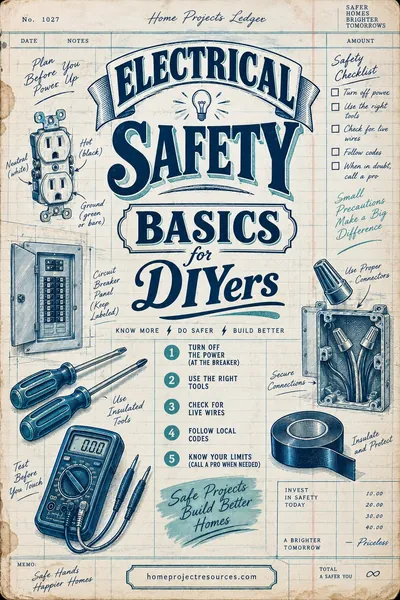
After mounting them, everyone in the family who is old enough walks through PASS once, and you write the install date on each label. During the holidays, when cooking, candles, space heaters and light strings all add risk, give each one a quick check. See LED vs incandescent Christmas lights for cooler-running options and electrical safety basics for cords and outlets. Our power outage prep guide covers safe heat and light when the power goes out, and you will find more free tools on our home page.
Quick answers about fire extinguisher types
What are the 5 types of fire extinguishers?
In the US, extinguishers are rated by the class of fire they fight: A for ordinary combustibles like wood and paper, B for flammable liquids and gases, C for energized electrical fires, D for burning metals and K for cooking oils in commercial kitchens. Many extinguishers cover more than one class.
What type of fire extinguisher is best for home use?
A multipurpose ABC extinguisher. It handles wood and paper, flammable liquids and electrical fires, so you do not have to guess what is burning. Many fire safety groups suggest at least a 2-A:10-B:C rating for the main one, with one on every floor.
What fire extinguisher should I use in the kitchen?
An ABC extinguisher or one labeled for home kitchen use, mounted near the exit rather than beside the stove. For a grease fire in a pan, turn off the burner and slide a lid over the pan first. Never use water on grease, and never carry a burning pan.
What is a Class K fire extinguisher?
It is a wet chemical extinguisher made for cooking oil and fat fires in commercial kitchens, like restaurant deep fryers. Most homes use an ABC extinguisher instead, and for a small pan fire at home, a lid and turning off the burner is usually the first step.
Where should I keep a fire extinguisher?
On every floor near the stairs, near the kitchen exit (not next to the stove), in the garage by the door into the house and in the laundry room. Mount each one with the top no higher than about 5 feet, where adults can reach it and small children cannot.
How do you use a fire extinguisher?
Remember PASS: Pull the pin, Aim low at the base of the fire, Squeeze the handle and Sweep side to side. Start about 6 to 8 feet back with an exit behind you. If the fire is spreading or the room fills with smoke, get out and call 911.
How long does a fire extinguisher last?
Check the label for its service life. Disposable extinguishers need replacing after a set number of years, and rechargeable ones need professional service. Replace or recharge any extinguisher after use, even a short squeeze, or when the gauge needle leaves the green.