How to Prepare for a Power Outage in Winter, Step by Step

Here's how to prepare for a power outage in winter in one sentence: pick one room you can keep warm, stock water and food you can eat cold, sort out a safe heat source before you need it, and know how you'll keep the pipes from freezing if the house goes cold for days. Most of that is a single Saturday of setup, and the rest is a routine you run when a storm is in the forecast. The two things that actually hurt people in winter outages are carbon monoxide from a generator or heater run in the wrong place, and a house that was never set up to hold heat. Both are preventable.
Updated September 2026
Wondering how long your house will hold heat once the furnace stops? Run our free insulation calculator to see how your attic and walls compare to the target for your climate zone. A house at the target holds a livable temperature for days; one at half the target is cold by morning.
Why a winter outage is different
A summer outage is an inconvenience. A winter outage is a slow-motion emergency, because everything that keeps the house safe runs on electricity even if the fuel doesn't. A gas furnace needs power for its blower, its igniter, and its control board. A heat pump is all electric. Heat cable on pipes stops. The sump pump stops. The well pump stops, which means no water at all for rural houses.
So the house cools, the pipes in the exterior walls start their slow march toward freezing, and every hour matters more than it would in July. The plan below is built around that clock.
How to prepare for a power outage in winter: the 24-hour heat plan
Your house is a bucket of heat with holes in it. The furnace kept the bucket full. Once it stops, your job is to plug the biggest holes in the right order and keep the heat you have in as small a space as possible.
Here's the order, from most effective to least:
| Priority | Action | Why it works |
|---|---|---|
| 1 | Close off one room and move everyone into it | Body heat from four people is roughly the output of a small space heater. It can hold one room, not a house |
| 2 | Shut every interior door, close the fireplace damper if the fire is out | Stops warm air migrating to cold rooms and up the chimney |
| 3 | Cover windows in the chosen room with blankets, quilts, or foam board | Glass is the weakest point in the wall. A blanket adds a still air layer |
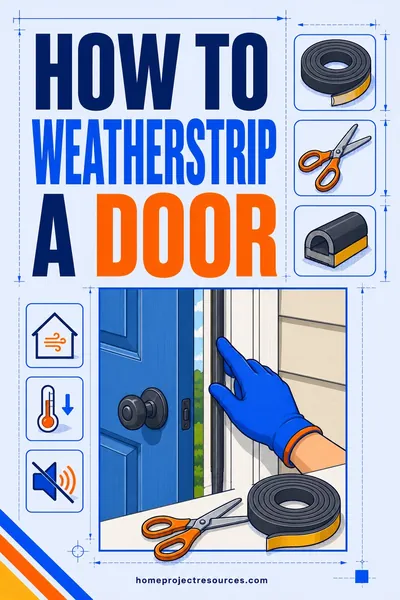
| 4 | Stuff towels at the base of the room's door and any exterior door | Cuts the drafts that steal heat at floor level |
| 5 | Open blinds and curtains on south-facing windows during the day, close them at dusk | Free solar gain, then keep it |
| 6 | Leave the attic hatch closed and stuffed | Warm air escaping through an unsealed hatch is a chimney |
| 7 | Wear layers, a hat, and socks, and sleep together under shared blankets | Heating people is easier than heating air |
The right room is on the south side, small, with the fewest exterior walls and windows, ideally with a door. A bedroom or a small den beats the living room. A room over a heated basement beats a room over a crawl space or garage. A bathroom next to it is a bonus.
If the outage runs into a second day and the house is dropping through the 40s°F, the pipes become the priority. That's covered below.
Heat sources that are safe, and heat sources that kill people
This is the section to read twice. In every big winter storm, people die from carbon monoxide because a generator was run in a garage, or a charcoal grill was brought inside, or a gas oven was used to heat the kitchen. The Consumer Product Safety Commission tracks these deaths, and the rules that follow come from their guidance.
Never use indoors, including the garage, the basement, or a porch with the door open:
- A portable generator
- A charcoal grill or hibachi
- A propane camp stove or propane patio heater
- A gas oven or stovetop as a room heater
- A kerosene heater not listed for indoor use, or any kerosene heater in a closed room
Safe with rules:
- A wood-burning fireplace or stove. Open the damper before lighting and keep it open until the ashes are cold. Keep a screen in place. Have the chimney inspected before the season.
- A vent-free gas fireplace or gas log that's listed for indoor use, run per its label, with a window cracked, and never while sleeping.
- An indoor-rated kerosene heater, with the room ventilated, fresh fuel only, refueled outdoors when cool, and at least 3 feet of clearance from anything that can burn. That clearance rule comes from the National Fire Protection Association, and it applies to every heater on this list.
- Battery, solar, or vehicle-charged 12-volt electric blankets and heated clothing, which put heat on a person rather than in a room.
And on every floor, near the sleeping area: a battery-powered carbon monoxide alarm. If your CO alarms are hardwired with no battery backup, buy at least one battery model now. Carbon monoxide has no smell and the first symptom is a headache that feels like the flu. If the alarm sounds, everyone goes outside and you call for help from there.
Generator safety, from the ground up
A generator is the single most useful winter outage tool and the most dangerous one. If you're buying one, decide between two kinds:
| Portable generator | Standby generator | |
|---|---|---|
| Fuel | Gasoline, sometimes propane or dual fuel | Natural gas or propane, plumbed in |
| Connection | Extension cords to individual devices, or a transfer switch or interlock installed by an electrician | Automatic transfer switch, whole house or selected circuits |
| Placement | Outdoors, at least 20 feet from the house, exhaust pointed away from windows, doors, and vents | Fixed pad, sited by the installer per code |
| Starts | You, in the storm | Itself, within seconds |
| Permit | None for the generator, yes for the transfer switch | Yes |
The 20-foot rule is from the CPSC and it's not a suggestion. Generators produce enough carbon monoxide to kill in minutes in an enclosed space, and the exhaust drifts in through windows and vents when the unit is too close. A garage with the door open is still an enclosed space. Newer portable generators carry a built-in CO shutoff sensor, and it's worth choosing one that does, but it's a backstop, not a placement plan.
Two more rules that matter:
- Never backfeed the house through a dryer outlet or any receptacle. It's illegal, it can electrocute the utility crew working on your line, and it can burn the house when the power returns. A transfer switch or a listed interlock kit is the only safe way to connect a generator to the panel, and it's an electrician's job. Our electrical safety basics page explains why.
- Size it by adding up watts, not by guessing. Look at the nameplate on each appliance you want to run. A refrigerator, a furnace blower, a sump pump, and a few lights are the usual winter list. Motors draw a surge on startup, several times their running watts, so the generator's surge rating has to cover the biggest motor starting while the others run. The numbers vary by appliance, so read your own nameplates rather than trusting a chart.
Store gasoline in approved containers, outside the living space, with stabilizer added, and rotate it. Run the generator for a few minutes every month so it starts when it counts.
Keeping the pipes from freezing during the outage
The house is cooling and the pipes in exterior walls, the crawl space, and the garage are the ones that freeze first. The routine is simple:
- Open the cabinet doors under every sink on an exterior wall.
- Drip both hot and cold at the faucet farthest from where the water enters the house, and at any faucet that's frozen before.
- Shut the doors on rooms without plumbing, but leave doors open between plumbing rooms and your warm room if they're adjacent.
- If the outage looks like it'll run more than a day and the house is heading into the 40s°F, shut off the main water valve and open all the faucets to drain the lines. Flush the toilets to empty the tanks. Pour RV antifreeze into traps and toilet bowls.
That last step means the house has no running water, but it also means no burst pipes. The full room-by-room method, including how to thaw a line that did freeze, lives in the hub on how to keep pipes from freezing. Read that page before the storm, not during it.
Water: how much and where to keep it
Federal emergency guidance is one gallon per person per day, and three days is the minimum you plan for. Half of that is drinking, half is washing and cooking. Pets need water too.
When a storm is forecast:
- Fill the bathtub. That's a reserve for flushing toilets (pour a bucket into the bowl) and washing, not drinking.
- Fill clean pitchers, pots, and bottles for drinking.
- If you're on a well, remember that the pump stops with the power. Fill more.
- Keep a case of bottled water in the pantry year round so you're not shopping in the storm.
For a family of four planning three days, that's 12 gallons: about two cases of bottled water for drinking plus the bathtub and a few filled pots for everything else.
Food: what to eat and when to throw it out
The refrigerator and freezer are your first two days of food if you leave them closed. The FDA's guidance is that an unopened refrigerator holds a safe temperature for about 4 hours, a full freezer for about 48 hours, and a half-full freezer for about 24 hours.
Your moves, in order:
- Before the storm, turn the fridge and freezer to their coldest settings, freeze containers of water to fill empty freezer space (a full freezer holds cold longer), and put a thermometer in each.
- During, don't open them. Eat from the pantry first.
- After, check the thermometers. Anything in the fridge that's been above 40°F for more than 2 hours goes. Freezer food that still has ice crystals or reads 40°F or below can be refrozen. Meat, seafood, dairy, and leftovers above 40°F are gone. When in doubt, throw it out.
Pantry stock for three days of no cooking: canned soup, beans, tuna, fruit, peanut butter, crackers, granola bars, dried fruit, shelf-stable milk. A manual can opener. If you have a camp stove, cook outdoors only. A wood stove with a flat top works indoors.
The supplies list, sorted by what fails first
Keep these in one bin so nobody's hunting in the dark.
| Category | Item | Notes |
|---|---|---|
| Light | LED flashlights or headlamps, one per person, plus a lantern | Headlamps leave your hands free. Skip candles where you can |
| Light | Spare batteries in the sizes your lights use | Check them in October |
| Warmth | Wool or fleece blankets, sleeping bags, hats, wool socks | One sleeping bag per person rated for the 30s°F or lower |
| Warmth | Hand warmers, a foam sleeping pad to get off the floor | Cold floors drain heat fast |
| Air | Battery carbon monoxide alarm, battery smoke alarm | Test both |
| Communication | Battery or hand-crank weather radio, phone power banks | Charge the power banks every month |
| Water | Bottled water, water containers, water purification tablets | See above |
| Food | Three days of no-cook food, manual can opener | Rotate it |
| Medical | First aid kit, a week of prescriptions, any medical device backup power | Talk to your doctor about refrigerated meds and powered devices |
| Tools | Wrench for the gas and water shutoffs, work gloves, tarp | Tape a note to the panel showing where both shutoffs are |
| Car | Keep the tank at least half full | A car is a phone charger and a warm place, but only outdoors, never in the garage |
Worked example: a family of four, a three-day ice storm, a 1970s two-story house
Say you've got two adults, two kids, a 2,000 square foot two-story with a gas furnace, a finished basement, and a crawl space under the family room addition. The ice storm hits on a Tuesday night and the power's out until Friday afternoon.
Tuesday evening, before the lights go out. Fridge and freezer to coldest. Bathtub filled (about 40 gallons in a standard tub). Six pots and pitchers filled for drinking: call it 4 gallons, plus the two cases of bottled water in the pantry, another 5 gallons. That's 9 gallons of drinking water for four people over three days, short of the 12-gallon target, so you fill the two 5-gallon camping jugs from the garage as well. Phones and power banks charged. The generator is rolled out to the driveway, 25 feet from the house, exhaust facing the street. Car moved out of the garage so the door can stay shut.
Tuesday night, power fails. Everyone moves into the master bedroom: south side, one exterior wall, over the heated basement, two windows, bathroom attached. Quilts go over the two windows, towel at the door base. Kitchen sink cabinet opened, both kitchen faucets set to drip, the family room (over the crawl space) closed off entirely. Generator started and two extension cords run: one to the refrigerator, one to a power strip for the CO alarm's charger, lamps, and phones. Battery CO alarm on the bedroom dresser.
Wednesday. The house sits in the mid 50s°F by noon. The bedroom is in the low 60s°F with four bodies and the sun on the south windows. Pantry lunch. The generator runs four hours in the morning and four in the evening, which holds the fridge and gives everyone a chance to charge up. Gasoline used: about half of what was stored.
Thursday. The house is in the upper 40s°F. Time for the pipe decision. The main water valve is closed, faucets opened, toilets flushed, and RV antifreeze poured into every trap and both toilet bowls. The bathtub water is now the flush supply. The generator's second morning run also powers the furnace blower for an hour through the interlock the electrician installed last year, which pushes the house back into the mid 50s°F and buys another day.
Friday afternoon, power returns. Furnace back on. Nobody opens the main valve yet. You walk the house listening for water running in walls, find nothing, then open the main slowly with the faucets still open, walk again, and close the faucets one by one. The refrigerator thermometer reads 38°F, so the food's fine. The freezer, which was kept closed, reads 20°F and everything still has ice crystals.
Total cost of the storm: some gasoline and a jug of RV antifreeze. No burst pipes, no lost food, no headache from the generator, because every one of those was decided on Tuesday.
When the power comes back
The outage isn't over when the lights are on.
- Turn off or unplug the generator before you switch the transfer switch back, and let the unit cool before you refuel it.
- Check the pipes before you trust them. If you drained the system, open the main slowly with the faucets open and listen. If you didn't drain, check every exterior wall faucet for flow and every visible line for drips. A pipe that froze may have split and only leaks when it thaws.
- Check the water heater. If it was drained or lost pressure, make sure it's full before it fires.
- Check the food against the thermometers.
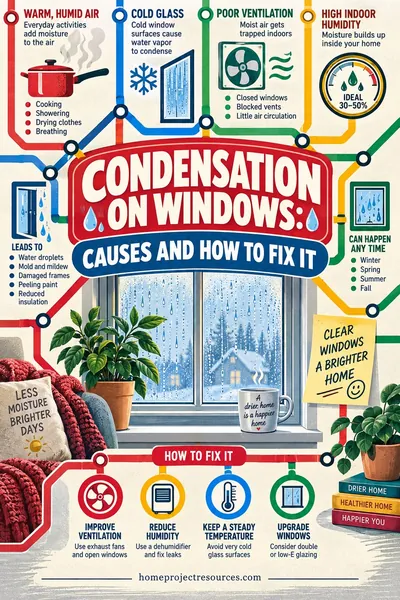
- Let the furnace run. Don't crank the thermostat; it heats at the same rate either way. Keep interior doors open now so the whole house comes up together and the cold rooms don't pull moisture from the warm ones onto their windows. Our condensation on windows page explains why a cold house that warms fast fogs its glass.
- Restock. Batteries, gasoline, bottled water, the medications you used.
Setting the house up before next winter
The one-time work that makes every future outage easier:
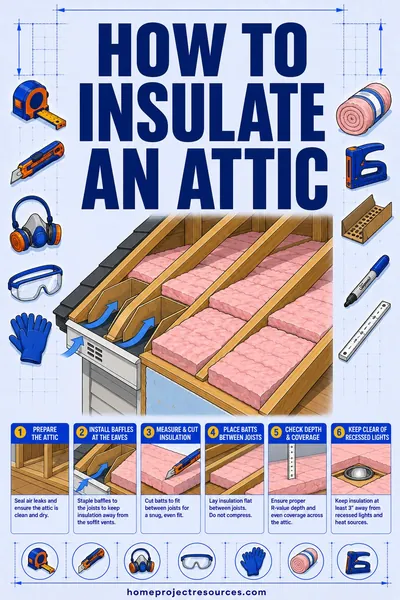
- Air seal and insulate the attic. It's the biggest reason one house holds 50°F for three days and another is at 35°F by morning. See how to insulate an attic and check your target with the insulation calculator.
- Add a layer over the glass in your chosen warm room. Cellular shades, thermal curtains, or an interior storm panel. Covered in how to insulate windows for winter.
- Winterize the outdoor faucets every fall so that's one less thing to freeze: how to winterize outdoor faucets.
- Get a transfer switch or interlock installed if you own a generator, so the furnace blower and the well pump can run safely.
- Put the outage bin together in October, and put it on your home maintenance checklist.
Frequently asked questions
How long will my house stay warm without power?
It depends on the outdoor temperature, the wind, and how well the house is insulated and air sealed. A well-insulated house in a 20°F night might lose 10 to 15 degrees overnight. A drafty one can drop into the 40s°F in the same time. There's no reliable single number, which is why the plan is to close off one room and watch a thermometer rather than trust the whole house.
Can I run a generator in the garage with the door open?
No. An open garage door does not clear carbon monoxide fast enough, and the exhaust drifts into the house through the connecting door and any gaps. The CPSC rule is outdoors, at least 20 feet from the house, exhaust pointed away from windows, doors, and vents. People die every winter running generators in open garages.
Is it safe to use a gas stove for heat in a power outage?
No. A gas oven or burner run for heat produces carbon monoxide in a space that was never designed to vent it. Use the stovetop for cooking a meal, with the range hood if it has power, and then turn it off. Heat comes from a fireplace, a listed indoor heater, or blankets.
What temperature should I set my thermostat to if I lose power?
The thermostat does nothing without power. If you have a generator running the furnace blower through a transfer switch, set it to the low 60s°F and let it cycle. Once the power returns, set it to your normal temperature rather than cranking it, since the furnace heats at the same rate regardless.
How do I keep my pipes from freezing during a power outage?
Open sink cabinets, drip the faucets on exterior walls, close off rooms with no plumbing, and if the house drops into the 40s°F with no end in sight, shut off the main and drain the lines. The full method is in the pipes hub.
Should I open the fridge to check the food?
Not until the power's back. Every opening lets the cold out. Put a thermometer inside before the storm, then read it when the power returns. Anything above 40°F for more than 2 hours is thrown out. Freezer items with ice crystals still in them can be refrozen.
Do I need a carbon monoxide detector if I don't have a generator?
Yes. Fireplaces, kerosene heaters, gas appliances, and cars in attached garages all produce carbon monoxide, and winter is when houses are sealed tightest. A battery-powered alarm on each level near the sleeping areas is the baseline whether or not you own a generator.