Hardwood vs Engineered Wood: How to Choose a Floor

The real difference in hardwood vs engineered wood is what sits under the surface. Solid hardwood is one piece of wood all the way through, typically 3/4 inch thick. Engineered wood is a thin layer of the same real wood glued over a plywood or HDF core. Both give you a genuine wood floor. They just fail in different ways, they suit different subfloors, and they are quoted with different labor.
Pick solid hardwood for above grade rooms in a stable climate when you want a floor that can be sanded five or six times over eighty years. Pick engineered for basements, concrete slabs, radiant heat, humid coastal air and wide planks, because the layered core does not cup and gap the way a solid board does.
Updated September 2026
A note on numbers. This page compares specifications, installation methods, lifespans and the line items a quote should carry, not dollar figures. Flooring material and installation labor are priced by species, by market and by the week, and we do not set any of it. Get your quantities right here, then compare three written quotes on identical square footage.
Know your square footage before you price anything. Our free flooring calculator turns room dimensions into boxes with waste built in, so you can compare quotes on the same number instead of guessing.
Hardwood vs engineered wood at a glance
Both are real wood. This table is the practical comparison, which is where the decision actually gets made.
| Factor | Solid hardwood | Engineered wood |
|---|---|---|
| What it is | One solid board, usually 3/4 inch | Real wood veneer over a plywood or HDF core |
| Relative material cost | Higher at the same species and grade | Ranges from the cheapest real wood floor to pricier than solid at thick wear layers |
| Relative installed cost | Higher, because nail down and site finishing carry more labor | Lower at the entry level, where a floating floor cuts the labor line most |
| Typical plank width | 2 1/4 to 5 inches | 3 to 10 inches |
| Refinishing | 4 to 7 times over its life | 0 to 3 times, depending on wear layer |
| Goes over concrete slab | No, not directly | Yes, with a moisture barrier |
| Below grade in a basement | No | Yes, most products |
| Radiant floor heat | Rarely approved | Commonly approved |
| Humidity tolerance | Narrow, roughly 35 to 55 percent | Wider, roughly 30 to 60 percent |
| DIY friendliness | Low, since nail down needs a flooring nailer | Moderate to high, since click lock floats |
| Realistic lifespan | 50 to 100 years | 20 to 40 years |
| Resale language | Solid hardwood, the strongest phrase in a listing | Hardwood, and buyers rarely distinguish |
The honest summary: solid hardwood is the better long term asset in a house that can host it. Engineered wood is the better floor in a house that cannot, and the good engineered products today are not a compromise at all.
Is engineered hardwood real wood?
Yes. This is the single most common misunderstanding, and it costs people good floors.
The top of an engineered plank is sawn or sliced from the same log as solid hardwood. Walk on a white oak engineered floor and you are walking on white oak. Sand it, stain it, scratch it, and it behaves like oak, because it is oak.
What is different is the body. Under that wear layer sit five to twelve cross laminated plies of birch, poplar or eucalyptus, each rotated 90 degrees from the one below. That crossing pattern is the whole point. Wood moves across the grain and barely moves along it, so alternating the direction cancels out most of the seasonal swelling.
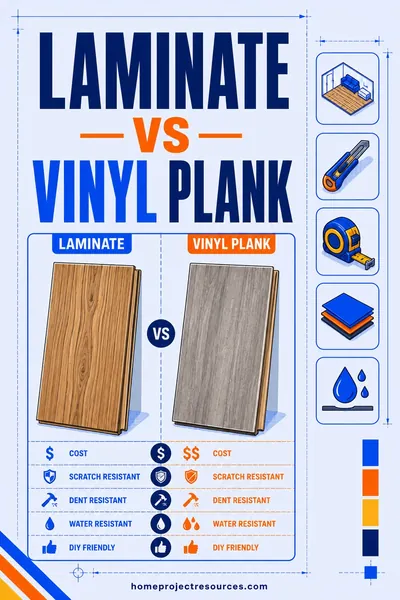
Do not confuse any of this with laminate. Laminate has zero real wood on the surface. It is a photograph of wood under a melamine coating. Our laminate vs vinyl plank comparison covers that whole category and where it belongs.
The one specification that decides everything: wear layer
If you take one number from this page, take this one. The wear layer is the thickness of real wood above the core, and it determines whether your engineered floor is a fifteen year floor or a forty year floor. It is also the main reason two engineered quotes can be far apart on the same room.
| Wear layer | Sandings left | Where it belongs | What it does to the quote |
|---|---|---|---|
| 0.6 to 1.0 mm | Zero, screen and recoat only | Rentals, flip properties, low traffic guest rooms | The cheapest real wood on the market, and a wear item rather than an asset |
| 2.0 mm | One light sanding | Normal residential, bedrooms and living rooms | The common mid tier, and the default in most big box displays |
| 3.0 mm | Two sandings | Busy family homes, kitchens, hallways | A clear step up in material, with no change in labor |
| 4.0 to 6.0 mm | Two to three sandings | Forever homes, heirloom grade installs | The priciest engineered tier, often above solid oak in the same species |
A sanding removes roughly 0.8 to 1.0 mm of wood, and the sander needs material left underneath so it does not chew through into the plywood. That is why a 2 mm wear layer buys you one refinish, not two.
Sellers do not always print the wear layer on the front of the box. Ask for it in millimeters and get it in writing. A premium engineered oak with a 0.6 mm veneer is a wear item, not an investment.
Also ask how the veneer was made. Sawn veneer is cut with a blade like a board, so the grain looks like solid wood. Sliced is similar quality. Rotary peeled is shaved off a spinning log like a roll of paper towels, and it produces a wide, swirly, plywood looking grain that most people find obviously fake. Rotary peeled shows up in the cheapest tier.
Species, hardness, and what each one does to the bill
Species drives material price more than construction does, and it drives refinishing labor too. Here is how the common choices compare.
| Species | Janka hardness | Relative material price | Notes for a quote |
|---|---|---|---|
| Red oak | 1290 | The value benchmark, widely stocked in both constructions | Easy to source, easy to match, easy to refinish |
| White oak | 1360 | A step above red oak, and the current design default | Wide planks and rift and quartered cuts push it up further |
| Hickory | 1820 | Above the oaks | Very hard, so cutting and sanding take longer |
| Maple | 1450 | Near white oak | Blotches under stain, so it is usually left natural or factory finished |
| Hard pine | 690 to 870 | The cheapest solid option | Dents easily, and that is a look some people want |
| American walnut | 1010 | Among the priciest common species | Soft for its price, and beautiful, so it belongs in low traffic rooms |
| Brazilian cherry | 2350 | Mid to high | Extremely hard, and refinishers charge more to sand it |
| Bamboo, strand woven | 3000 plus | Low to mid | Not technically a hardwood, and quality varies enormously by brand |
Janka is a dent resistance number from a standardized ball indentation test. Higher resists dents better. It says nothing about scratches, which are a finish property rather than a wood property.
Two things people get wrong. First, a hard species does not stop dog scratches, because scratches happen in the polyurethane on top. Second, a very hard exotic is harder to sand and refinish, and the pros charge more for it, so the cost follows you for the life of the floor.
Labor is the other half of the bill
Installation method changes the labor line more than the boards do, and it is set by your subfloor rather than by preference.
- Nail down over a plywood subfloor. The traditional solid hardwood install, and the most labor of the three.
- Glue down over concrete. The priciest method per square foot, and adhesive is a real material line on top of it.
- Floating click lock. The cheapest labor by a wide margin, and the only method most homeowners should attempt themselves.
- Old flooring removal. Priced separately, and glued tile or glued down carpet is the expensive version.
- Subfloor leveling. Nobody knows until the old floor is up, which is why it belongs on the quote as an allowance with a unit rate.
- Shoe molding and transitions. Priced by the linear foot, and easy to leave off a bid entirely.
Worked example: a 16x20 living room in oak
Say the room is 16 by 20 feet. That is 320 square feet. Wood flooring wants 10 percent waste on a straight layout, so you buy about 352 square feet. Raise that to 15 or 20 percent for a diagonal, herringbone or chevron layout, because both waste and labor climb.
Now hold that 352 square feet constant and ask for the same room quoted five ways:
- Solid red oak, 3 1/4 inch, site finished and nailed down.
- Solid white oak, 5 inch, prefinished and nailed down.
- Engineered white oak, 2 mm wear layer, 6 inch, floated.
- Engineered white oak, 4 mm wear layer, 7 1/2 inch, floated or glued.
- Engineered click lock, installed by you, with a tool rental.
Two things fall out of that comparison every time.
The cheapest and the most expensive options are both engineered. Construction type is not a price tier. Wear layer and plank width are, and a thick wear layer engineered plank routinely costs more than solid oak.
The DIY saving is almost entirely labor, and only on a floating floor. Nail down and glue down are not beginner projects, and a glue down mistake over concrete is close to unfixable. If you want the saving, buy a floating product and accept the slightly hollower sound underfoot.
Where solid hardwood wins
Total lifespan. A 3/4 inch solid oak floor has roughly 1/4 inch of wood above the tongue. That is four to seven sandings. Floors installed in the 1920s are still being refinished today. Nothing else in this comparison competes on that timeline.
Refinishing economics. Sanding and refinishing a floor you already own is far cheaper than replacing it, and you can do it repeatedly. It is also how you change color later without buying any flooring at all. Our cost to refinish hardwood floors page covers what drives that job.
Repairs disappear. A damaged board gets cut out, replaced and blended into the surrounding finish. On a prefinished engineered floor, the replacement plank shows, because the factory finish and sheen are hard to match.
The listing word. Real estate agents write solid hardwood throughout because buyers respond to it. Both floors read as wood in photos, but the phrase carries weight in higher end markets.
Site finished flatness. Solid boards are usually sanded flat after install, so there are no micro bevels between planks and no seams to catch grit. It is a smoother, more continuous surface.
Where engineered wood wins
Concrete slabs and basements. Solid hardwood cannot be nailed to concrete and cannot handle the moisture vapor that comes up through a slab. Engineered can be glued or floated over concrete with a vapor barrier. If your project is a lower level, our cost to finish a basement guide covers the moisture prep that has to happen first.
Radiant floor heat. Most manufacturers approve engineered over hydronic or electric radiant. Very few approve solid. The heating and cooling cycle is exactly the movement that a solid board handles badly.
Wide planks. A 7 inch solid board will cup, crown and gap seasonally in most climates. A 7 inch engineered board barely moves. If you want the wide plank look that dominates current design, engineered is the practical answer.
Humid or coastal climates. Gulf Coast, Florida and Pacific Northwest homes swing far outside the 35 to 55 percent humidity band that solid wood wants. Engineered tolerates more.
Faster installs and less mess. Prefinished engineered goes down and you walk on it that day. Site finished solid means three to five days of sanding, dust, stain and coats, and you stay off it while the finish cures. On an occupied house that difference has a real cost of its own.
Lower entry price. A 2 mm engineered floating floor is the cheapest way to get real wood into a house, full stop.
Can you refinish engineered hardwood?
Sometimes, and the answer is entirely in the wear layer.
- Under 2 mm. No sanding. You can screen and recoat, which abrades the finish lightly and adds a fresh coat of poly. That fixes dullness and light scuffs. It does not fix dents or deep scratches.
- 2 mm. One careful sanding, done by a pro who knows to stay off aggressive grits.
- 3 mm and up. Two sandings, sometimes three at 4 to 6 mm.
Beveled edges complicate this. Many engineered planks have a micro bevel between boards, and sanding flat removes it unevenly across the room, which looks worse than the wear you were fixing. Ask the refinisher to look at the bevels before you commit.
Screen and recoat every seven to ten years is honestly the smarter maintenance plan for any wood floor. It is a fraction of the work of a full sanding and it keeps the wear on the finish instead of on the wood.
Moisture, subfloors, and what actually ruins wood floors
Neither product likes standing water, and both need the subfloor checked first.
Test the slab. For concrete, the standard checks are a calcium chloride test, ASTM F1869, or in situ relative humidity probes, ASTM F2170. A pro doing a glue down over concrete should run one. If they shrug at the question, get another bid.
Check the wood subfloor. Plywood or OSB should read within 2 to 4 percentage points of the flooring's moisture content on a meter before anything goes down.
Acclimate the boards. Solid hardwood usually needs three to seven days in the room, unboxed and stickered, at normal living temperature and humidity. Engineered often needs 24 to 48 hours, and some floating products need none at all. Follow the specific manufacturer's sheet, because installing outside their instructions voids the warranty.
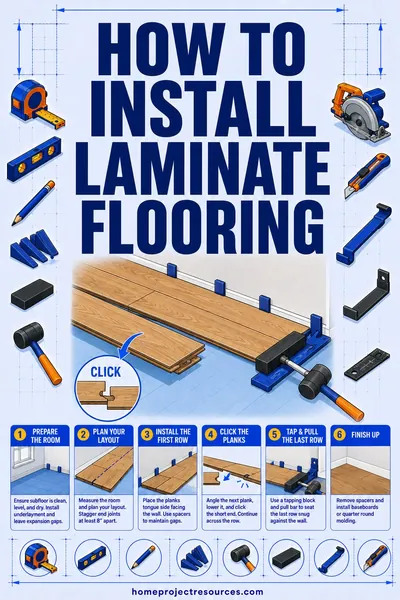
Leave the expansion gap. Both floors need 1/2 to 3/4 inch of gap at every wall, hidden behind baseboard and shoe molding. Floors that buckle in August almost always ran tight to a wall somewhere. The same rule shows up in our how to install laminate flooring walkthrough, and the gap logic there applies to wood too.
Keep indoor humidity in the band. A whole house humidifier in a dry winter climate protects a solid floor better than anything else you can buy. Gaps you can slip a dime into every January are a humidity problem, not an installation problem.
Which one adds more to resale?
Wood floors of either type are one of the few finishes that reliably help a sale. The practical read:
- Refinishing an existing solid floor is the best return in the whole category, because you already own the wood and you are only paying for the labor to bring it back.
- New wood over carpet in a main living area moves listings, especially in markets where wood is the default.
- Solid versus engineered rarely changes an offer. Almost no buyer measures a wear layer during a showing.
- Consistency matters more than species. One continuous floor across the main level reads as more expensive than three different premium floors in three rooms.
If you are weighing this against other projects, our home improvement ROI breakdown ranks flooring against kitchens, siding and windows on payback.
How to read a wood flooring quote
Make sure every bid separates these lines, or you cannot compare them:
- Product name, species, and wear layer in millimeters for engineered, or board thickness for solid.
- Finish type, meaning prefinished with aluminum oxide, or site finished with oil modified or water based poly.
- Square footage and the waste percentage being ordered, stated separately.
- Installation method, meaning nail, staple, glue or float.
- Subfloor prep allowance, priced separately with a unit rate, because nobody knows until the old floor is up.
- Removal and disposal of the existing floor, including glued down material.
- Transitions, thresholds, stair nosing and shoe molding, itemized by the linear foot.
- Appliance and toilet disconnects where the floor runs into a kitchen or bath.
A bid that comes in well under the others on a 0.6 mm veneer is not cheaper. It is a different product with a different lifespan. For a wider picture across materials, see our cost to install flooring breakdown.
Permits are rarely required for flooring alone. They become relevant when the job includes moving walls, altering structure, or plumbing and electrical work in a remodel, and structural questions belong to a licensed contractor. Our guide on how to tell if a wall is load bearing is the first stop if a floor project is turning into a layout change.
Frequently asked questions
Is engineered hardwood cheaper than solid hardwood?
At the entry level, yes, mostly because floating installs cost far less in labor than nail down or glue down. At the top of the market they cost about the same, and a 6 mm wear layer engineered plank can cost more than solid oak in the same species. Construction type alone does not tell you which quote will be lower, so compare wear layer, plank width and install method instead.
Can engineered hardwood go in a basement?
Yes, and it is the standard recommendation for below grade wood. Solid hardwood should not go in a basement at all. You still need a vapor barrier over the slab, a slab moisture test, and a plan for any water that gets in, since neither floor survives a flood.
How long does engineered hardwood last?
Twenty to forty years for a good product with a 3 mm or thicker wear layer and normal household traffic. Thin veneer floors under 1 mm are more realistically ten to twenty years, because once the veneer wears through there is no fixing it.
Does engineered hardwood scratch more easily than solid?
No. Scratch resistance lives in the finish, not in the core. Factory applied aluminum oxide finishes on prefinished engineered planks are typically harder than a site applied polyurethane, so they often scratch less than a freshly finished solid floor.
What thickness of engineered wood should I buy?
Total thickness of 1/2 inch to 5/8 inch with a 3 mm wear layer is the residential sweet spot. Total thickness affects how solid the floor feels underfoot and whether it can be nailed down. The wear layer is what determines how long it lasts, so never trade wear layer for overall thickness.
Can you put solid hardwood over concrete?
Not directly. Some installers build a plywood subfloor over the slab with a moisture barrier first, which adds roughly 3/4 to 1 1/4 inch of height plus a whole extra layer of labor and material. That height often collides with door swings and appliance clearances, which is why engineered usually wins on slabs.
Which is better for dogs?
Engineered with a hard factory finish, in a harder species like hickory or white oak, with a matte or wire brushed surface that hides scratches. Big claws mark any wood floor. A matte finish and a busy grain make the marks far less visible than a glossy dark stain does.
Do wide planks cost more to install?
Usually a little, because wide boards need more attention to subfloor flatness and often want glue assist along with nails. The material itself carries most of the premium, since a 7 inch plank commonly costs a quarter to a half again more per square foot than a 3 1/4 inch one in the same species and grade.
The short version
Both floors are real wood. Solid hardwood buys decades and multiple refinishes in a house with a wood subfloor and stable humidity. Engineered buys stability, wide planks, slabs, basements and radiant heat, and it is the only sensible choice in those conditions.
Buy the wear layer, not the brand. Three millimeters or more if you plan to stay. Then run your rooms through the flooring calculator so the boxes you order match the floor you actually have.