How Much Would It Cost to Carpet a Room?

How much would it cost to carpet a room is a question with four moving parts, and only one of them is the carpet. The others are the pad, the labor, and the shape of the room against a fixed roll width. Two retailers can quote the same bedroom in two different units, with two different pad specs and two different seam plans, and the sheets of paper will not be comparable until you take them apart.
So the useful question is not what carpet goes for. It is what unit the quote is written in, what pad is under it, where the seam lands, and what happens when the old carpet comes up. Get those four answered in writing and three quotes become comparable in about twenty minutes.
Updated August 2026
A note on numbers. You will not find a dollar figure on this page. Carpet, pad, installation labor, and disposal pricing move by region, by supplier, by product line, and by how busy the crews are, so any printed range would be wrong for most readers and stale for the rest. What is here instead is the unit math, the line items that belong on a written quote, and the questions that keep bids honest.
Measuring first? Get your square footage and material estimate with our free Flooring Calculator, then use the breakdown below to turn that area into a quote you can actually check.
The square yard trap: always ask which unit
This is the single most useful thing on this page. Carpet has been sold by the square yard for a century, and plenty of retailers still quote that way, while flooring in every other category is quoted per square foot.
One square yard equals 9 square feet.
That factor of nine is why a carpet quote can look like a third of a competing quote while describing the same job at the same rate. It also runs the other way, which is the dangerous direction: a number that looks cheap against the shop down the road may simply be written in the bigger unit.
| Room area in square feet | Same area in square yards |
|---|---|
| 100 | 11.1 |
| 120 | 13.3 |
| 168 | 18.7 |
| 200 | 22.2 |
| 224 | 24.9 |
| 320 | 35.6 |
| 1,200 | 133.3 |
| 2,000 | 222.2 |
To convert an area, divide square feet by 9 to get square yards, or multiply square yards by 9 to go the other way. Rates convert the same way: divide a per square yard rate by 9 for the per square foot equivalent.
Ask this exact question on every quote: "Is that per square foot or per square yard, and does it include pad and labor?" Two quotes are only comparable when both answers match. A written quote should state the unit. If it does not, get it in writing before you sign anything.
What is actually in a carpet installation quote
The carpet itself is usually less than half the total. Here is what a complete installed price contains, how each piece is measured, and what makes it move.
| Component | How it is measured | What moves it |
|---|---|---|
| Carpet material | Square feet or square yards, unit stated | Fiber, face weight, twist level, whether it is solution dyed, pattern repeat |
| Padding (cushion) | Square feet, density and thickness named | Density in pounds, thickness, moisture barrier, warranty minimums |
| Installation labor | Square feet of field area | Stretching, seaming, trimming, tucking, room count, closets and jogs |
| Old carpet removal and disposal | Square feet, plus haul | Layers, staples, glue down pad, stairs, county dump fees |
| Tack strip | Linear feet of perimeter | Whether existing strip is sound or rusted, concrete versus wood subfloor |
| Transitions and thresholds | Each | One per doorway and material change |
| Moving furniture | Per room | Free if you empty the room yourself, quoted individually for heavy items |
| Subfloor repair | Square feet or per sheet | Only discovered after the old carpet comes up, so get a unit basis in advance |
A quote that collapses all eight of those into one figure has told you nothing you can check. A quote that separates them lets you find out which line is actually different between bidders.
Why cheap padding is a false economy
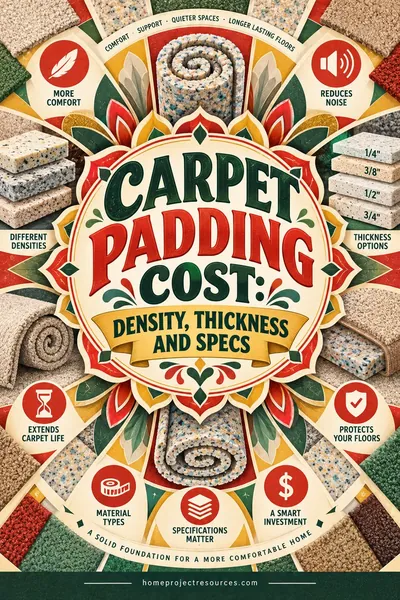
Padding is the part people cut to save money, and it is the wrong place to cut. The pad determines how the carpet feels underfoot, how quiet the room is, and how long the carpet lasts, because the pad absorbs the compression that would otherwise crush the carpet fibers.
A builder grade thin, low density pad under a good carpet will make that carpet wear out years early. Upgrading the pad on a single bedroom is the cheapest quality improvement available anywhere in the job, and it is a rounding error against the carpet above it.
The residential default worth paying for is 8 pound density, 7/16 inch thick rebond. Go thicker than half an inch and the carpet actually wears faster, because the surface moves too much under foot traffic. For stairs, use a firmer, thinner pad so the carpet does not roll off the nose of the step.
Also note that many carpet warranties are void if the pad does not meet the manufacturer's minimum spec. Check the spec sheet before you accept a padding downgrade, because a downgraded pad can quietly cancel the warranty you were sold on.
Carpet fiber: what each one buys you
Fiber is the biggest driver of carpet material cost, and it determines how the carpet behaves more than the color or style does.
| Fiber | Relative price | Durability | Stain resistance | Best for |
|---|---|---|---|---|
| Nylon | Upper middle | Excellent, best resilience of any synthetic | Good with treatment, needs a stain resist finish | Stairs, hallways, family rooms, anywhere with real traffic |
| Polyester (PET) | Lowest to lower middle | Moderate, mats down in traffic lanes | Excellent, color is in the fiber | Bedrooms, guest rooms, budget jobs, rentals |
| Triexta | Upper middle | Very good, close to nylon | Excellent, permanent and built into the fiber | Homes with kids and pets, spills you cannot get to fast |
| Olefin, polypropylene | Lowest | Fair in cut pile, good in loop | Very good against stains, excellent against moisture | Berber loop, basements, indoor outdoor, low traffic rooms |
| Wool | Highest by a wide margin | Excellent, recovers from crushing better than anything | Naturally soil resistant, but stains from acids and bleach | Primary bedrooms, formal rooms, feel and longevity |
The practical rule: nylon for traffic, polyester for budget bedrooms, triexta for pets, wool if the budget allows and the room is calm.
Polyester gets unfairly written off. In a guest bedroom that sees a few hundred footsteps a month, a solution dyed polyester will look fine for a decade. Put that same carpet in a hallway and it will show a traffic lane in two years. The fiber is not bad, it is just placed wrong.
Carpet style: plush, frieze, berber and patterned
Fiber is what it is made of. Style is how it is constructed, and it changes what you see day to day.
Plush, or Saxony, has a smooth cut pile surface that looks formal and feels soft. It also shows every footprint and vacuum mark, permanently in the sense that the room never looks untouched. Good for a formal room, frustrating in a busy one.
Textured is a cut pile with the fiber twisted and heat set so the tips point in different directions. It hides footprints and vacuum marks well, which is why it is the most popular residential carpet in the country.
Frieze takes the twist further into a shaggy, curled surface. It hides traffic marks better than anything else, feels casual, and is forgiving in a family room. The long fibers can look messy if you like a crisp room.
Berber and loop leaves the yarn in uncut loops. It is dense, durable, and resists crushing, which makes it a strong choice for basements and rec rooms. The catch is snagging: a pet claw or a dragged chair leg can pull a loop, and a pulled loop runs. Choose a small, tight loop over a big chunky one if you have pets.
Patterned and cut and loop mixes cut and looped yarn to build texture or a geometric pattern into the carpet. It hides soil well and looks more designed, but a pattern has to be matched at seams, which adds both waste and labor.
Best at hiding traffic and vacuum marks: frieze, then textured, then patterned. Worst: plush.
The roll width problem nobody mentions
Carpet is manufactured in rolls, almost always 12 feet wide, with some products available in 15 feet. This one fact drives waste more than anything else in the job, and it explains quotes that look too high for the room size.
If your room is 12 feet or less in one direction, you get a clean run with no seam and almost no waste. If your room is 13 feet wide, the installer has to run a 12 foot piece plus a 1 foot strip, which means:
- A seam in the field of the room, in a spot you will know about
- Buying material for a strip that is mostly waste, since the filler is cut from a full 12 foot width
A 13 by 15 room needs 195 square feet of floor but can easily require around 260 square feet of carpet ordered. That is roughly a third more material for one extra foot of room width, and none of it is a markup.
What to do about it:
- Ask whether a 15 foot roll is available in the product you like. It carries a higher rate per yard and can eliminate the seam entirely, which is often the better trade.
- Ask where the seam will fall. A seam under a bed or along a low traffic edge is invisible. A seam across a doorway or in front of a window is a problem forever.
- Expect the yardage on your quote to exceed your room's square footage. That is normal.
- Carpet also has a nap direction. All pieces in a room must run the same way or the seam will show as a color change. This limits how cleverly an installer can nest pieces.
Get your true area first with the square footage calculator, then check the material estimate with the flooring calculator, and treat the installer's yardage as the real order number.
How much would it cost to carpet a room, space by space
Rather than a price grid that goes stale, here is what actually changes between spaces. Match your room to the row and you will know which way your quote should lean before anybody hands you one.
| Space | Approximate area | What drives its number |
|---|---|---|
| Small bedroom, 10 by 10 | 100 sq ft, 11.1 sq yd | Fits the roll width, no seam, minimum job charges may dominate |
| Standard bedroom, 12 by 14 | 168 sq ft, 18.7 sq yd | Exactly one roll width, the best case for waste |
| Large bedroom, 14 by 16 | 224 sq ft, 24.9 sq yd | Over roll width in both directions, so a seam and filler waste |
| Living room, 16 by 20 | 320 sq ft, 35.6 sq yd | Seam placement, furniture moving, transitions at multiple doorways |
| Stairs, per step | 1 tread plus riser | Method matters more than area, see below |
| Standard 13 step flight | With landing | Landing usually quoted as its own small room |
| Whole house, carpeted areas | Varies | Crew minimums spread across more work, so ask for a multi room rate |
For a whole house, remember that most homes do not carpet every square foot. In a 2,200 square foot house, kitchens, baths, entry and often the main living areas are hard surface, so the carpeted area might be 1,000 to 1,400 square feet: bedrooms, a family room, stairs and hallways. Measure only what is actually getting carpet.
Whole house jobs usually earn a better per yard rate, because the installer is already on site and the crew minimum is spread across more work. Ask for the multi room rate rather than accepting per room math added up.
Why stairs are quoted separately
Stairs are quoted per step, not per square foot, and for good reason. A staircase has more linear feet of work, more cuts, more tack strip, and it all happens while the installer is kneeling on a step.
There are two methods, and they are different jobs:
- Waterfall: the carpet runs over the nose of the step and drops straight down to the next tread. Faster, less expensive, standard on most jobs.
- Wrapped, also called upholstered or cap and band: the carpet is wrapped around the contour of each nose and tucked underneath. It looks considerably better and takes roughly twice as long, which is why it carries a much higher rate per step.
Make sure two stair quotes describe the same method before you compare them. A wrapped flight against a waterfall flight is not a price difference, it is a scope difference.
Stairs also consume carpet quickly. A tread is about 10 to 11 inches deep, the riser above it about 7 to 8 inches, plus an inch or so wrapped over the nose, so each step eats roughly 19 to 20 inches of carpet run before waste. That is why stair yardage always looks higher than people expect. Our walkthrough on how to measure stairs for carpet turns a flight, landings included, into a square foot number you can hand a supplier.
What pushes a carpet quote up
Four things move a quote above the simple case.
Room shape against roll width. Covered above, and it is the biggest surprise on most quotes. Odd angles, bay windows, and closets that jog off the main room add both waste and labor.
Stairs. Quoted separately, quoted per step, and the wrapped method is a much bigger job than waterfall. Landings are usually quoted as separate small rooms.
Subfloor repairs found after removal. Nobody knows what is under the old carpet until it comes up. A squeaky subfloor gets screwed down, soft spots from an old leak get cut out and replaced, and both are billed as extras. Hold a contingency on any carpet over fifteen years old, and hold more if that room has ever had a water event. Ask for a unit basis in advance so the extra arrives with a rule attached.
Furniture. Retailers usually bill per room to move it, and many will not touch electronics, waterbeds, pianos, or anything with a fish in it. Emptying the rooms yourself is the easiest saving in the whole project.
One more: stairs plus a landing plus a hallway is where whole house quotes surprise people. Those three spaces are small in square footage and large in labor.
Should you install carpet yourself?
Honest answer: probably not, and this is the flooring type where that is genuinely true.
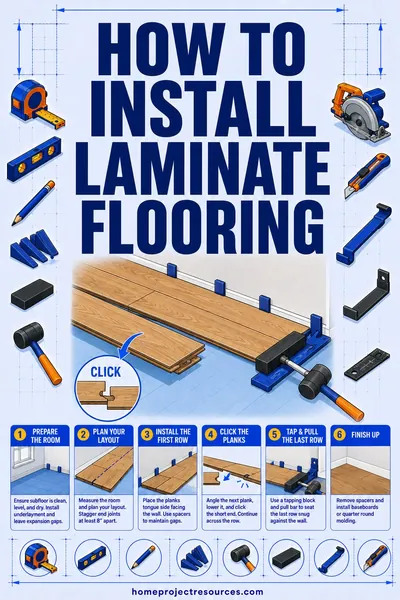
Laminate and vinyl plank are reasonable DIY projects. They click together, they float, and a mistake is recoverable because you can pull up a plank. Carpet is a different job.
Carpet has to be stretched, and stretched properly means a power stretcher, not a knee kicker. A knee kicker positions the carpet, it cannot put in the tension the carpet needs. Carpet installed without a power stretcher relaxes over the first year and develops ripples and waves across the room. Once it ripples, the fix is to pull it up, restretch it, and hope the backing survived, which costs about as much as the original install did.
Add to that: seaming with a hot iron and seam tape is a skill that shows immediately when it is done wrong, tack strip has to be set at the right gap from the wall, and the tool list to rent for a weekend is long: power stretcher, knee kicker, seam iron, carpet cutter, and a stair tool.
Where DIY does make sense: carpet tiles in a basement or playroom, a single closet, or pulling out the old carpet and pad yourself before the installer arrives. That last one is real savings, it is a line item on nearly every quote, and it takes an afternoon with a utility knife and a truck.
Worked example: normalizing three quotes on one bedroom
A 12 by 14 foot bedroom, mid grade nylon, upgraded pad, old carpet removed.
Area: 12 x 14 = 168 square feet, which is 168 / 9 = 18.7 square yards
Material ordered: The room is exactly 12 feet in one direction, which matches a standard roll width. That is the lucky case: the installer pulls one 14 foot length off a 12 foot roll, no seam. Add a few inches for trim and the order is about 12 x 14.5 = 174 square feet, or 19.3 square yards.
Now put three quotes side by side on what they contain rather than on the bottom line.
| What to compare | Quote A | Quote B | Quote C |
|---|---|---|---|
| Unit stated | Per square foot | Per square yard, unlabeled | Per square foot |
| Area quoted | 174 sq ft ordered | 168 sq ft, no waste added | 174 sq ft ordered |
| Fiber and product line | Named | "Nylon" only | Named |
| Pad spec | 8 lb, 7/16 rebond | Not stated | 8 lb, 7/16 rebond |
| Seam plan | None needed, stated | Not addressed | None needed, stated |
| Old carpet removal | Included, stated | Not listed | Included, stated |
| Tack strip | New, perimeter linear feet | Reuse existing | New, perimeter linear feet |
| Transition at doorway | One, listed | Not listed | One, listed |
| Subfloor repair | Unit basis given | Not addressed | Unit basis given |
| Furniture | Owner empties room | Unclear | Owner empties room |
Quote B is not cheaper. Quote B is written in the larger unit, omits waste, does not name the pad, and leaves five line items off the page. Every one of those omissions is a place the final invoice can grow.
Now change one number in the room itself. Make it 13 feet wide instead of 12. The floor area only rises to 182 square feet, about eight percent more. But the carpet order jumps to a 12 foot run plus a 1 foot filler cut from a full width, so ordered material goes to roughly 240 square feet, nearly forty percent more carpet, plus a seam and the labor to make it. That single foot of room width is a bigger swing than upgrading the fiber. This is exactly why you confirm roll width and seam placement before you sign.
If you want the contract side of the same process, including allowances, exclusions, and payment schedules, see how to compare contractor bids.
Frequently asked questions
How is carpet quoted, per square foot or per square yard?
Both, depending on the retailer, which is exactly the problem. A square yard is 9 square feet, so the same job written in the larger unit produces a number nine times bigger. Ask every quote to state the unit in writing, and convert them all to one unit before comparing. Also confirm whether the number includes pad, labor, and removal, because "carpet only" and "installed" are different quotes wearing the same shape.
How many square feet are in a square yard of carpet?
Nine. A square yard is 3 feet by 3 feet. To convert your room area from square feet to square yards, divide the square footage by 9. To convert a per square yard rate to a per square foot rate, divide by 9 as well.
What should I budget for carpeting a whole house?
Get one multi room quote rather than adding up per room numbers, because crew minimums and setup are spread across the job. Measure only the areas actually getting carpet, since kitchens, baths and entries are usually hard surface and often only half to two thirds of a home's square footage ends up carpeted. Then get the stairs quoted separately and by method, because that is where whole house quotes diverge most.
Why is my carpet quote for more square feet than my room?
Carpet comes in 12 foot wide rolls, so the installer orders material in full width pieces regardless of your room dimensions. A room wider than 12 feet in both directions forces a seam and a filler strip, and the offcut from that strip is unusable. Ordering twenty to forty percent more material than the floor area is normal on rooms that do not fit the roll width, and it is not padding on the bill.
Is expensive carpet padding worth it?
Yes, and it is the best value upgrade in the whole job. The pad absorbs the compression that would otherwise crush the carpet fibers, so a good pad directly extends how long the carpet looks new. Going from a basic 4 pound pad to an 8 pound, 7/16 inch rebond is a small fraction of the carpet above it and can add years of life. Many carpet warranties also require a minimum pad spec, so a downgrade can cancel your coverage.
Can I install carpet myself to save money?
Carpet is one of the few flooring types where doing it yourself usually costs more in the long run. Proper installation requires a power stretcher, and carpet that is not stretched tight will ripple within a year, which means paying to have it pulled up and redone. Where you can genuinely save is by removing the old carpet and pad yourself and emptying the room, both of which are line items on nearly every quote.
How are carpeted stairs quoted?
Per step, not per square foot, and the method has to be named. A waterfall installation runs the carpet over the nose and straight down to the next tread. A wrapped or upholstered installation follows the contour of each nose and takes roughly twice as long, so it carries a much higher rate per step. Landings are usually quoted separately as small rooms. Compare method to method or you are comparing nothing.
Which carpet is best for high traffic areas?
Nylon in a textured or frieze style is the standard answer, because nylon recovers from crushing better than any other synthetic, and textured or frieze construction hides footprints and vacuum marks. Triexta is a close second and has better built in stain resistance, which makes it the stronger pick if pets are the main concern. Avoid plush polyester in hallways and on stairs.
Related calculators and guides
- Flooring Calculator for carpet, plank, and laminate material estimates
- Square Footage Calculator for room area in square feet and square yards
- Cost to install flooring to compare carpet against hard surface floors
- Tile Layout Patterns if you are weighing hard surface against carpet
- Bathroom Remodel Cost for how flooring fits into a full room budget