What Is a Roofing Square? Squares Bundles and Coverage

A roofing square is 100 square feet of finished roof surface. That is the whole definition. Shingles, underlayment, tear-off labor, and disposal are all counted in squares, and for most shingles sold in the United States it takes three bundles to cover one square, so a single bundle covers about 33.3 square feet.
The part that trips people up is that a square measures roof surface, not the footprint of the house. A 1,600 square foot ranch does not have a 16 square roof. It has more, because the roof is sloped and it hangs past the walls.
Updated September 2026
Get your own square count before anyone quotes you. Our free roofing calculator turns your footprint, overhang, and pitch into roof area, squares, bundles, underlayment rolls, and starter and cap coverage. Two minutes with it and you can check every number on a bid.
Why roofers count in squares instead of square feet
The unit exists because of how the material is packaged and how a crew works.
A bundle of shingles has to stay light enough for one person to carry up a ladder on one shoulder. That practical limit puts a bundle somewhere in the 60 to 80 pound range depending on the line, and once you cap the weight per bundle you end up needing three of them to cover 100 square feet. Manufacturers standardized around that, then everything else on the roof followed. Underlayment rolls are sold as 10 square, 4 square, or 2 square rolls. Tear-off labor is bid per square. Dumpsters are sized by squares of old roofing.
So when a roofer says "you're a twenty-eight square roof," they mean 2,800 square feet of surface to cover. It is a shorthand that keeps the conversation in whole numbers instead of four digit ones.
The practical benefit for you is comparison. A lump sum bid tells you nothing. A bid with a square count on it can be checked against your own measurement and against the other two bids sitting on your kitchen table.
What is a roofing square in bundles, and does it change by shingle?
Three bundles per square is the answer for the overwhelming majority of residential shingles, both 3-tab strip and standard architectural laminates. Heavier lines break that rule because the shingles themselves weigh more.
| Shingle type | Bundles per square | Coverage per bundle |
|---|---|---|
| 3-tab strip | 3 | about 33.3 sq ft |
| Architectural laminate | 3 | about 33.3 sq ft |
| Heavy designer | 4 | about 25 sq ft |
| Luxury and slate look | 5 | about 20 sq ft |
You never have to guess which one you have. The bundles per square figure is printed right on the wrapper, along with the coverage in square feet. Read the wrapper before you order, not after, because ordering a designer shingle as if it were three bundles per square leaves you a quarter short on the last slope.
Coverage versus exposure
Coverage and the physical size of the shingle are two different things, and the difference is the overlap.
A standard 3-tab shingle is 12 inches by 36 inches, which is 3 square feet of material. But it is laid with about 5 inches of exposure, so only 5 inches of each 12 inch shingle actually shows. The other 7 inches sits under the course above it. That is why three bundles of 3 square foot shingles, which is roughly 78 square feet of raw material, only covers 33.3 square feet per bundle after lapping.
Architectural laminates are usually 13 1/4 inches by 39 3/8 inches with an exposure around 5 5/8 inches. Different dimensions, same idea, same 33.3 square feet per bundle.
Exposure matters to you for one reason: it sets the course spacing, and course spacing is what makes shingle lines look straight or drunk from the street. If a crew stretches exposure to save material, the roof loses coverage and the warranty goes with it.
Your roof is bigger than your floor plan
Two things make roof area larger than the ground the house sits on.
Overhangs. Eaves and rakes typically project 12 to 24 inches past the wall on every side. On a 40 by 30 house, a 12 inch overhang all around turns the covered footprint into 42 by 32, which is 1,344 square feet instead of 1,200. That is 12 percent more before slope even enters the picture.
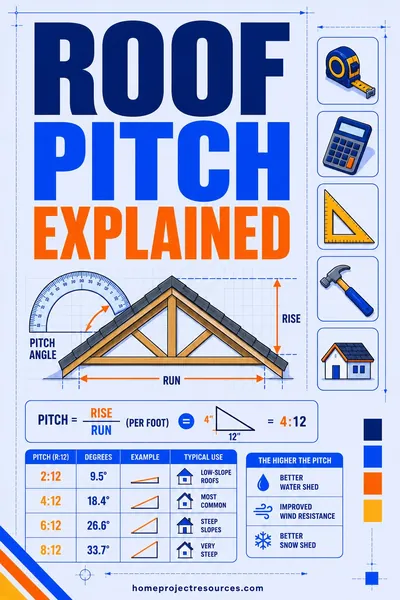
Pitch. A sloped surface is longer than the flat distance it covers, the same way a ramp is longer than the floor beneath it. Roofers handle that with a pitch multiplier.
Roof area = footprint area including overhangs x pitch multiplier
| Pitch (rise per 12 in run) | Multiplier | Angle |
|---|---|---|
| 1/12 | 1.003 | 4.8 deg |
| 2/12 | 1.013 | 9.5 deg |
| 3/12 | 1.030 | 14.0 deg |
| 4/12 | 1.054 | 18.4 deg |
| 5/12 | 1.083 | 22.6 deg |
| 6/12 | 1.118 | 26.6 deg |
| 7/12 | 1.157 | 30.3 deg |
| 8/12 | 1.201 | 33.7 deg |
| 9/12 | 1.250 | 36.9 deg |
| 10/12 | 1.301 | 39.8 deg |
| 11/12 | 1.356 | 42.5 deg |
| 12/12 | 1.414 | 45.0 deg |
At 6/12, the most common residential pitch in a lot of the country, the roof is 11.8 percent larger than the area it covers. At 10/12 it is over 30 percent larger. If you are not sure what pitch you have, our guide to roof pitch explained walks you through measuring it from inside the attic with a level and a tape, no ladder needed.
Worked example: a 40 by 30 ranch at 6/12
Here is the full count on a simple gable roof, start to finish.
1. Covered footprint. The house is 40 by 30. Add a 12 inch overhang on all four sides and you are covering 42 by 32, which is 1,344 square feet.
2. Roof surface. 1,344 x 1.118 (the 6/12 multiplier) = 1,502.6 square feet.
3. Squares. 1,502.6 / 100 = 15.03 squares.
4. Waste. A plain gable with no valleys takes about 10 percent. 15.03 x 1.10 = 16.53 squares, so you order 17.
5. Bundles. 17 squares x 3 bundles = 51 bundles of architectural shingles.
6. Underlayment. Underlayment gets lapped too, roughly 10 percent, so 1,502.6 x 1.10 = 1,653 square feet. Synthetic comes in 10 square rolls at 1,000 square feet each, so that is 2 rolls with material left over.
7. Starter strip. Starter runs the eaves and, on most manufacturer specs, the rakes as well. Eaves are 2 x 42 = 84 linear feet. Each rake is half the 32 foot width times the 1.118 multiplier, about 17.9 feet, and there are four of them, so 71.6 feet. Total 155.6 linear feet. Starter bundles cover 100 linear feet, so 2 bundles.
8. Ridge cap. The ridge runs the 42 foot length. Pre-formed hip and ridge covers 20 to 30 linear feet per bundle depending on the product, so at 20 linear feet you need 3 bundles.
9. Drip edge. Same 155.6 linear feet as the starter, in 10 foot pieces, so 16 pieces.
10. Nails. Budget 320 nails per square, which is what our calculator uses. 15.03 x 320 = 4,810 nails. At about 160 roofing nails per pound, that is 30 pounds.
Notice that step 3 and step 4 are separate. Waste is its own line, and it should be its own line on a bid too. A contractor who buries waste inside the square count is making it impossible to compare their bid to anyone else's.
Waste factors: what to add and why
Waste is not sloppiness. It is the material that gets cut off and thrown away because roof planes do not come in shingle-sized pieces.
| Roof shape | Typical waste | What is driving it |
|---|---|---|
| Simple gable, no valleys | 10% | Rake cuts and starter offsets only |
| Hip roof, one or two valleys | 15% | Every hip and valley cuts shingles at an angle |
| Cut-up roof, dormers, multiple valleys | 20% | Lots of short runs, more cuts per square |
A hip roof cuts material on every hip line and every valley, and those cutoffs are usually too small to use anywhere else. That is why the same square count can need noticeably different bundle counts on two different houses.
One more thing worth knowing: waste percentages are applied to the field shingles, not to the accessories. Starter, cap, and drip edge are measured in linear feet and ordered by the piece, so they get their own small round-up rather than a percentage.
How squares show up on the rest of the job
The square is not just a shingle unit. It is the unit for almost every line on a roofing job.
Tear-off. Crews bid removal per square, and per layer. A roof with two layers of old shingles is twice the tear-off, twice the weight in the dumpster, and twice the nail pulling. Ask any bidder how many layers they expect and what happens if they find a third.
Disposal. Old asphalt shingles are heavy. A square of stripped-off 3-tab weighs roughly 200 to 250 pounds, and architectural more. Multiply that by your square count and you can see why dumpster sizing is a real line item. Our dumpster size calculator will tell you what container a given tear-off needs so you are not paying for a swap-out halfway through day one.
Underlayment and ice barrier. Sold and specified in squares. Ice and water shield along the eaves is specified in linear feet and course width instead, usually enough to reach past the interior wall line. If you have had trouble at the eaves before, our guide on ice dams on roof covers where that membrane needs to land.
Ventilation. Net free vent area is specified as a ratio to attic floor area, not roof squares, so this is the one line that does not follow the square count. It still belongs on the bid.
Reading a bid with squares on it
Three questions, and any honest roofer answers all three without hesitating.
- How many squares, and how did you get there? Drone measurement, satellite report, or hand measurement are all fine. "We eyeballed it" is not.
- What waste percentage is in the material order? You want the number stated, not folded in.
- How many layers are coming off, and what is the change order process if there are more? This is the single most common mid-job surprise on a roof.
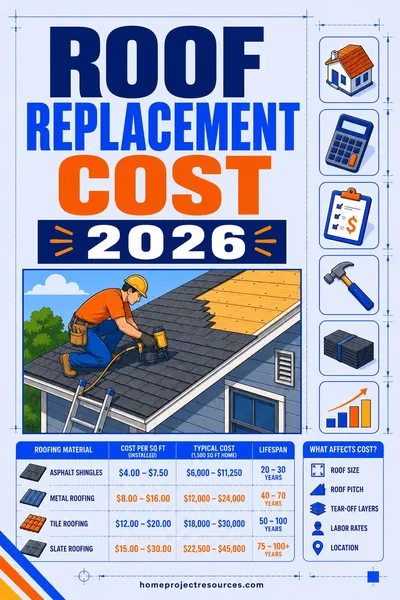
If two bids differ by four squares on the same house, one of them measured wrong, and you now know enough to figure out which. For the broader comparison process, our guide on how to compare contractor bids covers allowances, exclusions, and payment terms. If you want the full picture of what else sits on a roofing estimate, roof replacement cost walks the line items.
Common mistakes when counting squares
Using the house square footage. A two story 2,000 square foot house might have a 1,100 square foot footprint and a 13 square roof. A one story 2,000 square foot house has nearly double that. Living area and roof area are unrelated numbers.
Forgetting the overhang. A 12 inch overhang adds 8 to 12 percent on a typical house. Skipping it is the most common reason a homeowner's own count comes in low.
Forgetting garages, porches, and dormers. Anything with shingles on it counts. Attached garage roofs get left out of homeowner estimates constantly.
Assuming one pitch. Many houses have a main roof at one pitch and a porch or addition at a much shallower one. Measure and multiply each plane separately, then add the squares together.
Rounding down. Always round up to the next whole square when ordering. Running out on the last course means a second delivery, a second trip charge, and possibly a different production run of shingles with a slightly different color batch.
Frequently asked questions
How many bundles of shingles are in a square?
Three for most shingles sold in the US, covering both 3-tab and standard architectural laminates, so each bundle covers about 33.3 square feet. Heavy designer lines are four bundles per square and a few luxury products are five. The number is printed on the bundle wrapper.
How many square feet does one bundle of shingles cover?
About 33.3 square feet for a three-bundle-per-square shingle. That is coverage after the overlap, not the raw surface area of the shingles inside, which is roughly double.
How many squares is a 2,000 square foot house?
There is no single answer, because that figure is living area and squares measure roof surface. A single story 2,000 square foot ranch at 6/12 with 12 inch overhangs works out near 25 squares once you add overhang and pitch. The same living area in a two story house is closer to 13. Measure the footprint, add the overhang, then apply the pitch multiplier.
Do I include the ridge and valleys in the square count?
Yes, they are part of the roof surface, so they are already inside your area calculation. What they add on top of that is waste, because every valley and hip means angled cuts. Ridge cap is ordered separately in linear feet since it is a different product.
Is a roofing square the same as a square of siding?
Same idea, different material. Siding is also sold and bid by the square, meaning 100 square feet of wall. The two do not mix on one job, so keep them as separate line items. If you are pricing a wall project, use the siding calculator rather than the roofing one.
How much does a square of shingles weigh?
A square of standard architectural shingles lands roughly in the 230 to 280 pound range, and 3-tab a bit less. That matters for two reasons: what your deck and framing are carrying, and how fast you fill a dumpster on tear-off. Multiply your square count by that weight before you rent a container.
Can I measure squares myself without getting on the roof?
Yes, and you should. Measure the footprint on the ground with a tape, add your overhang on all sides, then multiply by the pitch multiplier for your slope. Measure the pitch from inside the attic with a 12 inch level. That gets you within a square or two of a professional measurement on a simple roof, which is close enough to catch a bad bid.
What should I do before the crew arrives?
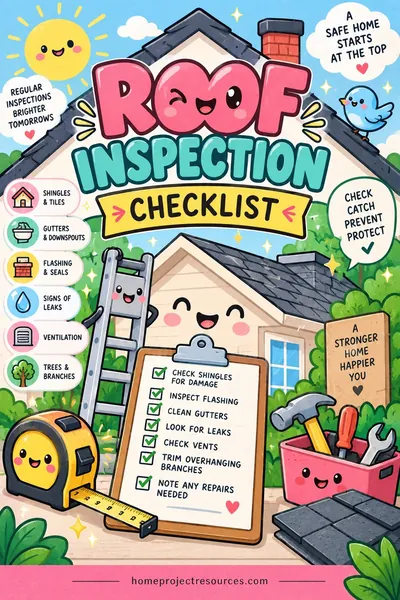
Walk the roof from the ground with binoculars and note anything that looks off, then use our roof inspection checklist so you and the contractor are looking at the same list of problems. Deck repairs found under the old shingles are the most common cost change on a roofing job, and agreeing in writing on how those are priced beats arguing about it on day two.