Types of Wood: Hardwood vs Softwood and How to Pick the Best Wood for Your Project

The main types of wood are softwoods, such as pine, fir and cedar, and hardwoods, such as oak, maple, walnut and cherry. Softwood and hardwood describe the kind of tree, not how hard the wood is. To choose, start with your project: pine or poplar for budget builds and painted pieces, oak or maple for tables and anything that takes hard wear, and cedar or pressure-treated lumber for outdoor builds.
This guide explains the difference between the two groups, what each common wood is good for, how lumber is sized and sold, a worked example for a simple bookcase, and how to pick good boards at the store. It's written for first projects: shelves, a desk, a planter box, a bench, some trim.
Key facts
- Softwoods come from cone-bearing trees; hardwoods from broadleaf trees.
- Pine and fir are usually the cheapest; walnut and cherry cost the most.
- Outdoors, use cedar, redwood or pressure-treated lumber.
- A 2x4 actually measures about 1.5 by 3.5 inches.
- One board foot is 144 cubic inches, like a 1 by 12 by 12 inch piece.
Free calculator from Home Project Resources
Wood Picker: Good Woods for Your Project and Budget
Pick your project and your budget. You get two or three good wood types to look at.
Need more? Open the free Paint Calculator.
 Paint Calculator
 Square Footage Calculator
 Wallpaper Calculator
The Wood Picker has two choices. Pick your project (a shelf or bookcase, a table or desk, outdoor furniture or a deck, or trim or a painted project) and your budget (low, medium or high). It suggests two or three wood types to look at, with a line on why each fits, plus reminders on checking local prices, dust protection and testing stain on a scrap.
Quick reference: common woods and what they suit
| Wood | Type | Good for | Notes |
|---|---|---|---|
| Pine | Softwood | Shelves, frames, painted pieces | Cheap, dents easily |
| Fir | Softwood | Framing, sturdy builds | Strong for its price |
| Cedar | Softwood | Outdoor furniture, fences, planters | Resists rot, nice scent |
| Redwood | Softwood | Decks, outdoor builds | Rot-resistant, costs more |
| Poplar | Hardwood | Painted projects, trim | Smooth, affordable, fairly soft |
| Oak | Hardwood | Tables, shelves, floors | Strong, open grain |
| Maple | Hardwood | Tables, workbenches, cutting boards | Hard and smooth |
| Walnut / cherry | Hardwood | Fine furniture | Rich color, higher cost |
What hardwood and softwood really mean
The names are a bit misleading. Softwoods come from conifers, the cone-bearing trees with needles, like pine, fir, spruce, cedar and redwood. Hardwoods come from broadleaf trees that usually drop their leaves in fall, like oak, maple, walnut, cherry, ash and poplar.
In general, softwoods are lighter, cheaper and easier to cut, and they grow faster, which is why most house framing is softwood. Hardwoods are usually denser, more expensive and longer lasting, which is why they're used for furniture, floors and cabinets. But there are plenty of exceptions. Douglas fir, a softwood, is stronger than some hardwoods. Poplar, a hardwood, is soft enough to dent with a fingernail. Balsa, the very light wood in model airplanes, is technically a hardwood.
So when you choose wood, think less about the label and more about three things: how hard and stable it is, how it looks under the finish you want, and what it costs where you live.
Softwoods you'll find at most stores
Pine
Pine is the go-to budget wood. It's light, easy to cut and drill, and widely sold at home centers in both construction grade and smoother "select" or "common board" grades. It's great for shelves, picture frames, simple benches and anything you'll paint. Its weak spots are that it dents easily and can look blotchy under stain unless you use a wood conditioner first.
Fir and spruce
Fir, often sold alongside spruce and pine as framing lumber, is strong for its price. It's what most 2x4s and 2x6s are made of, and it's the right pick for workbenches, garage shelves, stud walls and sturdy builds that don't need to look fancy.
Cedar and redwood
Cedar and redwood naturally resist rot and insects, which makes them favorites for outdoor furniture, fences, planters and raised beds. Cedar is light, smells lovely and weathers to a soft silver gray if left unfinished. Redwood is a little more costly and is sold mostly in the West.
Hardwoods worth knowing
Poplar is the hardwood beginners meet first. It's smooth, straight-grained and affordable, and it takes paint beautifully, which makes it a top pick for painted trim, cabinet frames and painted furniture. Its greenish streaks are why it's rarely stained.
Oak comes in red and white varieties. It's strong, with an open grain that takes stain well and shows a bold pattern. It's a classic for tables, bookshelves and floors. White oak also resists water better, so it's often used where things get damp.
Maple is hard, heavy and very smooth, with a fine, pale grain. It makes excellent tabletops, workbench tops and cutting boards. It can look blotchy under stain, so many people finish it clear. Walnut has a rich chocolate color, and cherry starts pinkish and darkens to a warm red over time. Both are favorites for fine furniture and gifts, and both cost more. Ash, with a pale color and bold grain, is another strong, good-value option where you can find it.
Plywood and other sheet goods
For wide, flat parts, plywood is often a better choice than solid boards. It's made of thin layers glued with the grain crossing, so it doesn't cup or split the way a wide board can. Cabinet-grade plywood with a hardwood face, such as birch or oak, is great for bookcase sides, wide shelves and cabinet boxes. Edge banding, a thin strip of veneer you iron or glue on, hides the layers on the front edge.
MDF is smooth, flat and cheap, and it takes paint very well, but it's heavy, sags under load over long spans and swells if it gets wet. Use it for painted panels and cabinet doors, not for long shelves or anything outdoors.
How lumber is sized and sold
Softwood boards are sold by their nominal size, which is bigger than the real size. A 2x4 actually measures about 1.5 by 3.5 inches. A 1x12 is about 0.75 by 11.25 inches. The boards started at the nominal size when rough-cut, then shrank as they dried and were planed smooth. Always plan your project with the actual sizes, or your shelves will come out short.
Hardwood at a lumberyard is often sold by the board foot. One board foot is 144 cubic inches, the same as a piece 1 inch thick, 12 inches wide and 12 inches long. Hardwood thickness is often given in quarters: 4/4 is 1 inch rough, and 8/4 is 2 inches rough. Our board foot calculator does the math and shows nominal against actual sizes. If you need a refresher on fractions, see how to read a tape measure.
A worked example: a simple pine bookcase
Say you want a basic bookcase 36 inches wide and 48 inches tall, with four shelves, built from 1x10 pine (actual size about 0.75 by 9.25 inches) and painted. You'd need two sides at 48 inches and four shelves of about 34.5 inches, since the shelves fit between the sides (36 minus two 0.75 inch sides). That's 96 inches of sides plus 138 inches of shelves, or 234 inches, about 19.5 feet of 1x10.
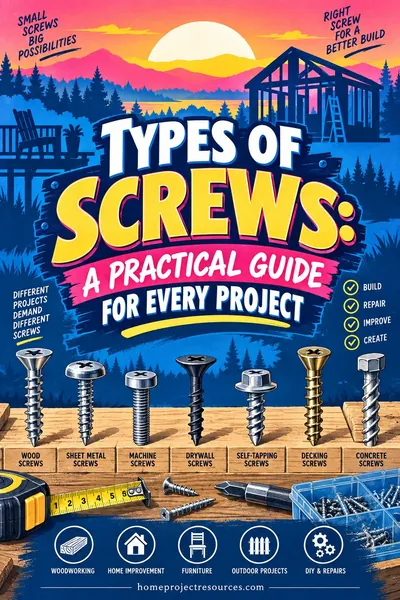
Boards come in set lengths, often 6, 8, 10 and 12 feet. Three 8 ft boards give you 24 feet, which covers the parts and leaves room to cut around knots, split ends and a mistake or two. In board feet, 24 feet of 1x10 is 1 x 10 x 288 / 144, or 20 board feet. Add a sheet of thin plywood or hardboard for the back, wood glue, and screws; our guide to types of screws covers which to use, and types of drill bits helps with pilot holes so the pine doesn't split near the ends.
Want a stained bookcase instead? Swap pine for oak or birch plywood. The math is the same, the cost goes up, and the finish looks richer. For a smaller first project, like a cutting board or a little bench, see how much lumber for a handmade wood gift.
Wood for outdoor projects
Outdoors, the choice is about rot. Cedar and redwood resist it naturally. Pressure-treated lumber, usually pine treated with preservatives, is made for decks, posts and anything touching the ground; buy lumber rated for ground contact for posts and anything buried. Dense tropical hardwoods such as teak last a long time but cost much more.
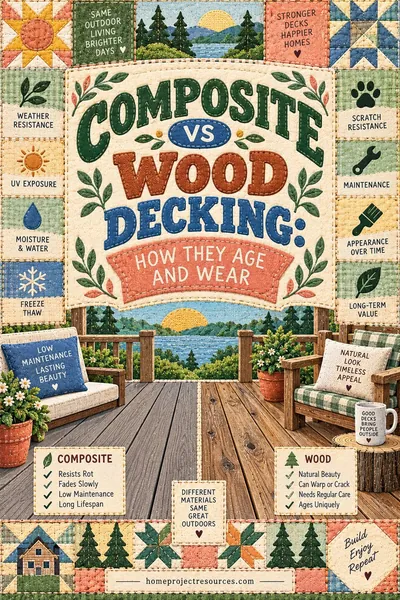
Wear gloves and a dust mask when cutting treated lumber, sweep up the sawdust rather than burning it, and don't use it for cutting boards or surfaces that touch food. Follow the tag on the board and use fasteners rated for treated wood, since the treatment can corrode plain steel. For decks, compare options in composite vs wood decking, then size the boards and joists with the deck calculator. Fence builders can count posts and pickets with the fence calculator.
Choosing good boards at the store
Pick through the pile; it's expected. Sight down each board from one end like you're aiming along it, and look for bows, twists, cups and crooks. Skip boards with big loose knots, long cracks at the ends or a lot of sap. Flat, straight boards with tight, small knots are worth the extra minute. For anything you'll stain, look at the grain on both faces, since one side is often nicer.
When you get home, keep the boards flat in your work space for a few days before cutting so they adjust to your home's humidity. Store them stacked flat with small spacer sticks between layers, not leaning against a wall, where they can bow.
Paint or stain, and staying safe
Paint hides grain, so a cheaper, plainer wood like pine, poplar or MDF works well. Stain shows the grain, so it's worth buying nicer boards such as oak, ash or cherry. Oak, ash and walnut take stain evenly. Pine, maple, birch and cherry can turn blotchy, so use a pre-stain wood conditioner and always test on a scrap from the same board. Our guide to how long paint takes to dry covers recoat times.
Wear eye protection and a dust mask when cutting or sanding, especially with treated wood and with MDF, which makes very fine dust. Keep blades sharp, clamp the board before you cut, and keep hands clear of the cut line. Read the manual for every power tool. If you're still building your kit, see types of saws and our list of essential tools every homeowner needs.
Quick answers about types of wood
What is the difference between hardwood and softwood?
It's about the tree, not the hardness. Hardwoods come from broadleaf trees such as oak and maple, and softwoods come from cone-bearing trees such as pine and cedar. Most softwoods are lighter and easier to work, but some, like Douglas fir, are very strong, and some hardwoods, like poplar, are fairly soft.
What is the best wood for a shelf?
Pine and poplar are budget-friendly and easy to work, and both paint well. Oak and maple cost more but are harder and stronger, which helps on long or heavily loaded shelves. Cabinet-grade plywood is also a good choice for wide shelves, since it stays flat.
What is the best wood for outdoor projects?
Cedar and redwood resist rot naturally and look lovely. Pressure-treated pine is made to resist rot and insects and is the usual pick for decks, posts and anything touching the ground. Tropical hardwoods such as teak last a long time but cost much more.
What is the cheapest wood for a project?
Pine and fir are usually the least expensive, followed by poplar. Prices vary by region, store and board grade, so check your local lumberyard and home center. Buying construction-grade boards and picking through for straight ones can save a lot on painted projects.
Is pressure-treated wood safe to use?
It's made for outdoor use, such as decks and fences, and is fine there. Wear gloves and a dust mask when cutting it, don't burn the scraps, and don't use it for cutting boards or food surfaces. Use fasteners rated for treated lumber and follow the tag instructions.
Which woods take stain well?
Oak, ash and walnut take stain evenly. Maple, pine, birch and cherry can look blotchy without a pre-stain conditioner. Whatever you use, test the stain on a scrap from the same board first, since color varies from board to board.
Why is a 2x4 not 2 by 4 inches?
Lumber is named by its rough-cut size. After drying and planing, a 2x4 ends up about 1.5 by 3.5 inches, and a 1x6 about 0.75 by 5.5 inches. Always plan with the actual dimensions, especially when parts fit between other parts.