How Long Does Paint Take to Dry? Latex vs. Oil, Time Between Coats and Painting in the Cold

Latex wall paint is dry to the touch in about an hour and ready for a second coat in about 2 to 4 hours. Oil-based paint is dry to the touch in about 6 to 8 hours and needs about 16 to 24 hours before you recoat. Those are typical times in a room around 70°F with moderate humidity, and the label on your can is always the final word.
The part that catches people out is that "dry" isn't "cured." Latex takes about 2 to 4 weeks to harden all the way through, and oil-based paint about a week or more. Until then the wall looks finished but scuffs, sticks and marks easily. Cold or humid rooms slow every stage, so in winter, give it extra time.
Key facts
- Latex: touch-dry in about 1 hour, recoat in about 2 to 4 hours.
- Oil-based: touch-dry in about 6 to 8 hours, recoat in about 16 to 24.
- Latex fully cures in about 2 to 4 weeks.
- Many latex paints need about 50°F air and wall temperature.
- Tacky or cool to the touch means it isn't ready to recoat.
Free calculator from Home Project Resources
Dry Time Planner: Recoat and Cure Times for Your Paint
Pick your paint and your room's temperature and humidity. You get dry-to-touch, recoat and full-cure times.
Need more? Open the free Paint Calculator.
 Paint Calculator
 Square Footage Calculator
 Wallpaper Calculator
The Dry Time Planner above turns this into times for your exact job. Pick your paint: latex (water-based) wall paint, latex semi-gloss or gloss for trim and doors, oil-based paint, or latex primer. Then pick your room conditions: warm and dry (about 70°F with low humidity), cool or humid (about 50 to 60°F, or damp air), or cold (below about 50°F). You get dry-to-touch, recoat and full-cure times, plus what to do while you wait.
Three stages: dry, recoat and cure
Paint goes through three stages, and most paint problems come from rushing one of them. Dry to the touch means you can lightly touch the surface without paint coming off on your finger. The top skin has set, but it's still soft underneath. Ready to recoat means the film is firm enough that a second coat won't pull it up, wrinkle it or leave drag marks. Cured means the paint has hardened all the way through. Now you can scrub it, put tape on it, hang heavy art and push furniture right up against it.
Recoating too soon causes streaks, lifting and sometimes peeling, because the roller drags the soft first coat. Using the room hard before the paint cures causes scuffs, and objects stick to sills and shelves. Knowing which stage you're in takes most of the guesswork out.
Quick reference: dry, recoat and cure times
| Paint | Dry to touch | Recoat | Full cure |
|---|---|---|---|
| Latex flat, matte, eggshell | About 1 hour | About 2 to 4 hours | About 2 to 4 weeks |
| Latex satin, semi-gloss, gloss | About 1 to 2 hours | About 4 hours | About 2 to 4 weeks |
| Oil-based (alkyd) | About 6 to 8 hours | About 16 to 24 hours | About a week or more |
| Latex primer | About 30 min to 1 hour | About 1 to 3 hours | N/A (paint over it) |
| Oil-based primer | About 1 to 4 hours | Follow the label | N/A |
Typical times at about 70°F with moderate humidity. Every product is a little different, so check the can before you plan the day.
How long to wait between coats
For most latex wall paints, wait about 2 to 4 hours before the second coat. Glossier latex, like the semi-gloss you'd use on trim and doors, and deep or dark colors often need a bit longer, closer to 4 hours. For oil-based paint, plan on the next day.
The clock is only a guide, so test before you roll. Find an inconspicuous spot, like low in a corner, and touch it lightly with the back of a knuckle. If it feels tacky, soft or noticeably cool, there's still moisture in the film. Give it another hour and test again. A cool feel is easy to miss, but it's a reliable sign the paint is still evaporating. Our guide on how to paint a room covers the full order of work, ceilings first, then walls, then trim.
A real weekend timeline for one bedroom
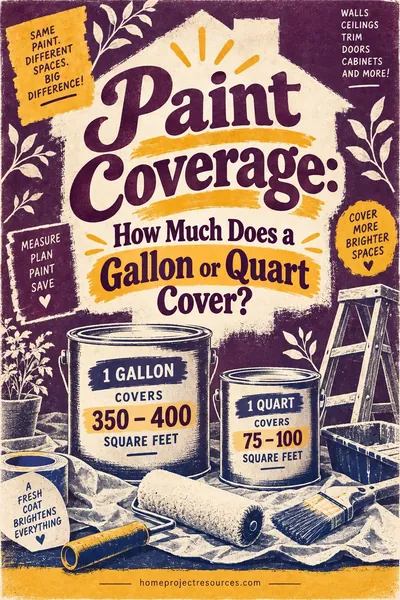
Here's how the times play out for a typical 12 by 12 foot bedroom with 8-foot ceilings, painted with latex eggshell in a warm, dry house. Measure the walls with the free square footage calculator, then plug the numbers into the paint calculator; a room this size usually needs about 2 gallons for two coats, and our page on paint coverage per gallon explains why.
On Saturday morning, you patch holes and let the filler dry, then prime the patches; latex primer is ready for paint in about 1 to 3 hours. Cut in and roll the first coat before lunch. After about 2 to 4 hours, test a spot and roll the second coat mid-afternoon. Pull the painter's tape once the last coat is dry to the touch, about an hour later. On Sunday, move furniture back, a few inches off the walls. Wait several days to a week to hang pictures, and 2 to 4 weeks before you scrub anything. If you're patching first, our guide on how to patch drywall covers drying times for filler.
Putting the room back together
You can pull painter's tape as soon as the last coat is dry to the touch. Pull slowly at a sharp angle, back over itself. If you wait until the paint cures, the film can bond to the tape and tear along the edge.
Furniture can usually go back after about 24 hours, but leave it a few inches away from the walls for the first week or so. Pictures and mirrors are best left for several days to a week, longer for heavy pieces, so the paint behind them doesn't stick or mark. If you're mounting a TV, the same patience applies; our guide on how to hang a TV covers the studs and brackets. Washable or not, don't scrub a wall until it has cured, about 2 to 4 weeks for latex. Painted shelves and windowsills deserve extra patience: wait a week or more before setting anything on them, or books and plant pots can stick to the paint.
Painting indoors in cold weather
Winter painting is very doable indoors, but cold slows both drying and curing a lot. Start with the can: many latex paints list a minimum of about 50°F for both the air and the wall surface, and some are made for cooler conditions. Oil-based paints often need about 40 to 45°F or more. Warm the room to about 65 to 70°F a day before you start, and keep it there while you paint and while the paint dries.
Exterior walls are the sneaky part. On a cold day the wall surface can be several degrees colder than the air in the room, especially behind furniture or in corners that don't get much heat. A cool room might double your recoat time, so plan for it. And keep heat sources safe: never use open-flame or unvented heaters near wet paint or paint fumes.
Humidity, bathrooms and damp days
Water-based paint dries as the water in it evaporates, so damp air slows it down. Bathrooms, basements, laundry rooms and rainy days can all stretch drying times well beyond what the can says. A fan keeps air moving across the wall; point it to circulate the room rather than straight at the wet paint, so it doesn't blow dust onto it. A dehumidifier helps a lot in damp spaces. Crack a window for fresh air if the weather allows, and keep the heat on so the room doesn't cool down.
In a freshly painted bathroom, hold off on showers until the paint is well dry, ideally a day or more, and run the exhaust fan when you do shower for the next few weeks. If you see moisture beading on windows in a room you're painting, the air is very damp; our guide on condensation on windows explains why and what helps.
Ways to make paint dry faster, safely
The best trick is to paint thin, even coats. Two thin coats dry faster and look better than one thick one, which can stay soft underneath for a long time and sag on the wall. Keep the room warm, around 65 to 75°F, and keep air moving with a fan and good ventilation. Lower the humidity with a dehumidifier or by running the heat. And start early in the day, so your coats dry while the house is at its warmest. Hair dryers and heat guns aren't worth it on walls; they can make the surface skin over while the paint underneath stays wet.
Mistakes that make paint stay soft or tacky
Thick coats are the big one, especially with a heavily loaded roller in corners and along trim. Painting a cold exterior wall is another: the room feels fine, but the wall is too cold for the paint to form a good film. Rushing the second coat on a humid day can leave the wall tacky for days. Putting objects back on a painted shelf or sill the same day is a classic way to end up with stuck books and peeled spots.
Sheen plays a part too. Glossier paints, used on trim, doors and cabinets, often stay slightly tacky longer than flat wall paint, so give them their full recoat time. If you're tackling cabinets, our guide on how to paint kitchen cabinets covers the extra patience they need, and changing paint sheen explains when a clear coat helps.
Painting before holiday guests
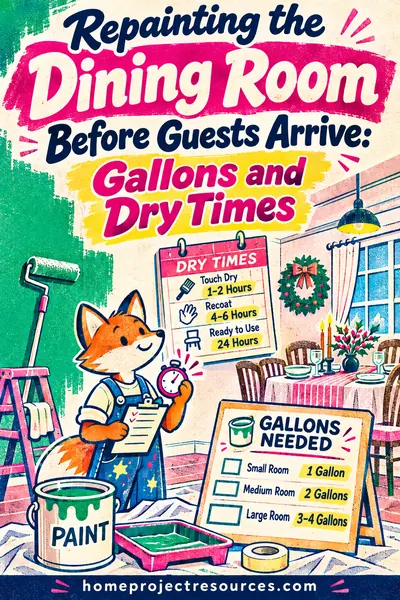
If company is coming, finish at least a few days early. That gives the smell time to fade and lets you put the room back together without rushing. Our guide to repainting the dining room before guests has a day-by-day plan. If you'd rather hire it out, cost to paint a room explains what drives the price, which varies by region and room. All of our free tools are on the Home Project Resources home page.
Quick answers about paint drying time
How long does paint take to dry?
Latex wall paint is dry to the touch in about 1 hour and ready to recoat in about 2 to 4 hours. Oil-based paint is dry to the touch in about 6 to 8 hours and ready to recoat in about 16 to 24 hours. Cool or humid rooms take longer, so check the label.
How long should I wait between coats of paint?
About 2 to 4 hours for most latex wall paints and about 16 to 24 hours for oil-based paint. Glossy and dark latex colors may need closer to 4 hours. Wait longer in a cool or humid room, and test a hidden spot: tacky or cool means wait.
How long does it take paint to fully cure?
Latex takes about 2 to 4 weeks to fully cure, and oil-based paint about a week or more. Until then, treat walls gently: no scrubbing, no tape and nothing heavy leaning against them. Set things on painted shelves and sills lightly, or wait a week or more.
Can you paint when it's cold?
Indoors, yes, as long as the room air and the wall surface stay above the minimum on the label, often about 50°F for latex. Warm the room to about 65 to 70°F a day ahead, keep it there until the paint dries and allow extra time between coats.
Does humidity affect paint drying time?
Yes. Water-based paint dries by evaporation, so damp air slows it down. Bathrooms, basements and rainy days can stretch times well past the label. Use a fan and a dehumidifier, keep the heat on and allow extra time between coats.
How can I make paint dry faster?
Paint thin, even coats, keep the room about 65 to 75°F, keep air moving with a fan and good ventilation, and lower the humidity with a dehumidifier or the heat. Starting early in the day helps your coats dry while the house is warmest.
When can I put furniture back after painting?
Usually after about 24 hours for latex, keeping pieces a few inches from the walls for the first week or so. Hang pictures after several days to a week, and wait until the paint has cured, about 2 to 4 weeks, before scrubbing or pushing furniture tight to the wall.