Mobile Home Remodel Cost: What a Manufactured Home Renovation Really Runs

A mobile home remodel usually costs roughly $10,000 to $25,000 for a budget refresh of a single-wide, and $40,000 to $80,000 or more for a mid-range whole-home remodel of a double-wide. One room costs much less. A mid-range kitchen update often lands somewhere between $8,000 and $25,000, and a mid-range bathroom between $5,000 and $12,000 in a single-wide.
Those are rough national ballparks, not quotes, and prices vary a lot by region. In a manufactured home, the age and condition of the house matter more than almost anything else. A soft floor, a leaky roof or torn underbelly comes first, because new finishes over an old problem mean paying twice. This guide covers what each budget buys, the fixes to put at the front of the line, a worked example for a single-wide, and the odd-size parts that trip people up.
Key facts
- Single-wide budget refresh: about $10,000 to $25,000
- Double-wide mid-range: about $40,000 to $80,000
- Double-wides cost about 1.5 times as much
- Check subfloor, roof and belly wrap first
- Homes built before June 15, 1976 often need more work
Free calculator from Home Project Resources
Mobile Home Remodel Cost Estimator: Your Ballpark Range
Pick the home size, which rooms you're redoing and the finish level. You get a rough national range and what it usually covers.
Need more? Open the free Square Footage Calculator.
 Square Footage Calculator
 Flooring Calculator
 Drywall Calculator
Use the estimator to get a quick range for your home. Choose the home size, single-wide (about 600 to 1,300 square feet) or double-wide (about 1,000 to 2,300 square feet). Then pick what you're remodeling: kitchen only, bathroom or bathrooms only, kitchen and bathrooms, or the whole home. Finally, pick a finish level: budget refresh, mid-range update or higher-end remodel. You get a rough national range and a short note on what that range usually covers.
Quick reference: mobile home remodel cost by size and scope
| Project | Single-wide | Double-wide |
|---|---|---|
| Kitchen, budget refresh | $3,000 to $8,000 | $4,000 to $10,000 |
| Kitchen, mid-range | $8,000 to $20,000 | $12,000 to $25,000 |
| Bathrooms, budget refresh | $2,000 to $5,000 (one) | $4,000 to $10,000 (two) |
| Bathrooms, mid-range | $5,000 to $12,000 (one) | $10,000 to $24,000 (two) |
| Whole home, budget | $10,000 to $25,000 | $15,000 to $35,000 |
| Whole home, mid-range | $25,000 to $55,000 | $40,000 to $80,000 |
| Whole home, higher-end | $55,000 to $85,000 | $80,000 to $125,000 |
Treat these as a starting point for your budget and get at least three written local bids. For the wider picture of what drives any remodel quote, see our guide to home remodel costs.
Fix the outside first
A manufactured home is only as good as the shell around it. Before you spend a dollar on cabinets or flooring, walk around the outside and look under the home with a flashlight. Four things deserve your attention.
The roof comes first, because leaks ruin new interiors fast. Many owners add a roof-over or reseal the existing roof before anything else; our roof repair cost guide explains how those jobs are scoped. The belly wrap, the barrier under the home that holds the floor insulation, is next. Torn or sagging wrap lets in cold air and critters, and it can leave pipes exposed in winter. The skirting protects the crawl space and plumbing from cold and animals, so gaps or missing panels are worth fixing. Finally, check that the home is level and tied down. A home out of level makes doors stick and cracks new drywall and tile. Re-leveling before a remodel saves a lot of headaches later.
If your water lines run through a cold crawl space, read our guide on how to keep pipes from freezing before winter, especially if the belly wrap needs repair.
Why the year it was built matters so much
Homes built after June 15, 1976 were built to the federal HUD code, which brought stronger construction and safety standards. Older "mobile homes" from before that date often need more work: wiring, plumbing, windows and sometimes framing. That doesn't mean a 1972 home can't be lovely again, but the budget needs to cover the systems before the finishes.
Some homes from the late 1970s into the 1990s also have gray polybutylene water lines. Many plumbers recommend replacing them, and it's far easier to do while walls and floors are open for a remodel than to tear things up again later. If you see gray flexible plastic pipe at the water heater or under a sink, ask a plumber to look at it when you get bids.
Soft floors are the most common surprise
Many manufactured homes use particleboard subflooring, which swells and crumbles when it gets wet. Soft spots by the kitchen sink, tub, toilet and water heater are very common. Walk the house in socks and press with your heel near each of those spots; if the floor gives, flexes or feels spongy, the subfloor underneath likely needs replacing.
Replacing subfloor in those spots is one of the most frequent surprise costs, so ask for it to be checked before you price new flooring. It's also a good moment to look for the leak that caused it. A slow drip at a supply line will ruin new subfloor just as fast as it ruined the old one.
A worked example: a 1998 single-wide
Say you own a 1998 single-wide, about 14 by 70 feet, which is roughly 980 square feet. The roof was resealed recently and the home is level, but the floor is soft by the bathroom and the kitchen sink. You want a mid-range refresh. Here's how a rough budget might come together.
Subfloor repair at the bath and kitchen sink runs about $1,000 to $3,000. Luxury vinyl plank flooring throughout adds about $4,000 to $8,000. Interior paint, if you do it yourself and only buy supplies, costs about $500 to $1,200. The kitchen, with new stock cabinets, laminate counters, a sink and faucet, lands around $8,000 to $15,000. The bathroom, with a one-piece tub and surround, vanity and toilet, comes in around $5,000 to $10,000. New light fixtures, interior doors and hardware add another $1,500 to $4,000.
That totals about $20,000 to $41,000. Add a 10 to 20 percent cushion for surprises, which in this example is another $2,000 to $8,000. To check the flooring line, measure each room with the free square footage calculator, then run the total through the flooring calculator to see how many boxes to buy. Our note on how much extra flooring to buy explains the waste allowance, and laminate vs vinyl plank helps if you're choosing between the two. Vinyl plank handles moisture better, which matters in a kitchen and bath.
Single-wide vs double-wide
A double-wide has more of everything: more floor, more walls, a bigger roof and often two bathrooms. So a whole-home update usually costs about 1.5 times as much as the same work in a single-wide. The upside is more room to work with in the kitchen and baths, and more options for opening up walls.
One important caution: in a double-wide, the marriage line where the two halves join carries load. Don't remove or cut into walls or framing along it without a qualified pro's sign-off. A single-wide has its own limits too, since its narrow width leaves less room to rearrange a kitchen or widen a hallway.
Odd sizes and parts that don't fit
Many manufactured homes use different sizes than site-built houses: narrower doors, thinner walls, shorter tubs and different window sizes. A standard 36-inch exterior door or a 60-inch tub from a big box store may not fit the opening you have. Compare your openings with our chart of standard door sizes, measure carefully, and check manufactured-home supply stores for exact matches.
Thinner walls also affect drywall and paneling. Many older homes have vinyl-covered wall panels with battens over the seams rather than taped drywall. If you're replacing panels with drywall, the drywall calculator gives you sheets, mud and screws, and the paint calculator tells you how many gallons to buy once it's finished.
What to do yourself and what to hire out
Painting, flooring and swapping light fixtures or faucets are common do-it-yourself jobs that cut costs. They're also the jobs where careful prep pays off. Turn off the breaker before you touch a light fixture, and turn off the water before you change a faucet.
Electrical, gas, structural and most plumbing work should go to licensed pros, and may need permits. That includes re-leveling, roof-overs and anything touching the marriage line. When you're ready to hire, our step-by-step guide on how to hire a contractor covers licenses, insurance and contracts. Ask whether each contractor has worked on manufactured homes before, since the construction is different enough that experience matters.
Permits and community rules
Electrical, plumbing, structural and some window and door work often need a permit. Some states have a separate agency that oversees manufactured homes, so the right office may not be your town's building department. Our guide to building permit costs covers what to expect.
If you live in a land-lease community, the community may also need to approve exterior changes like skirting, decks and additions. Check the rules before you order materials, and get any approval in writing.
Is it worth remodeling a mobile home?
Often, yes, if the frame, roof and floors are in good shape and you plan to stay a while. A fresh kitchen, bath and floors can make an older home feel brand new for much less than replacing it. It's worth pausing to compare your options when the home was built before June 1976 and needs wiring, plumbing and windows on top of finishes, when there's major water damage to the floor structure or walls, or when your whole-home quote is creeping toward the price of a newer used or new home.
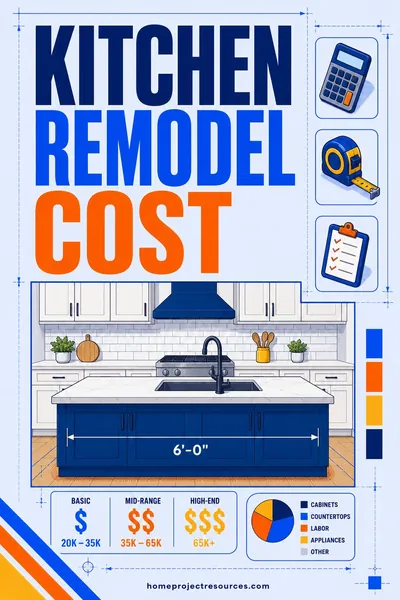
The biggest mistakes are all versions of the same thing: finishes before fixes. New floors over a soft subfloor, new drywall under a leaky roof, heavy stone counters or a large tiled shower without checking whether the floor can carry them, and no cushion in an older home that almost always hides a surprise. Keep the job in order with our home renovation checklist, and if you're planning one room, the kitchen remodel cost and bathroom remodel cost guides go deeper.
Quick answers about mobile home remodel costs
How much does it cost to renovate a mobile home?
Roughly $10,000 to $25,000 for a budget refresh of a single-wide, and $40,000 to $80,000 or more for a mid-range whole-home update of a double-wide. Higher-end work can reach $85,000 in a single-wide and $125,000 in a double-wide. Condition, finishes and local labor change it a lot.
How much does a mobile home kitchen remodel cost?
About $3,000 to $8,000 for a cosmetic refresh in a single-wide, roughly $8,000 to $25,000 for new cabinets and counters in the same layout depending on the home's size, and more for higher-end finishes and appliances. Check the subfloor under the sink before you price anything.
How much does a mobile home bathroom remodel cost?
For one bathroom, a budget refresh runs about $2,000 to $5,000 and a mid-range update about $5,000 to $12,000. A double-wide with two bathrooms runs about $4,000 to $10,000 for a refresh and $10,000 to $24,000 for mid-range work.
Is a double-wide more expensive to remodel than a single-wide?
Yes, usually. It has more floor, wall and roof area, and often two bathrooms, so a whole-home update can cost about 1.5 times as much. Opening walls along the marriage line also needs a pro's sign-off, because that line carries load.
Is it worth remodeling a mobile home?
Often, if the frame, roof and floors are sound and you plan to stay. For older homes, especially those built before June 1976, compare the full remodel cost with the price of a newer home before you commit, since wiring, plumbing and windows may all need work.
Do I need a permit to remodel a manufactured home?
Often, yes, for electrical, plumbing, structural and some window or door work. Rules vary by state and town, some states have a separate manufactured housing agency, and a land-lease community may have its own approval process, so check before you start.
Can I use regular house materials in a mobile home?
Sometimes. Many manufactured homes use different sizes for doors, windows, tubs and wall thickness, so measure carefully and check manufactured-home supply stores for exact fits. Paint, flooring and most light fixtures usually work the same as in any house.