How to Fix a Door That Won't Latch

Here is how to fix a door that won't latch: rub a pencil or lipstick on the latch bolt, close the door until it stops, and look at the mark it leaves on the strike plate. That mark tells you whether the latch is landing high, low, or short of the hole. High or low by a hair gets fixed with a metal file. Off by more than about 1/8 inch means the strike plate moves, or the door itself has sagged and needs long hinge screws first.
Nine times out of ten, this is a five to ten minute job with a screwdriver and a file. You do not need a new door, a new lockset, or a carpenter. You just need to know which of the four common failures you have.
Updated September 2026
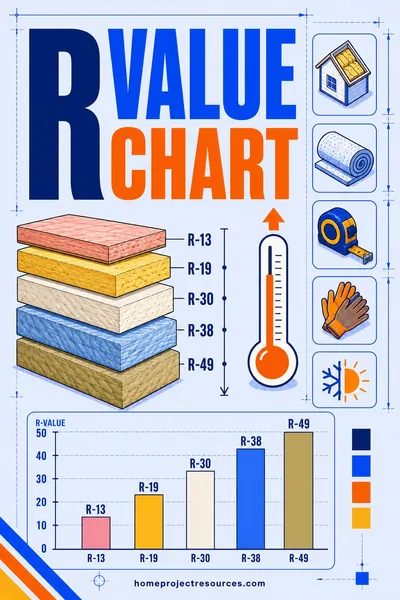
A door that won't latch is also a door that leaks air. Once the latch is fixed, use our free insulation calculator to see where the rest of your house is losing heat, because a misaligned door is usually a symptom of a building that has moved, not a one-off.
The four reasons doors stop latching
Almost every stubborn door falls into one of these buckets. Diagnose first, then pick the fix. Working the other direction (buying parts and hoping) is how people end up with three new strike plates in a drawer.
| Symptom | What is happening | The fix | Time |
|---|---|---|---|
| Door closes fully, latch clicks past the hole and does not catch | Strike plate is too high or too low by 1/16 to 1/8 inch | File the strike opening, or move the plate | 5 to 15 min |
| Door bumps and springs back before it touches the stop | Latch bolt is hitting the face of the strike plate, door is not closing far enough | Deepen the mortise, shim the hinges, or check for paint buildup | 10 to 30 min |
| Gap at the top of the latch side is wide, gap at the bottom is tight | Door has sagged, usually from loose top hinge screws | 3 inch screws into the framing through the top hinge | 5 min |
| Latch bolt does not spring out fully or feels gritty | Dirty or dry latch mechanism, or a bent spindle | Clean and lubricate, or replace the latch | 10 min |
| Door latches in summer but not in winter (or the reverse) | Wood movement with humidity, or seasonal frame shift | Split the difference: file the strike so it works in both seasons | 15 min |
The trick is that two of these can be true at once. A sagged door often also has a latch landing low, because sagging drops the latch relative to the frame. Fix the sag first, then re-test, because fixing the hinge can move the latch back into alignment on its own and save you from filing anything.
The pencil test that finds the problem in one minute
Grab a soft pencil, a lipstick, or a dab of chalk. Any of them work.
- Coat the end and both flat faces of the latch bolt. The latch bolt is the spring-loaded wedge that sticks out of the door edge, usually projecting about 1/2 inch when fully extended.
- Close the door slowly until it stops on its own. Do not slam it.
- Open it and look at the strike plate. You will see a smear.
- Read the smear. A mark above the strike hole means the latch is landing high and the hole needs to open upward. A mark below means the opposite. A mark centered on the plate face with the door refusing to close all the way means the door is not seating, not that the height is wrong.
- If there is no mark on the plate at all, the latch is not even reaching. That is a gap problem, and the door or the jamb has moved.
Painter's tape works too if you would rather not get lipstick on the trim. Put a strip across the strike plate, close the door, and the latch will dent the tape exactly where it lands. Then poke a pen through the dent and you have a mark you can measure to.
How to fix a door that won't latch, step by step
Work these in order. Each step is reversible and none of them costs you anything if it turns out you did not need it.
Step 1: tighten every hinge screw. All of them, both leaves, all three hinges. Use a hand screwdriver, not a drill, so you can feel when a screw is spinning in a stripped hole. This alone fixes a surprising number of doors, because a top hinge that has backed out even 1/8 inch drops the latch side of the door by roughly twice that at the far corner.
Step 2: replace the center screw in the top hinge with a 3 inch screw. The short screws that come with hinges only bite into the jamb, which is a thin board nailed to the rough framing. A 3 inch #9 screw goes through the jamb, through the shim space, and into the actual 2x4 or 2x6 behind it. Drive it until the head is flush, then a hair more, and watch the top of the door pull toward the hinge side. On most doors this moves the latch corner up 1/16 to 1/8 inch.
Step 3: re-test with the pencil. If the latch now catches, you are done, and you never touched the strike plate. This is the outcome you want.
Step 4: measure the gap all the way around. A correctly hung door has a gap of about 1/8 inch (roughly the thickness of a nickel) along the top and both sides, and 1/2 to 3/4 inch at the bottom for carpet clearance. Run a nickel around the perimeter. Where it will not fit, the door is binding. Where you can slide two nickels, the door has dropped or the frame has spread.
Step 5: file the strike opening. If the pencil mark sits within about 1/16 inch of the hole, a round or flat bastard file opens the strike hole in about two minutes. File the edge the latch needs to move toward, keep the file flat against the plate so you do not round the face, and stop as soon as the latch catches. You can usually gain 1/16 inch this way, sometimes a hair more, before you have filed through the plate and it looks chewed up.
Step 6: move the strike plate. If you need more than about 1/8 inch, unscrew it. Fill the old screw holes with wood glue and toothpicks or a golf tee, snap them off flush, and let them set. Reposition the plate where the pencil mark says it belongs, trace it with a sharp pencil, pare the mortise with a chisel so the plate sits flush, drill 3/32 inch pilot holes, and screw it back. Then swap at least one strike screw for a 3 inch screw so the plate is anchored to framing, which also makes the door far harder to kick in.
Step 7: adjust the latch depth if the door bounces. If the door will not seat, the latch bolt may be hitting the plate face because the strike mortise is too shallow or paint has built up on the stop molding. Deepen the mortise a hair with a chisel, or scrape the paint ridge off the stop. On weatherstripped exterior doors, compressed foam seals can also hold the door out by 1/16 inch or so, and an adjustable strike solves it.
Worked example: the bedroom door that clicked but never caught
Here is a real sequence on a hollow core bedroom door, 30 inches wide, hung on three 3-1/2 inch hinges.
The symptom: the door closed, made a click, and drifted back open. Pencil on the latch showed a smear starting 1/16 inch above the top edge of the strike hole and running up the plate. So the latch was riding high.
The gap check told the rest of the story. Along the latch side, the gap measured 1/16 inch at the top and 3/16 inch at the bottom. That taper is the classic signature of a door leaning into the opening at the top, which happens when the top hinge loosens.
The fix took eight minutes:
- Tightened all six hinge screws. Two on the top hinge spun freely, so they were stripped.
- Drove a 3 inch screw through the center hole of the top hinge jamb leaf. The gap at the top of the latch side opened to 1/8 inch and the bottom closed to 1/8 inch.
- Re-tested. The latch now landed with its smear straddling the top edge of the hole, still a touch high.
- Two minutes with a flat file on the top edge of the strike opening, about 1/32 inch removed.
- Door latched with a clean sound and stayed latched.
Total parts used: one screw. No new hardware, no filler, no paint touch-up.
When the door has swollen instead of sagged
If the door binds along the whole latch edge and the gap is tight from top to bottom, the slab has swollen. This is common on unfinished door edges in a humid summer, and on exterior doors whose top and bottom edges were never sealed.
Check the season. If it latches fine in January and sticks in July, wait for a dry stretch, then sand or block plane the latch edge until you have a consistent 1/8 inch gap. Take material off in small passes and check often, because you cannot put it back.
Then seal what you exposed. Prime the bare edge and the top and bottom edges of the slab. An unsealed door edge is a sponge, and it will swell again next summer. On a door with a paint film you plan to keep, a coat of clear finish on the raw edge is enough.
If the door is a solid exterior slab that binds only at the bottom corner on the latch side, look at the threshold. Many adjustable thresholds have four or five screws that raise and lower the cap, and someone may have cranked them up chasing a draft.
When the latch itself is the problem
Sometimes the alignment is perfect and the hardware is what quit.
Pull the door open and press the latch bolt in with your thumb. It should slide in smoothly and spring back all the way out with a firm snap. If it feels gritty, sticks halfway, or comes back slowly, the mechanism is dirty or dry.
Take the two screws out of the latch faceplate on the door edge, slide the latch assembly out, and blow it out. A dry PTFE spray or powdered graphite is the right lubricant here. Skip the general purpose penetrating oils for a long term fix, because they attract dust and gum up inside a year.
If the knob turns but the latch barely moves, the spindle or the internal spring is worn. A replacement passage latch is a five minute swap as long as you match two measurements: the backset (distance from the door edge to the center of the knob hole, almost always 2-3/8 or 2-3/4 inches) and the faceplate shape (round drive-in versus square corner versus radius corner).
For the tools that make this kind of work fast, our essential DIY tools list covers the file, chisel, and driver bits you will reach for on every door in the house.
Deadbolts play by slightly different rules
A deadbolt has no spring and no ramp, so it does not forgive misalignment the way a latch does. If the key turns hard, the bolt is dragging on the strike.
Use the same pencil trick, but throw the bolt against the closed door with the strike plate removed so you can mark the jamb directly. Deadbolt strikes need a bored hole behind them at least 1 inch deep so the full bolt throw (usually 1 inch on a residential grade deadbolt) can extend. A strike plate over a shallow hole is one of the most common security defects in a house, and it shows up as a bolt that will not fully turn.
While you have it apart, put 3 inch screws in the deadbolt strike. That single upgrade does more for door security than a fancier lock does.
When it is not the door at all
If you have fixed three doors in one hallway and they all drifted the same direction, the doors are not the problem. The building moved.
Signs to take seriously: doors and windows sticking on the same side of the house, new diagonal cracks running from door corners toward the ceiling, floors that feel sloped, or gaps opening between the trim and the wall. Our guide on foundation cracks and when to worry walks through which cracks are cosmetic and which ones justify a call.
Seasonal movement is normal, though. Clay soils swell in wet months and shrink in dry ones, and a house can rise and fall a fraction of an inch through the year. That is why a door can latch perfectly in April and refuse in October. When that happens, file the strike so the latch catches in both positions rather than chasing perfection in one season.
Fix the air leak while you are there
A door that would not latch was almost certainly sitting open by a fraction of an inch every time you thought it was closed. On an exterior door, that is a slot the full height of the opening.
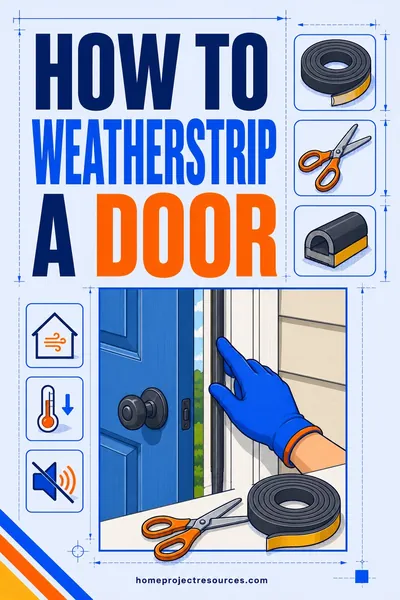
Once the latch works, check the seal. Our guide to how to weatherstrip a door covers the dollar bill test, sweeps, and thresholds, and it pairs naturally with a strike plate you just moved. Doing them in that order matters, because weatherstripping a door that does not close tightly just wastes the weatherstrip.
Adding a door to the seasonal walkthrough is easy too. Our home maintenance checklist puts hinge screws and door seals on a schedule so you catch a loose hinge before the door stops latching.
What you will need
- Phillips and flat screwdrivers (a hand driver, so you can feel a stripped hole)
- 3 inch #9 wood screws, four or five of them
- A flat and a round metal file, or a small 4-in-1 rasp
- A 3/4 inch or 1 inch wood chisel
- Wood glue and toothpicks, or golf tees, for filling old screw holes
- A drill with a 3/32 inch bit for pilot holes
- Pencil, lipstick, or painter's tape for marking
- A nickel, for measuring gaps by feel
That is the whole kit, and every item earns its place on other jobs. If you are patching the wall after moving a strike plate on a split jamb, our how to patch drywall guide covers the small hole repair.
Frequently asked questions
Why does my door only fail to latch in winter?
Wood shrinks in dry winter air and swells in humid summer air, and the frame moves with the house as soils freeze and thaw. A 1/16 inch seasonal swing is enough to move a latch out of a strike hole. File the strike opening slightly in the direction the latch drifts so it catches at both extremes, rather than perfectly at one.
Can I just bend the strike plate tab instead of filing it?
You can, and on cheap stamped plates it sometimes works. Bend the metal tang inside the hole with pliers so it guides the latch deeper. It is a legitimate quick fix, but the tab tends to bend back over months of use, so treat it as a test rather than the repair.
How much can I file a strike plate before I ruin it?
About 1/16 inch of opening is safe, and up to 1/8 inch if you file evenly and keep the file flat. Past that you are removing enough metal that the hole edge gets thin and the plate starts looking hacked. Move the plate instead. Moving it takes ten minutes and looks correct forever.
My door latches but pops open when the furnace kicks on. What now?
That is air pressure, not alignment. A closed room with a supply register and no return path pressurizes when the blower runs, and a marginal latch loses. The alignment fix (moving the strike so the latch seats deep instead of just catching the lip) usually solves it. Undercutting the door or adding a transfer grille solves the pressure itself.
Should I use 3 inch screws on every hinge?
One per hinge is plenty, and the top hinge is the one that matters most because it carries the most weight. Use the center hole so the screw pulls straight through the jamb into framing. Do not overdrive them. If you keep turning after the hinge seats, you will bow the jamb inward and create a new binding problem where there was not one.
The latch bolt is angled the wrong way after I flipped my door. Can I fix that?
Yes. Almost all passage latches let you pull the bolt out, rotate it 180 degrees, and push it back in, so the ramped face points toward the stop again. Some need a small screwdriver in a slot on the underside to release it. Check before you buy a new latch, because a reversed bolt is a two minute correction.
How do I know if the problem is the hinges or the frame?
Measure the gap along the latch side at the top and at the bottom. If those two numbers differ by more than about 1/16 inch, the door is leaning and the hinges are the suspect. If the gap is even top to bottom but the whole side is tight or the whole side is wide, the frame has moved and the strike plate is your lever.